
What Is The Difference Between An Amp And A Volt
Okay, so you're staring at a bunch of wires and electrical gadgets, maybe trying to figure out why your phone charger is taking FOREVER. You've heard the terms "amps" and "volts" thrown around, but what do they actually mean? Let's untangle this electricity spaghetti, shall we?
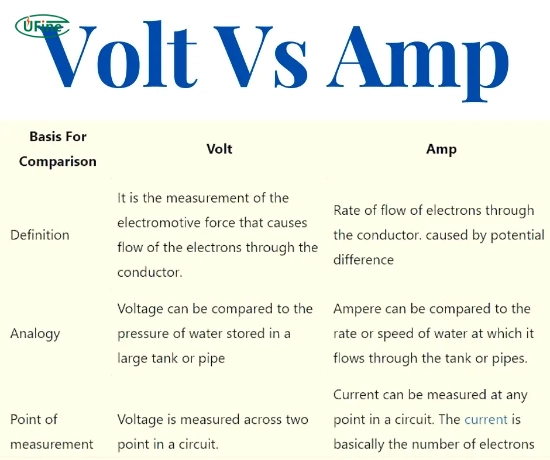
Think of it like this – and this is my FAVORITE analogy, by the way – electricity is like water flowing through a pipe. Yep, water.
Volts: The Pressure, Baby!
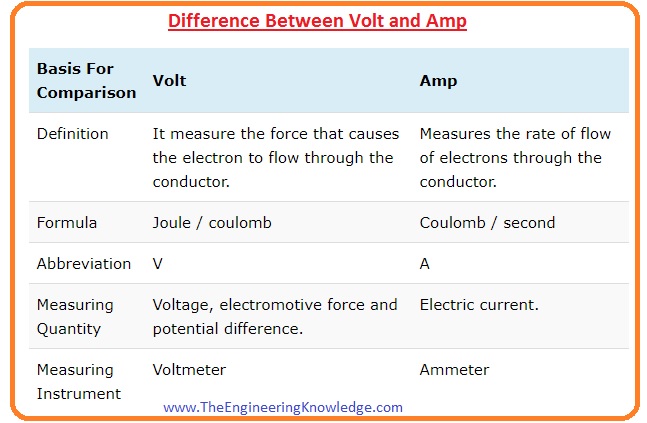
Volts (V) are basically the pressure pushing the water (electricity) through the pipe (wire). The higher the voltage, the more "oomph" it has. It's the force that makes the electricity WANT to flow. Think of it as how hard the water pump is working. Is it just a gentle trickle, or a full-on fire hose?
Must Read
So, 120 volts in your wall outlet? That's the pressure needed to power most of your household stuff. A tiny 1.5 volt battery? That's a gentle nudge. See the difference?
But here’s the kicker: high voltage doesn't necessarily mean dangerous. A static shock can have a REALLY high voltage, but it's the amount of electricity that actually hurts (more on that in a sec!).

Amps: The Amount of Water!
Amps (A), or Amperes, represent the amount of water actually flowing through the pipe. It's the volume of electricity. So, a higher amperage means more electrons are zipping through that wire per second. Imagine a garden hose versus a HUGE pipeline. That pipeline carries WAY more water, right?
Think of it this way: Voltage is like potential energy, and amperage is like kinetic energy. One is about the push, the other about the flow. Got it? Good.
It’s the amperage that usually gets you into trouble when it comes to electrical shocks. High amperage can cause burns, muscle contractions, and generally unpleasant experiences. So, don't go sticking forks into outlets, okay?
So, What's the Difference, in a Nutshell?
Okay, let's recap this whole shebang. Voltage is the electrical pressure; Amperage is the amount of electrical flow. One is the "push," the other is the "stuff." Clear as mud? (Hopefully, clearer!)

Think of it another way: Your phone charger says "5V, 2A". That means it's using 5 volts of pressure to push 2 amps of electricity into your phone battery. Simple, right?
Why Should You Even Care?
Why are we even talking about this? Because understanding volts and amps can help you:

- Choose the right power adapter for your devices (don't blow them up!).
- Avoid electrical hazards (safety first, folks!).
- Understand why your lights dim when you plug in a power-hungry appliance. (All those amps being drawn suddenly!).
- Impress your friends at parties with your newfound electrical knowledge (okay, maybe not, but you could!).
Seriously though, knowing the difference between volts and amps is a super useful life skill. It demystifies electricity and helps you make smarter, safer decisions around your home.
And remember this little nugget of wisdom: Wattage (Power) = Volts x Amps. This tells you how much total electrical power a device uses. Now go forth and calculate the wattage of everything in your house! (Just kidding... unless?)
Now, wasn't that electrifying? (I'll see myself out...)