What Is The Difference Between A Watt And An Amp

Electricity. It's the invisible force that powers our lives, from charging our phones to keeping the lights on. We flick switches and plug things in without giving much thought to what's actually happening. But sometimes, those confusing terms like watt and amp pop up, and suddenly we feel like we're back in high school physics class, only this time, the teacher's voice is replaced by the incessant buzzing of a failing fluorescent light.
Fear not, dear reader! Understanding the difference between a watt and an amp doesn't require a PhD in electrical engineering. Let's think of it this way: Imagine electricity flowing through a wire like water flowing through a pipe. An amp, short for ampere, is like measuring how much water is flowing – the amount of electrical current passing through. It's the quantity of the flow. A high amp number means a lot of electrons are buzzing along the wire.
Now, picture that water not just flowing, but working. Imagine it spinning a water wheel, powering a mill. That's where the watt comes in. The watt, named after the brilliant Scottish inventor James Watt (of steam engine fame), measures the power of the electrical current, how much work it can do. It's the strength of the flow. A higher wattage means the electricity can do more – brighter lights, faster spinning motors, and, of course, warmer toast.
Must Read
It's All About the Relationship
Here's the crucial part: amps and watts are related. Think of it like this: you can have a lot of water (high amps) flowing very slowly (low voltage, which we'll sneak in here for context), and it won't turn the water wheel very fast (low watts). Or you can have a smaller amount of water (lower amps) flowing very forcefully (high voltage), and it can spin that wheel like crazy (high watts).
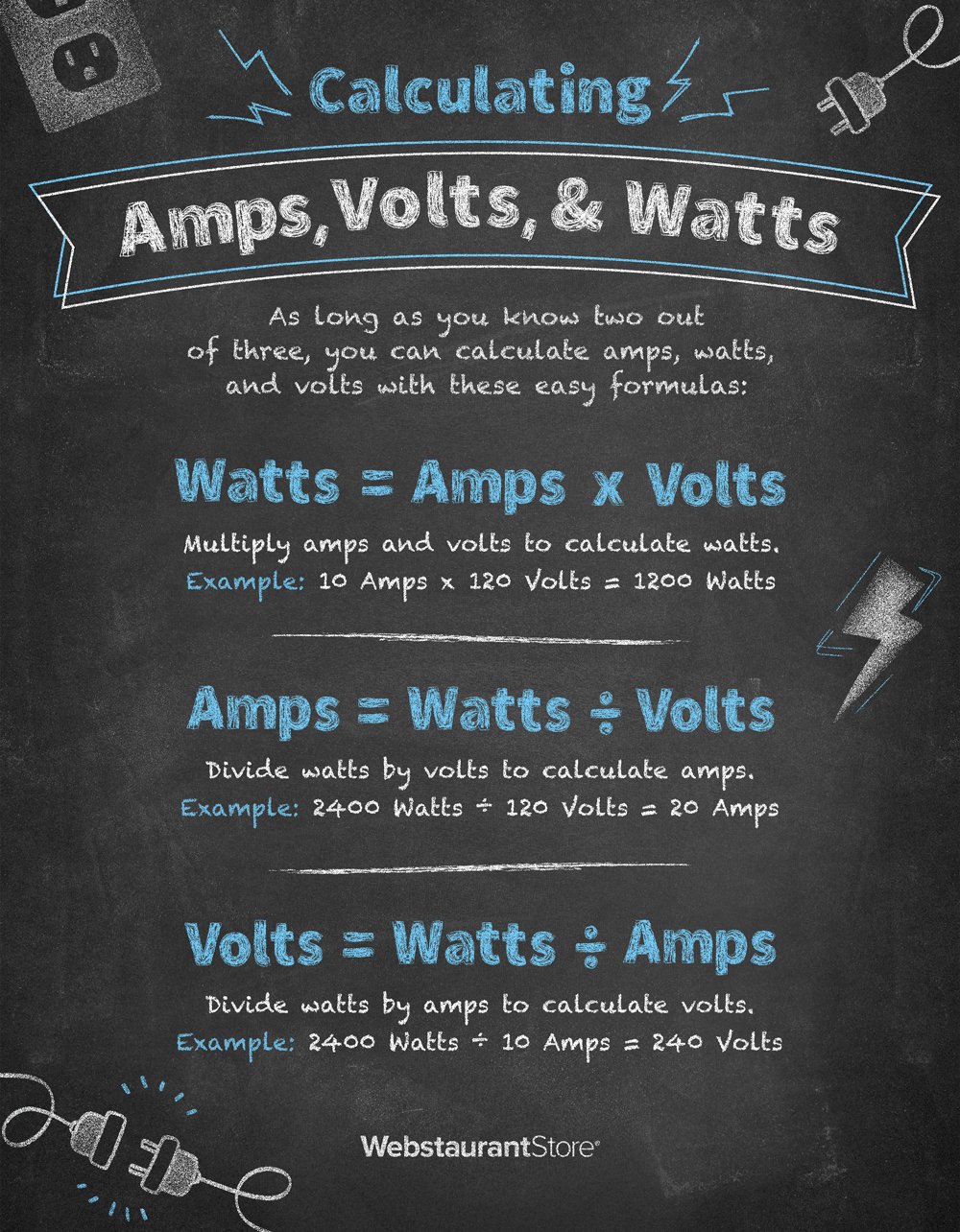
The formula that connects them is simple: Watts = Amps x Volts. So, if you know the amps and the volts, you can calculate the watts. It's like knowing the number of people and their average height to estimate the total height of the group. See? Math can be fun (sort of)!
Practical Examples (and Maybe a Little Humor)
Let's bring this home with some real-world examples. That little USB phone charger might draw only a few amps at 5 volts, resulting in a low wattage – enough to slowly trickle charge your phone. But your electric oven? That beast pulls a hefty number of amps at 240 volts, resulting in a high wattage – enough to bake a Thanksgiving turkey. Imagine trying to bake that turkey with a phone charger! The outcome might be a very sad, slightly warmed bird.
Or consider this: you're trying to blow-dry your hair, and simultaneously run the microwave. Suddenly, BAM! The circuit breaker trips. What happened? You overloaded the circuit. The combined wattage of the hairdryer and microwave exceeded the circuit's capacity (the number of amps the wiring could safely handle at the voltage available). It's like trying to force too much water through a pipe – eventually, something's going to burst (or in this case, the circuit breaker does its job and saves you from a potential fire).

Why Should You Care?
Okay, so you know the difference now. But why does it matter? Well, understanding watts and amps can help you make informed decisions when buying appliances, avoiding overloading circuits (and potential electrical fires!), and even saving money on your electricity bill. Choosing energy-efficient appliances with lower wattage can significantly reduce your energy consumption over time.
But perhaps the most important reason to understand these terms is safety. Knowing the current draw of your devices and the capacity of your circuits can help you avoid dangerous situations. Treat electricity with respect, and remember that even though it's invisible, it's a powerful force. So, the next time you see a label on an appliance with its wattage and amperage, you'll know exactly what's going on. And maybe, just maybe, you'll feel a little bit like James Watt himself – a master of the electrical universe (or at least, your kitchen).