
What Is The Difference Between A Canoe And A Kayak

Okay, let's settle this once and for all, like a squabble between a beaver and an otter arguing over the best dam-building materials. What’s the real difference between a canoe and a kayak? You've probably seen them gliding across lakes, rivers, and even the occasional brave soul battling the ocean waves. But can you confidently point and say, “Aha! That's a canoe, and that's definitely a kayak!"? Don't worry, you're not alone. For many, they're just "those pointy boat things."
The easiest way to tell the difference comes down to a few key things: how you sit, what you paddle with, and generally, the overall shape. Think of it like comparing a comfy armchair to a sporty racing seat – both are for sitting, but the experience is wildly different.
Sitting Pretty (or Not So Pretty, Depending on Your Flexibility)
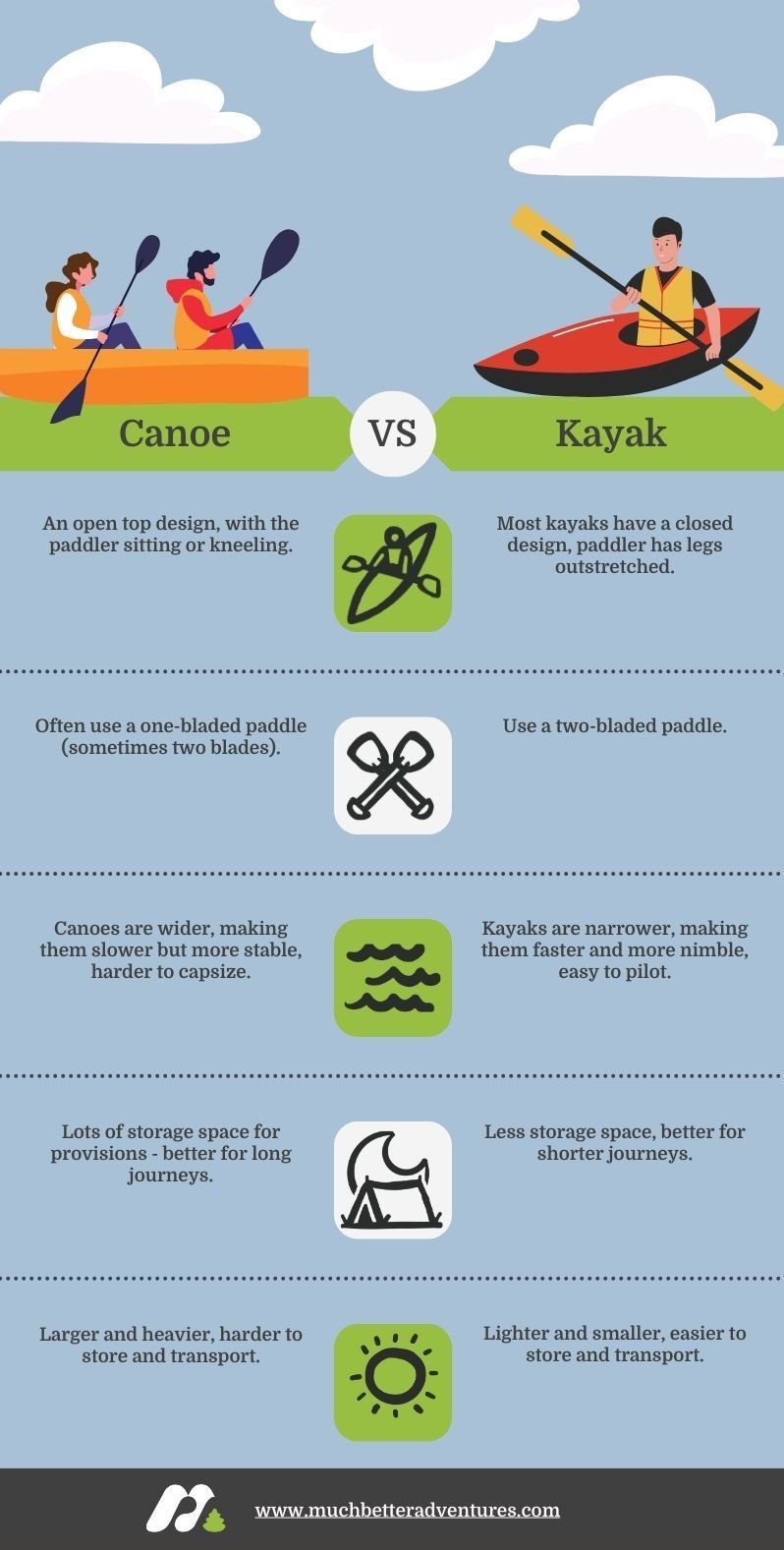
In a canoe, you typically sit up higher, often kneeling or sitting on a bench seat. Imagine yourself as a noble explorer, surveying your domain. This upright position gives you a great vantage point, perfect for spotting wildlife or keeping an eye on the kids splashing nearby. It also makes it easier to carry lots of gear, like that giant cooler full of snacks (essential for any successful expedition, right?). You're basically the king or queen of your waterborne castle!
Must Read
Now, in a kayak, you're usually sitting much lower, with your legs stretched out in front of you. Think of it as a watery sports car. You're often enclosed, feeling more connected to the water. This lower center of gravity gives you more stability and control, especially in rougher waters. Some kayaks even have foot pedals to help steer, making you feel like a super-efficient water navigator.
Paddle Power!
The paddle is where the real fun begins. Canoes use a single-bladed paddle. This means you're constantly switching sides, which, let's be honest, can feel a little like patting your head and rubbing your tummy at the same time when you first start. You dip, stroke, switch, dip, stroke, switch. It's a great workout for your core, though! And it also means that your canoe skills will be far better than those of kayak paddlers. In some ways, this skill can be a metaphor for your life and how you handle its challenges.

Kayaks, on the other hand, use a double-bladed paddle. This is much more efficient for speed and distance. You're constantly paddling on both sides, creating a smooth, rhythmic motion. It's like the difference between rowing a boat and swimming – one requires more coordination, the other is pure propulsion. You end up gliding along with a steady beat, almost meditative. This is where the true serenity is.
Shape Shifting
Visually, canoes tend to be wider and more open than kayaks. Think of them as the SUVs of the water – spacious, sturdy, and capable of carrying a lot. Kayaks, with their sleeker designs, are more like sports cars – agile, fast, and designed for performance. The shape of a kayak helps it cut through the water more efficiently.
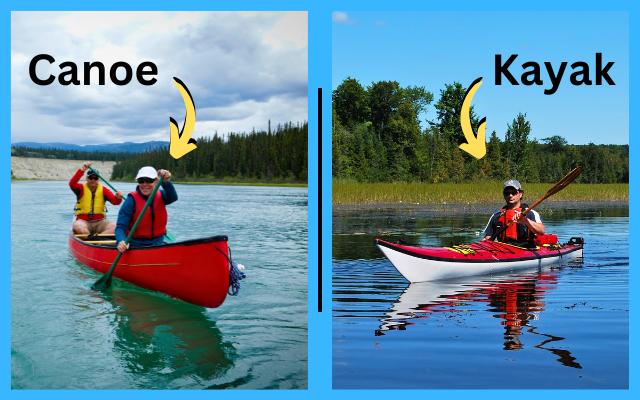
Of course, there are always exceptions to the rule. Some kayaks are wide and stable, perfect for beginners. Some canoes are narrow and fast, designed for racing. But generally speaking, the differences in shape reflect their intended purpose.
So, next time you see someone out on the water, take a closer look. Are they sitting upright, paddling with a single blade? Chances are, they're in a canoe, probably on their way to a picnic spot with a cooler full of goodies. Are they sitting low, paddling with a double blade? Then they're likely in a kayak, exploring hidden coves or tackling some serious waves.
Ultimately, the best way to understand the difference is to try them both! Rent a canoe and a kayak, grab a friend, and head out to your nearest lake or river. You might discover a hidden talent for paddling, a newfound appreciation for nature, or at least a good story to tell at your next barbecue. Who knows, you might even spark your own canoe versus kayak debate!
Just remember, whether you choose the spacious comfort of a canoe or the sleek agility of a kayak, the most important thing is to get out there and enjoy the water!
