What Is The Density Of Tungsten
Ever picked something up and thought, "Wow, this is heavier than it looks!"? Or perhaps marvelled at how a tiny object can feel so incredibly substantial? Well, that fascinating sensation often comes down to a property called density, and few materials demonstrate it quite as dramatically as tungsten. Learning about tungsten's density isn't just for science buffs; it's a wonderfully tangible way to understand the hidden properties that make our world work, from the golf clubs we swing to the intricate machines around us. It's like peeking behind the curtain to see what makes certain things feel so uniquely weighty.
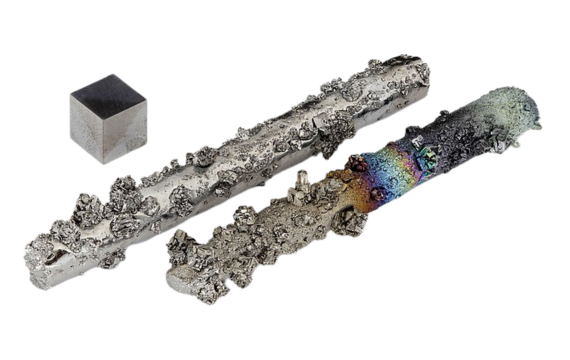
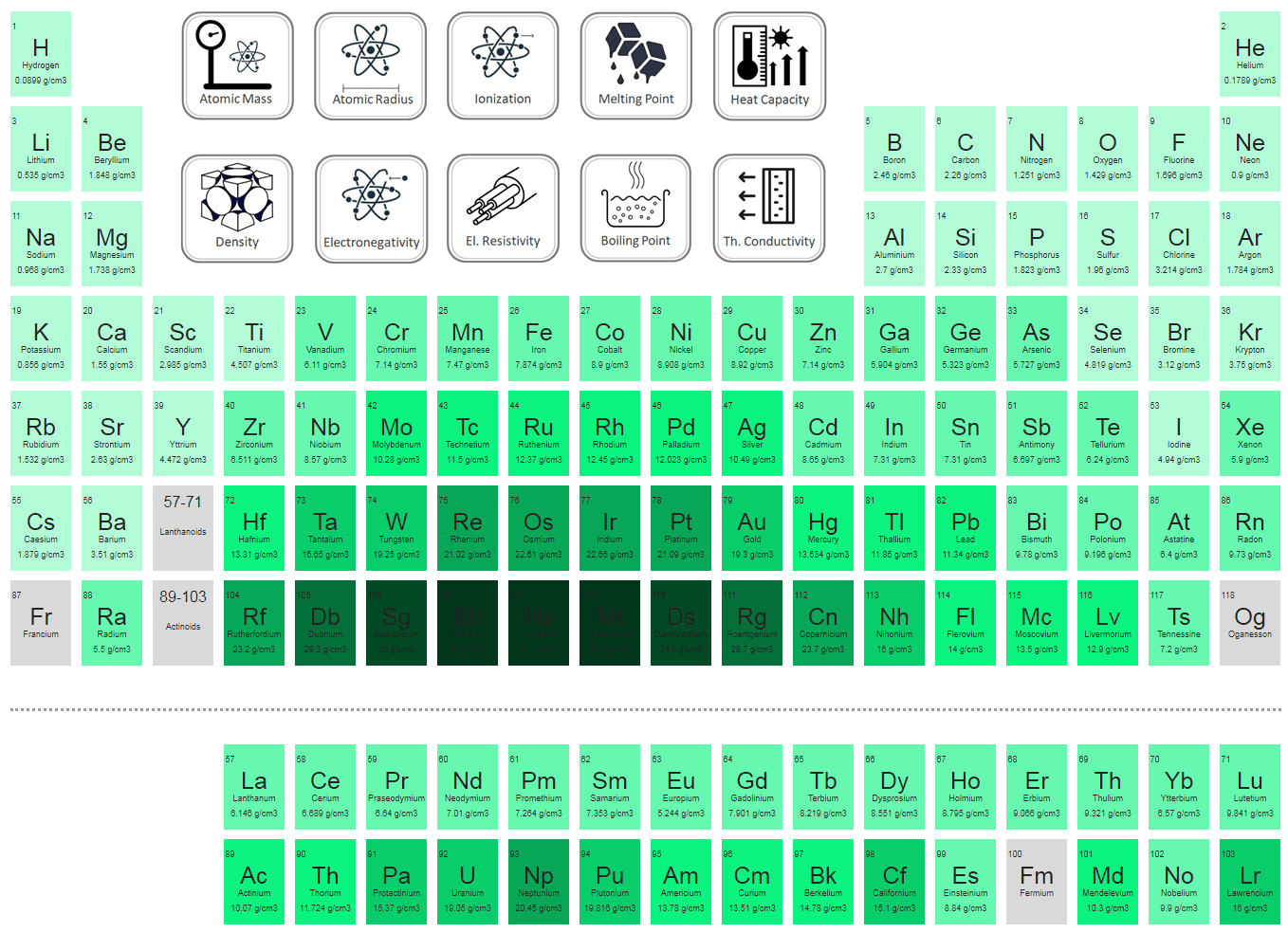
So, what exactly is the density of tungsten, and why should we care? In simple terms, density measures how much "stuff" (mass) is packed into a given amount of space (volume). Imagine a sugar cube – if it were made of styrofoam, it would be incredibly light. But if that exact same size sugar cube were made of tungsten, you'd be astonished by its heft! Tungsten boasts an impressive density of about 19.3 grams per cubic centimeter. To put that into perspective, it's nearly twice as dense as lead, and even denser than gold! This extreme compactness isn't just a fun fact; it's a fundamental property that dictates how tungsten behaves and what it’s good for. Understanding this helps engineers choose the right materials, and for us, it helps us appreciate the clever design behind everyday objects.
The practical applications of tungsten's impressive density are incredibly diverse. In education, comparing a small tungsten cube to a similar-sized aluminum one is a powerful, hands-on lesson in material science, demonstrating how elements have unique atomic structures that affect their bulk properties. In daily life and industry, this super-heavy metal really shines. Its heft makes it ideal for counterweights in everything from crankshafts in engines (to reduce vibration) to high-performance golf clubs, giving them that satisfying "thwack." Because it's so good at packing a lot of mass into a small space, tungsten is also used in things like fishing weights, high-end darts, and even radiation shielding where space is at a premium. Each time you encounter something surprisingly heavy for its size, there's a good chance density, perhaps even tungsten, is playing a starring role.
Must Read
Want to explore density in a simple, hands-on way? You don't need a lab! The easiest tip is to become more aware of how things feel. Pick up a golf ball and then a lead fishing weight of similar size; you'll immediately notice the difference in density. If you're feeling adventurous, you can even buy small, polished tungsten cubes online (they're popular novelty items) and compare them to a same-sized steel or aluminum cube. You'll be absolutely amazed by the difference in weight. Another fun experiment involves gathering various small objects – a pebble, a piece of wood, a metal washer – and seeing which ones sink and which ones float in water. While water density is key here, it's a great initial step to thinking about how much "stuff" is in an object compared to its size. It’s a simple way to appreciate the incredible, unseen physics behind the ordinary!