What Is The Density Of Nylon
Ever found yourself pondering the mysteries of the universe while waiting for your coffee to brew? Probably not about nylon, right? But stick with me, because this everyday wonder material has some pretty cool secrets, especially when it comes to how much stuff is packed into it. We're talking about the fabulous concept of density, and what it means for our pal, nylon.
What Even Is Density, Anyway?
Okay, so before we dive headfirst into the world of nylon, let's get cozy with density. Think of it like this: how much "oomph" is crammed into a certain amount of space. Imagine two identical boxes. One is full of feathers, the other is full of bricks. Both boxes take up the same amount of space, but the brick box is going to make you grunt and maybe pull a muscle. That brick box? High density. The feather box? Low density. It’s all about how tightly packed the molecules are, like sardines in a tin versus a lonely goldfish in a giant tank.
We encounter density all the time without even realizing it. Why does a cruise ship float while a tiny pebble sinks? Density! Why does that gorgeous, artisanal loaf of bread feel surprisingly light, while a humble can of soup feels like a mini dumbbell? You guessed it – density! It’s the universe’s way of playing hide-and-seek with weight and volume.
Must Read
Nylon: The Unsung Hero of... Everything
Now, let's talk nylon. This stuff is everywhere, isn't it? From your sturdy backpack that’s seen better days, to your sleek windbreaker that laughs in the face of a sudden downpour, to those incredibly tough fishing lines. It's the material that says, "Yeah, I can handle it," without being overly dramatic. It's strong, it's often a bit stretchy, and it's generally pretty forgiving. But what about its density? Is it a feather-light floater or a brick-like sinker?
The Nitty-Gritty: Nylon's Density Demystified
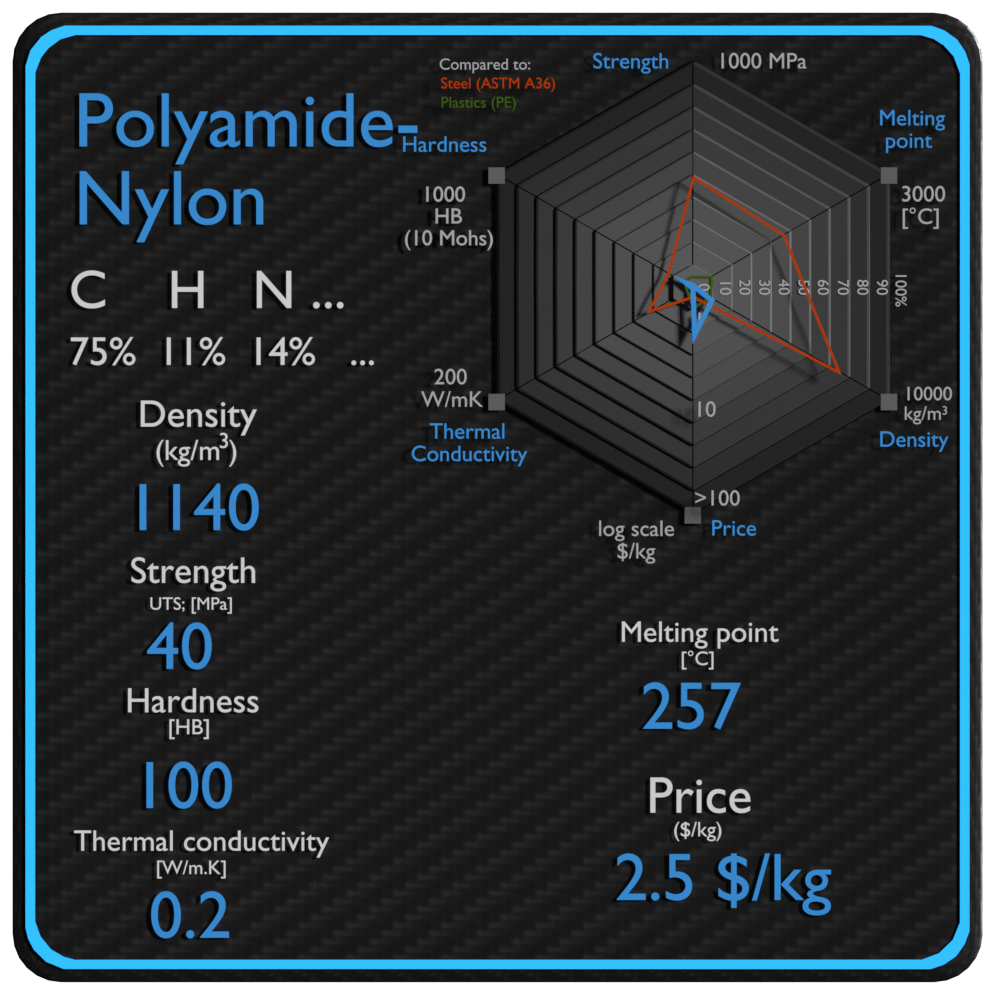
Alright, drumroll please! The density of nylon usually hovers around 1.15 grams per cubic centimeter (g/cm³). Sounds fancy, right? Let's translate that into something a bit more relatable.

To give you some perspective, water has a density of about 1 g/cm³. Think about that for a second. If something is less dense than water, it floats. If it's more dense, it sinks.
So, what does 1.15 g/cm³ tell us about nylon? It tells us that nylon is just a little bit denser than water. Not massively so, but enough to make a difference.
The "So What?" Factor: Everyday Implications
This slightly-denser-than-water fact has some fun implications in your daily life.

You know that feeling when you accidentally drop something plastic into the sink, and it just bobs there, smugly refusing to go down the drain? That's probably a plastic that's less dense than water. But if you were to drop a solid chunk of nylon into a bucket of water (maybe not your best party trick), it wouldn't be doing any happy floating. It would, rather politely, make its way to the bottom. Not like a stone, which plunges with the enthusiasm of a kid cannonballing into a pool, but more like a graceful, slow descent.
This slight "heaviness" is actually part of nylon's superpower. It means that when you’re lugging around that hiking backpack, the material itself isn’t adding a ton of unnecessary bulk, but it’s still substantial enough to be incredibly durable. Imagine if nylon was super light, like expanded foam – it wouldn't be nearly as strong for those heavy-duty applications.

Think about nylon fishing line. It's thin, incredibly strong, and while it does sink, it does so slowly enough that it’s manageable for anglers. If it were significantly denser, it would plummet, making fishing a whole different (and probably more frustrating) sport. If it were significantly lighter than water, you'd have your line floating on the surface like a lazy snake, not ideal for catching those sneaky underwater critters.
It's all about that perfect balance. Nylon hits that sweet spot where it's tough and robust without feeling like you're carrying around a lead blanket. It gives you strength without being a dead weight. That lightweight camping gear that packs a punch? Probably nylon. That rugged outdoor clothing that can take a beating? Yep, nylon is often a key player.
The Nod and a Smile Moment
So, the next time you marvel at the strength of a nylon rope, the sleekness of a nylon jacket, or the sheer utility of a nylon gear bag, give a little nod to its density. It's not the densest material out there, nor the lightest. It’s just right. It's that Goldilocks density that makes nylon the incredibly versatile, resilient, and utterly indispensable material we all know and (sometimes unknowingly) love. It's dense enough to be mighty, but not so dense that it weighs you down. And really, what more could you ask for from a material that’s helping you navigate everything from a mountain trail to your morning commute?