What Is The Definition Of Carbon

Alright, grab another coffee, because we're about to tackle a question that sounds utterly mundane but is actually mind-blowingly cool: What is carbon? You probably hear it everywhere – carbon footprints, carbon dating, 'I need more carbon fiber in my life,' whatever that means. But have you ever stopped to think, 'What is this mysterious element that seems to be everywhere and do everything?' Well, buckle up, buttercup, because carbon is basically the Beyoncé of the periodic table: it's flawless, it's versatile, and it's absolutely everywhere.
What Even Is Carbon, Anyway?
At its core, carbon is just an element. It sits proudly at number 6 on the periodic table, right there after Boron and before Nitrogen. Its symbol? A delightfully simple C. No fancy squiggles or obscure Latin here, just a humble 'C' for 'Can't live without me' (probably). What makes an element an element, you ask? It's all about the protons in its nucleus. Carbon has six protons. That's it. Simple, right? Until you realize what those six protons enable it to do.
The Social Butterfly of the Periodic Table
But here's where carbon really earns its superstar status. Imagine the periodic table as a giant high school dance. Most elements are kind of awkward, maybe dance with one or two partners, then sit in the corner. Not carbon. Carbon is the ultimate social butterfly. It has four valence electrons – basically, four open spots on its outer shell just begging to make new friends. This means carbon can form four strong chemical bonds with other atoms, including, crucially, itself! It’s like the ultimate Lego block, ready to click into place with pretty much anything and everything, forming chains, rings, spheres, you name it. This incredible ability to bond in so many ways is why carbon is found in literally millions of different compounds. It's not just an element; it's a master builder.
Must Read
Carbon's Wild Wardrobe: From Bling to Black Mess
And talk about a wardrobe! Carbon doesn't just stick to one look; it's got several fabulous outfits, known as allotropes.
First, there's diamond. You know, the sparkly stuff that costs an arm and a leg? Believe it or not, a diamond is pure carbon. Every single atom is carbon, bonded together in an incredibly strong, rigid 3D lattice. It's the hardest known natural material, literally formed under immense pressure deep within the Earth. So next time you see some bling, just remember you're looking at really, really fancy burnt toast.
Then there's its humble cousin, graphite. Also pure carbon! But instead of a rigid 3D structure, graphite atoms are arranged in flat, slippery layers. This is what's inside your pencil, making it soft enough to write with. You're literally rubbing off layers of carbon when you doodle. From bling to pencil lead – talk about a career change!
And let's not forget the darker side: soot, or charcoal. Mostly just messy, amorphous carbon atoms chilling out, not really bothering to form a fancy structure. Useful for grilling, maybe, but not exactly inspiring sonnets.

But carbon also has its futuristic fashion sense: graphene and carbon nanotubes. Imagine a single, atom-thick layer of graphite – that's graphene. It's 200 times stronger than steel, incredibly lightweight, and a fantastic conductor. Scientists are still figuring out all the amazing things we can do with it. It’s like carbon decided to upgrade from a humble pencil to a superhero cape.
The Carbon-Based Lifeform Club
Now, here’s the kicker: carbon is not just versatile; it’s the backbone of all life on Earth. Every single living thing, from the smallest bacterium to the tallest redwood, to you and me, is a carbon-based lifeform. Our DNA, proteins, fats, carbohydrates – they're all complex carbon compounds. Without carbon's amazing ability to form long, stable chains and rings, life as we know it simply wouldn't exist. So, in a way, we're all just incredibly elaborate carbon sculptures, walking around, having thoughts, and debating the definition of carbon. Pretty meta, right?

So, What's the Definition? (The Punchline)
So, after this whirlwind tour of carbon's multifaceted life, what's the official definition? Carbon is an element (atomic number 6, symbol C) that possesses an extraordinary ability to form four stable chemical bonds. This unparalleled versatility allows it to create an astonishing array of compounds, from the simplest gases to the complex molecules that form all known life, and to exist in diverse forms like diamond, graphite, and graphene.
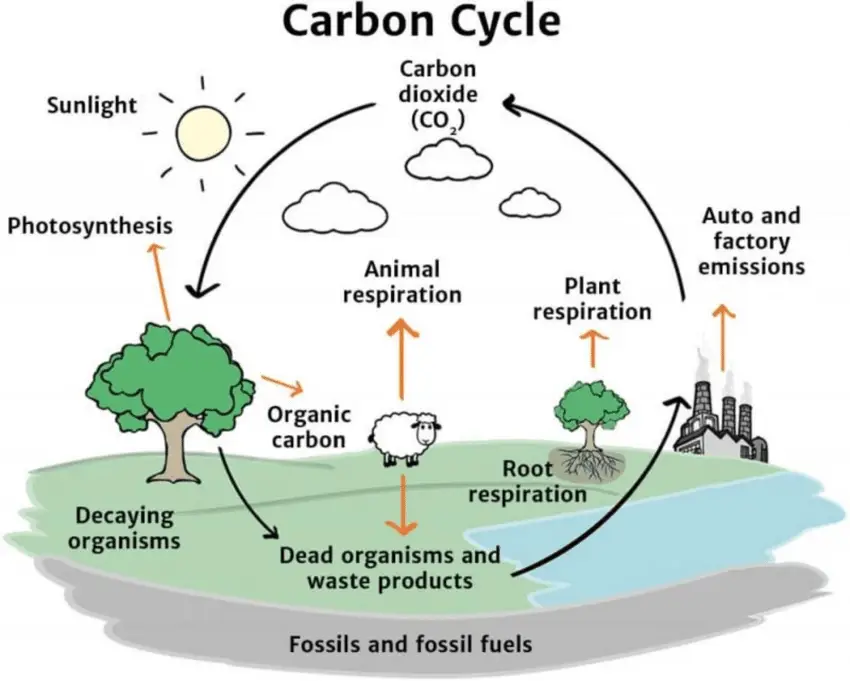
Basically, carbon is the ultimate foundational element. It's the silent hero, the unsung architect, the glue that holds everything together – whether it's the sparkle in your ring, the lead in your pencil, the air you breathe (in CO2), or the very cells that make you you. So next time you hear 'carbon,' give a little nod of respect. That little 'C' is doing a lot of heavy lifting.