
What Is The Color Of Copper

Alright, settle in, grab your imaginary latte, because we're about to dive into a question that seems simple but is actually a delightful little rabbit hole of metallic mystery: What color is copper?
You're probably thinking, "Easy peasy! It's… well, it's copper-colored, isn't it? Like a penny!" And you wouldn't be wrong, bless your straightforward heart. But hold onto your metaphorical hats, because just like that friend who claims they only have one personality trait (being "really into true crime podcasts"), copper has a whole spectrum of moods.
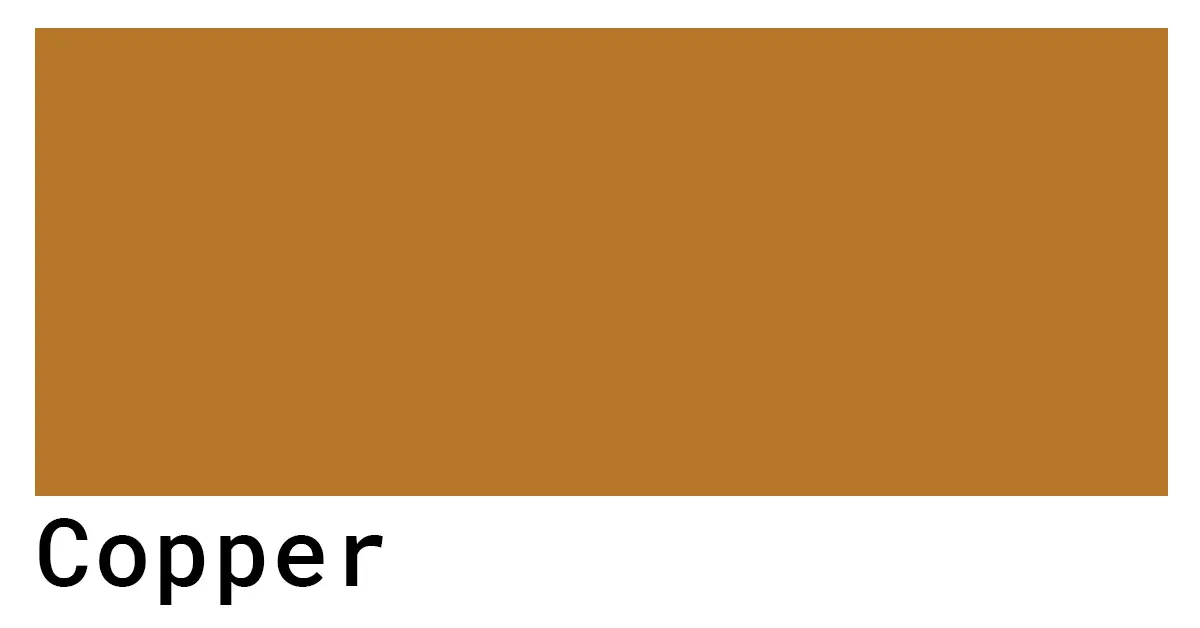
Let's start with the obvious. When you picture copper, you probably envision that warm, reddish-brown hue. That familiar, cozy glow that makes you want to curl up with a hot drink and maybe listen to some vintage jazz. This is the color of most everyday copper items you encounter – old pipes, decorative pots, and, yes, those humble pennies jangling in your pocket (if you still use cash, you retro legend).
Must Read
But here's where it gets interesting, like finding out your quiet librarian friend secretly competes in underground wrestling. If you were to take a piece of brand-spanking-new, freshly cut copper – like, straight from the mine, untouched by the harsh realities of our oxygen-rich world – it’s not reddish-brown at all. Nope! It’s a gorgeous, almost blushing salmon pink with an orange tint. Think less "old penny" and more "fancy gourmet salmon fillet, but metallic and much less likely to go bad in your fridge." It’s bright, it’s shiny, it’s got that "just rolled out of bed looking fabulous" vibe.
Copper's Great Big Wardrobe Change
So, what happens? How does our shy, pink metal turn into the familiar reddish-brown? The answer, my friends, is air. And water. And basically, anything that isn't a vacuum.

Copper, bless its reactive little heart, loves to interact with its environment. When it's exposed to oxygen in the air, a chemical reaction called oxidation occurs. This creates a thin layer of copper oxide on the surface. And voilà! Our pink friend starts to darken, gradually transforming into that warm, reddish-brown we all know and love. It’s like copper's natural tanning process, only instead of getting a glow, it gets a deeper, richer hue.
But wait, there's more! Because copper isn't just a two-trick pony. Oh no, it's a whole circus of color!
When Copper Goes Green (and Blue!)
You've seen it. You've definitely seen it. Picture the Statue of Liberty. Is she reddish-brown? Nope! She's a magnificent, stately, very un-salmon-pink shade of… green! And not just any green, a very specific, beautiful, seafoam-ish green. This magical transformation is called patina.
Patina isn't just rust; it's a complex layer of copper carbonate (and sometimes other compounds like sulfates or chlorides) that forms over decades or even centuries when copper is exposed to the elements – rain, pollution, salty air. It’s copper's ultimate grand finale of oxidation. It’s like the metal decided to go through a dramatic fashion phase and emerged looking like a sophisticated mermaid. And honestly, it pulls it off spectacularly.
This isn't just for monumental statues either. Think about old copper roofs on historical buildings, or ancient copper artifacts. They often sport that distinctive green patina, a testament to their long and storied lives. It's not a sign of decay; it's a protective layer, actually! So, copper basically gets a stylish, protective suit as it ages. Smart metal.

Sometimes, though less commonly in everyday items, copper can even take on a bluish tint, especially when combined with other elements or forming specific mineral compounds like azurite (a stunning deep blue) or chrysocolla (often blue-green). So, our copper friend can really show off its artistic side, dabbling in the entire cool-color spectrum.
The Factors That Paint Copper's Picture
So, to recap, copper's color isn't a fixed thing. It's a dynamic, ever-changing masterpiece influenced by:
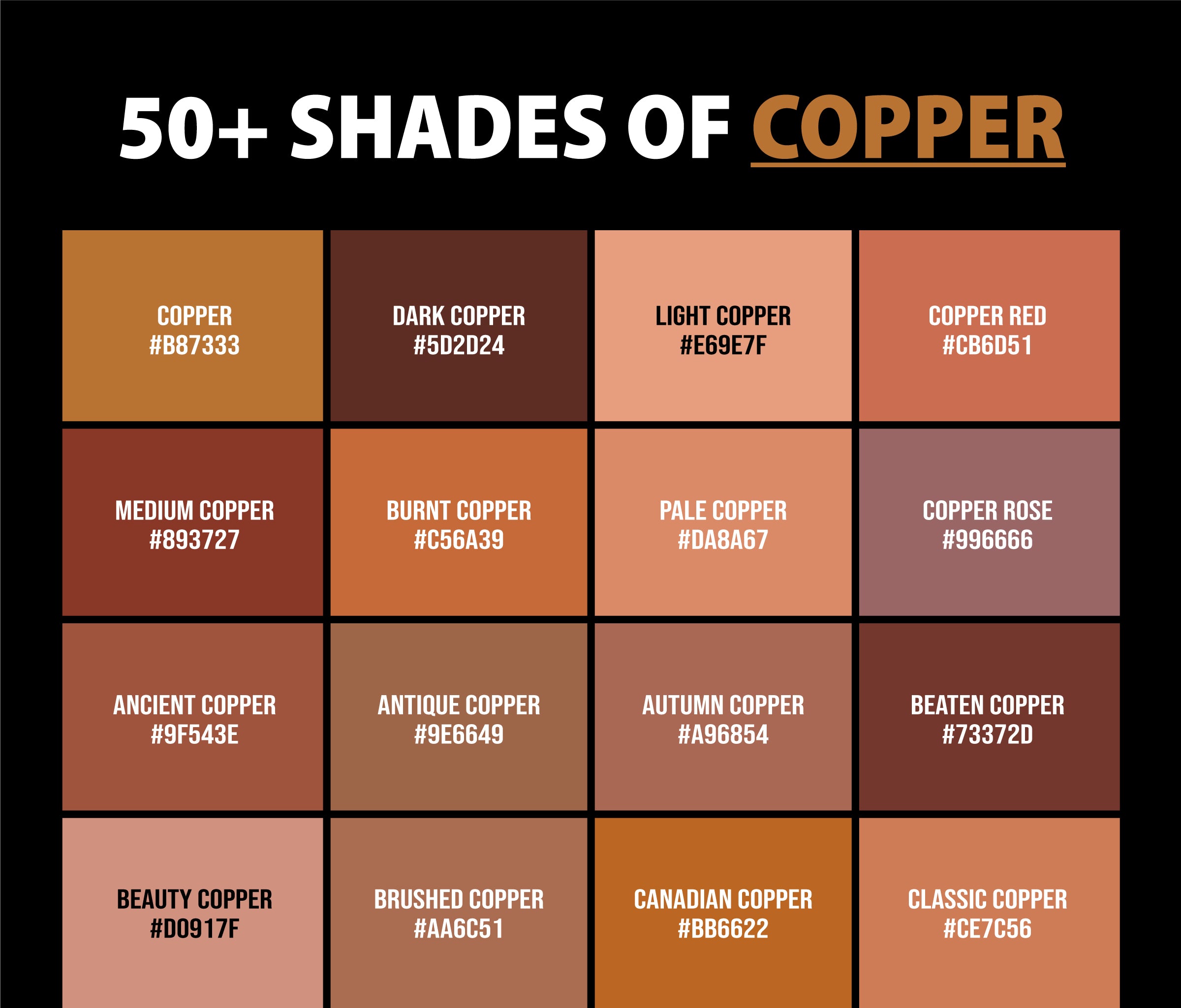
- Its age: Freshly cut vs. a hundred years old.
- Its environment: Indoors vs. outdoors, humid vs. dry, salty air vs. clean air.
- What it's exposed to: Oxygen, water, various chemicals (even acid rain plays a role!).
- Its temperature: Heat can also cause interesting surface color changes, like the iridescent blues and purples seen when copper is tempered.
It's like copper has a mood ring, but instead of telling you if it's happy or stressed, it tells you its life story. Each shade tells a tale of its journey, from the pristine moment it left the earth to its long dance with the elements.
The Ever-Shifting Beauty
So, the next time someone asks you, "What color is copper?" you can confidently smirk, take a dramatic sip of your actual or imaginary beverage, and say, "Ah, my friend, that depends on its mood, its age, and where it's been in the world!"
From its humble, blushing pink birth to its regal green old age, copper is a testament to the fascinating transformations that metals undergo. It’s not just one color; it’s a whole spectrum of beautiful, surprising hues. And that, my friends, is why copper is so much more interesting than just a penny. It's a chameleon, a storyteller, and frankly, a bit of a show-off.