
What Is The Average Apartment Electric Bill

Ever wonder where all your money disappears to each month? For many apartment dwellers, a sneaky culprit is lurking behind the light switch: the electric bill. It's a universal mystery, wrapped in jargon, and delivered with the regularity of sunrise.
So, what's the average electric bill for an apartment? The answer, like a decent parking spot downtown, is frustratingly elusive. It depends!
The Great Electric Bill Mystery: De-Coded!
First, forget about national averages for a moment. They're about as useful as a snow shovel in July. Your neighbor's bills tell a better story.
Must Read
Why? Because location, location, location! Electricity prices vary wildly from state to state. Californians might weep openly at a Texan's bill, while someone in Washington might shrug and say, "Is that all?"
Size Matters (Apartment Size, That Is)
Think of your apartment as a thirsty sponge. The bigger it is, the more electricity it slurps up. A cozy studio will naturally use less juice than a sprawling two-bedroom.
More rooms mean more lights, potentially more appliances, and a greater area to heat or cool. Simple math, right?
Appliance Armageddon: The Electricity Eaters
Let's talk about the usual suspects: the refrigerator, the air conditioner (or heater), and that ancient TV you refuse to part with. These energy vampires are constantly feeding on your kilowatt-hours.
Your fridge, perpetually humming, is usually the biggest offender. That old A/C unit might as well be powered by a small nuclear reactor. And that TV? Well, it's probably costing you more than it's worth.

Consider the vintage appliances. They looks stylish, but probably use so much electricity that they should be consider a museum piece.
Lifestyle Choices: Are You a Day Owl or a Night Owl?
Are you a homebody who binge-watches Netflix all day? Or are you a social butterfly who only uses their apartment for sleeping? Your lifestyle drastically impacts your electricity consumption.
If you're constantly using electronics, cooking elaborate meals, and running the washing machine, expect a higher bill. If you're rarely home, your bill should be significantly lower.
The Temperature Tango: Heating and Cooling Costs
Heating and cooling are the biggest electric bill swing factors. During the summer, the AC screams to life, battling the oppressive heat. In the winter, the heater shivers and struggles to keep you warm.
These systems are power hogs of epic proportions. Using them efficiently is key to keeping your bill manageable.
The Phantom Load: Electricity's Silent Thief
Even when turned off, some devices continue to draw power. This is called phantom load, and it can account for a surprisingly large portion of your bill. Think of it as electricity's silent thief, siphoning energy while you're not looking.
Unplug chargers, turn off power strips, and be mindful of devices in standby mode. Every little bit helps!
So, What's the Actual Number? (Finally!)
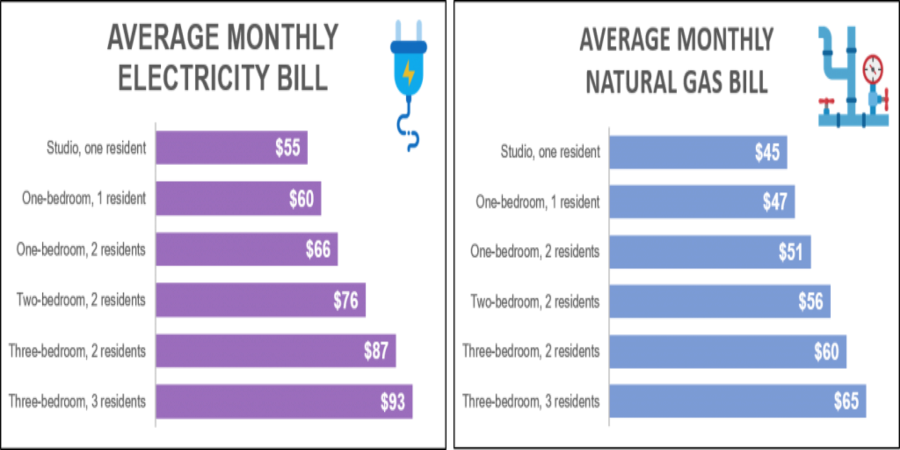
Okay, okay, enough suspense. Let's try to nail down a range. Averages are tough, but generally:
- Studio Apartment: $50 - $100 per month
- One-Bedroom Apartment: $75 - $150 per month
- Two-Bedroom Apartment: $100 - $200+ per month
Remember, these are just estimates. Your actual bill could be higher or lower depending on the factors we've discussed. These figures are the starting point for the bill, they can increase dramatically.
Becoming an Electricity Ninja: Tips and Tricks
Want to wrestle your electric bill into submission? Here are a few ninja-level tactics:
- Embrace Energy-Efficient Light Bulbs: Switch to LEDs. They use a fraction of the energy of traditional bulbs and last much longer. It's an investment that pays off.
- Seal the Cracks: Drafts are your enemy. Seal windows and doors to prevent heat loss in the winter and cool air loss in the summer.
- Smart Thermostats: Program your thermostat to adjust automatically when you're away or asleep. A smart thermostat can learn your habits and optimize energy usage.
- Unplug Unused Electronics: Remember the phantom load? Unplug devices when you're not using them.
- Wash Clothes in Cold Water: Hot water heating is a major energy drain. Cold water works just as well for most loads.
- Air Dry Your Clothes: Skip the dryer and hang your clothes to dry. It's better for your clothes and your wallet.
- Be Mindful of Peak Hours: Some utility companies charge higher rates during peak hours. Try to avoid using major appliances during these times. Check your utility company's website for details.
Consider purchasing energy-efficient appliances if you are in the market. Look for the Energy Star label.

The Community Factor: Talk to Your Neighbors
Don't be afraid to ask your neighbors about their electric bills. Sharing information can provide valuable insights and help you identify potential energy-saving opportunities. Misery loves company, but so does energy efficiency!
Just don't compare yourself too harshly to the person who keeps their apartment at a constant 65 degrees year-round. They might be saving money, but they're also probably wearing a parka indoors.
The Landlord's Role: Is Your Apartment Energy-Efficient?
Your landlord has a responsibility to provide a reasonably energy-efficient apartment. Ask about insulation, window quality, and the age of the appliances.
If your apartment is drafty, poorly insulated, or equipped with ancient appliances, your landlord might be willing to make upgrades. It never hurts to ask!
Perhaps, your landlord is willing to add solar panels to the building, if you can convince the others, then your apartment will be energy-efficient.
Embrace the Challenge: Turn Electric Bill Management into a Game
Instead of dreading your electric bill each month, turn it into a game. Set a goal to reduce your consumption and track your progress. Reward yourself when you succeed!

Maybe you can treat yourself with that nice cup of coffee. Or a new video game. All because you manage to lower that bill.
Think of it as a personal quest to become an electricity-saving superhero! Who knows, you might even inspire your neighbors to join in the fun.
The Big Picture: Saving Energy for a Better World
Reducing your electricity consumption isn't just about saving money. It's also about protecting the environment. Every kilowatt-hour you save reduces your carbon footprint and helps create a more sustainable future.
By making small changes in your daily habits, you can make a big difference. So go forth and conquer your electric bill, knowing that you're doing your part for the planet. Reduce, reuse, and recycle. Now, reduce the electricity usage.
It's time to take charge of your energy usage and reclaim your financial freedom! You can become the apartment's electricity guru!
Remember knowledge is power. Use these tools and you can control that pesky electric bill.