What Is Poly Fabric Made Of
Okay, confession time. I have this ridiculously bright yellow rain jacket. Bought it on a whim for a festival years ago, fully expecting it to last maybe that one muddy weekend. Fast forward to now, and that jacket has been through actual downpours, a few accidental tumbles, countless washes, and it still repels water like it’s personally offended by moisture. It’s practically indestructible. And every time I shrug it on, I find myself thinking, “What is this thing made of? Why won’t it die?”
Sound familiar? You’ve probably got something similar in your closet – that activewear top that wicks sweat like a pro, the sofa throw that never seems to stain, or those curtains that just refuse to fade. Chances are, the answer to their superpower lies in one word: poly. Specifically, polyester.
The Great Poly Mystery: Everywhere You Look
Polyester is like the quiet MVP of the fabric world. It’s everywhere. From your super-soft fleece blanket to the lining of your winter coat, from industrial conveyor belts to sails on a boat, and, yes, even that trusty, stubborn rain jacket of mine. You’ve probably worn it today without even thinking about it, haven’t you?
Must Read
But when we say "poly fabric," what are we actually talking about? Is it some ancient secret textile from a forgotten civilization? Or maybe grown in a lab by mad scientists? Well, not quite ancient, and definitely lab-grown, in a way. Let’s unravel this mystery, shall we?
So, What Exactly Is Polyester Made Of?
Here’s the big reveal, folks: polyester is a synthetic polymer. And if that sounds a bit too much like chemistry class, don't worry, I’ll keep it light. Essentially, it’s a type of plastic. Yep, you read that right. Your super-durable jacket or that silky-smooth lining? It started life in a similar vein to your water bottle or even some car parts.
The primary ingredient for most polyester is petroleum – good old crude oil. I know, I know, it’s not exactly a magical forest where fabric trees grow. But stay with me, because the transformation is pretty fascinating.
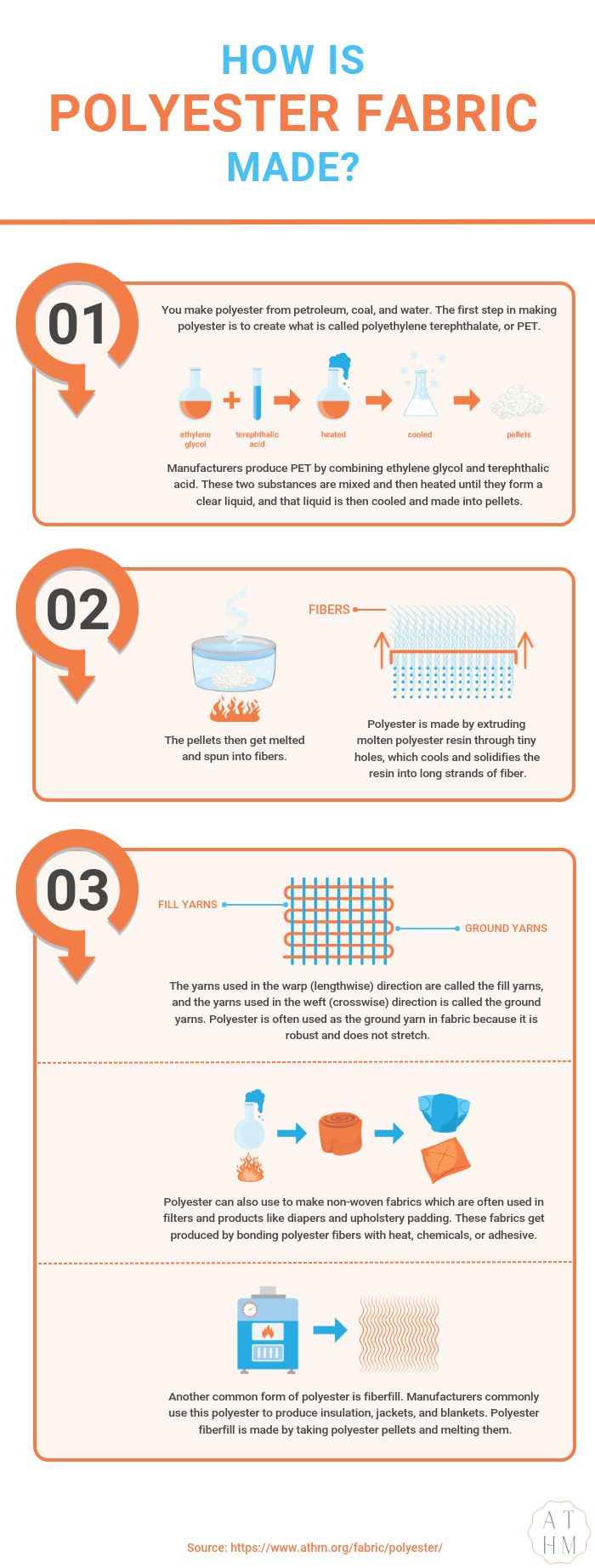
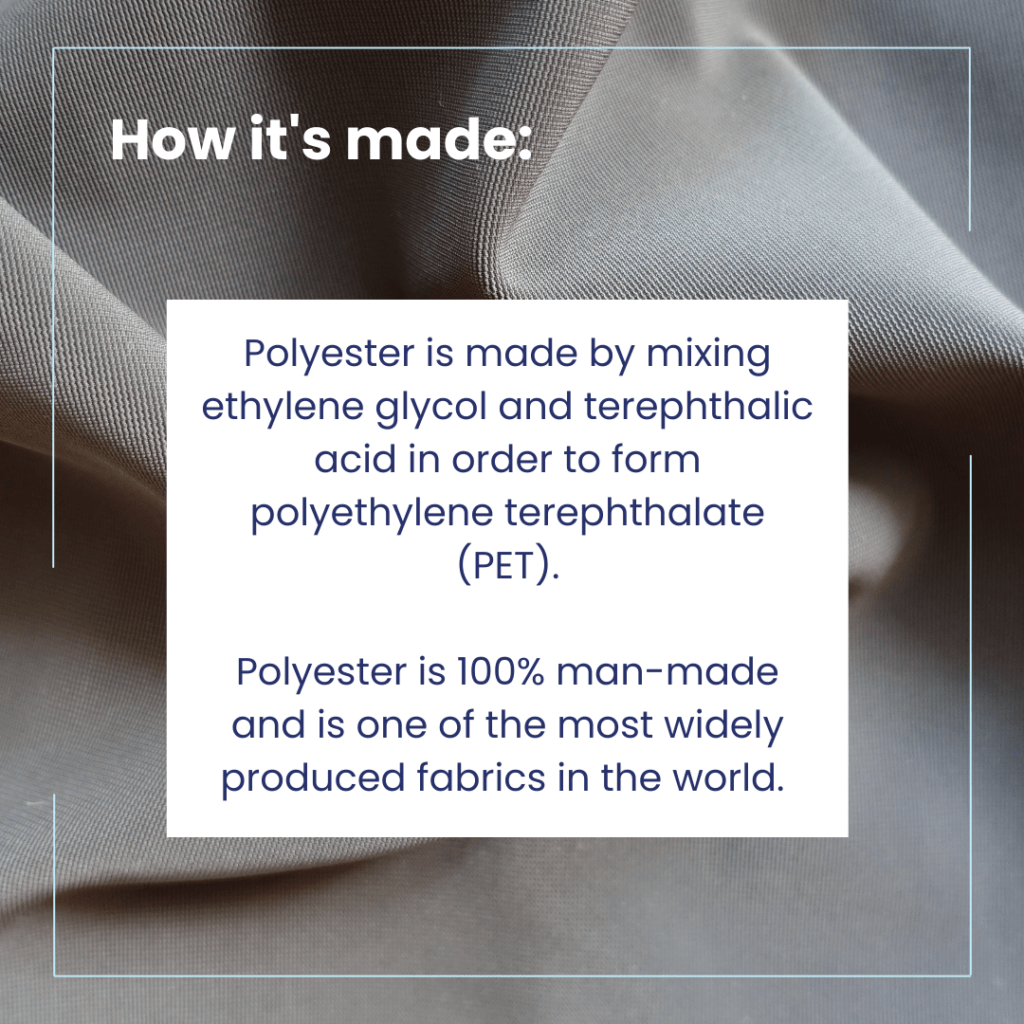
The core building blocks are chemical compounds like terephthalic acid and ethylene glycol. These are derived from petroleum. Think of them as tiny little LEGO bricks.
From Goo to Garment: The Nitty-Gritty Process
This is where the magic (and a lot of science) happens. These chemical building blocks, called monomers, are reacted together under specific conditions (heat, pressure, catalysts) to form long, repeating chains. These long chains are what we call polymers. Picture those LEGO bricks snapping together, end-to-end, forming extremely long strands.

Once you’ve got these long polymer chains, they’re typically melted down into a thick, syrupy liquid. This molten "poly-goo" is then pushed, or extruded, through incredibly tiny holes in something called a spinneret. Imagine a showerhead, but instead of water, it’s pushing out plastic goo, and the holes are microscopically small. What comes out are continuous, fine strands – these are the synthetic fibers.
These freshly-formed fibers are then stretched and cooled. Stretching them makes them even stronger and more uniform. After this, they can be cut into short staple fibers (like cotton or wool) or left as long filaments. These fibers are then spun into yarn, and that yarn is what’s ultimately knitted or woven into the fabric we know and love (or sometimes, love to hate).

Why We Love (and Sometimes Loathe) Poly
So, why go through all that chemical wizardry to make a fabric? Well, because polyester has some truly incredible properties that natural fibers often can’t match:
- Durability: Remember my rain jacket? Poly is tough. It resists stretching, shrinking, and abrasion.
- Wrinkle Resistance: Ironing? What’s ironing? Polyester holds its shape remarkably well.
- Water Resistance/Quick-Drying: Those workout clothes that wick sweat away? That’s poly in action. It doesn’t absorb much moisture, so it dries super fast.
- Stain Resistance: Many stains sit on the surface, making them easier to clean.
- Color Fastness: It holds dye incredibly well, so your colors stay vibrant longer.
But, let’s be real, it’s not all rainbows and wrinkle-free dreams. Being a plastic, polyester isn't biodegradable, which means it hangs around in landfills for hundreds of years. Plus, washing it releases microplastics into our waterways – a big environmental concern. It also doesn't always breathe as well as natural fibers, which is why some people find it less comfortable in hot weather, even with all the wicking technology.
So, the next time you marvel at that surprisingly durable gym shirt or that utterly unyielding backpack, you’ll know the secret. It’s not magic, it’s just incredibly clever chemistry turning basic petroleum into the omnipresent, versatile, and yes, sometimes ironic, fabric we call polyester. And now you know the story from oil rig to outfit!