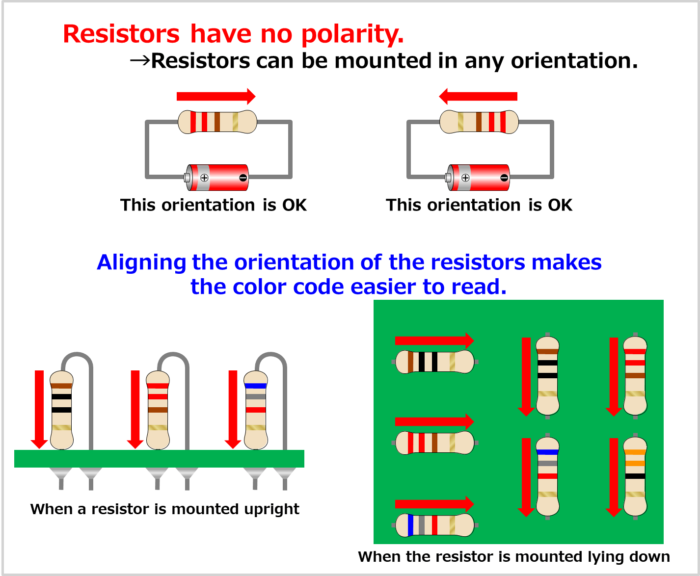
What Is Polarity In Electricity

Ever caught yourself wondering about the little details that make our tech world function? Like, why do some plugs have a distinct "right" way to go in, with those tiny + and - symbols, while others just slide in any which way? Or perhaps you’ve heard an electrician talk about "positive" and "negative" wires and thought, "Is that really a big deal?" Well, my friend, you've just stumbled upon one of electricity's most fundamental, fascinating, and frankly, super cool secrets: polarity. It’s a concept quietly underpinning almost every electronic device you touch.
Imagine the bustling world of electricity as a carefully planned city. Polarity? That's like the designated one-way streets, the clearly marked "entrance" and "exit" doors, ensuring that the tiny, invisible "traffic" of electrons flows smoothly and safely, precisely where it’s supposed to be. It’s all about direction, order, and distinction.
So, What Exactly Is Polarity In Simple Terms?
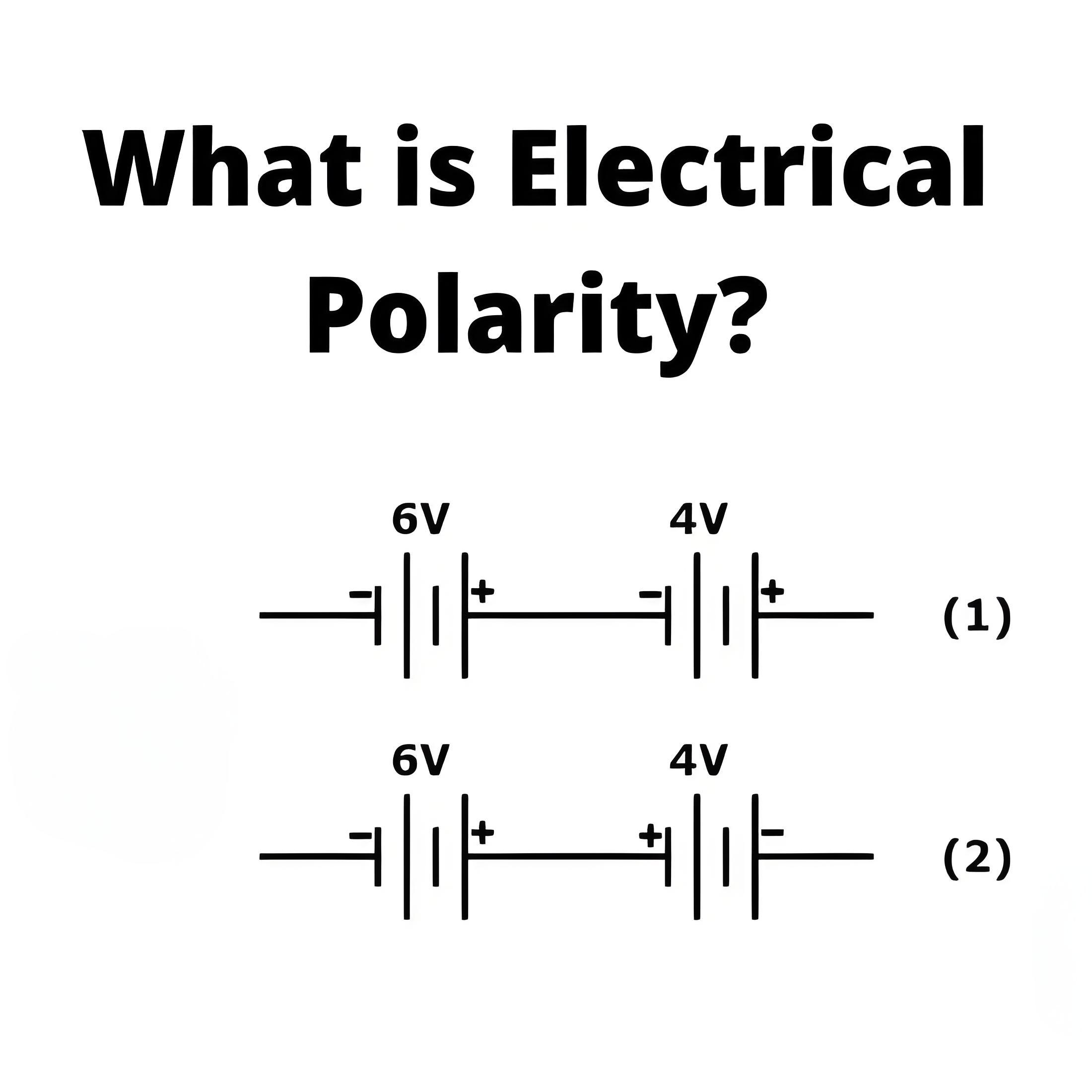
At its very heart, polarity refers to the distinct orientation or designated direction of an electric current. Every power source that gives us a steady flow of electricity – like your trusty AA battery or phone charger – has two clearly defined ends, or terminals. We universally label these as the positive (+) and negative (-) terminals.
Must Read
Picture an invisible, energetic river made up of countless minuscule particles called electrons. These electrons naturally want to move from an area where they are in surplus and feel a distinct "push" (our negative terminal) towards an area where there's a deficit and they feel an eager "pull" (our positive terminal). This natural, directed movement is what creates the steady flow we call electric current.
So, when we talk about polarity, we're really pinpointing which end of the power source is the "pusher" and which end is the "puller" within an electrical circuit. It’s quite similar to how magnets operate, isn't it? A North pole and a South pole – two distinct opposites that are intrinsically linked and create a dynamic, invisible force.

Why Does This "Direction" Of Polarity Matter So Much?
Oh, it matters a tremendous amount! Without the precise guidance provided by polarity, our entire modern electrical world would likely descend into chaos. It's a fundamental principle.
Making Our Favorite Gadgets Hum
The vast majority of electronic devices we use daily, especially those powered by batteries or specific plug-in adapters, are meticulously engineered to operate with current flowing in one very specific direction. Take, for example, a simple LED (Light Emitting Diode). For it to light up, electrons need to enter through one side, traverse its material, and then exit through the other. If you reverse the polarity, the LED simply won't light up. In fact, for many components, an incorrect polarity connection can cause significant damage. Your device is politely, but firmly, insisting, "I need my electrons arriving at this specific entrance and departing from that specific exit, please!"
Protecting Your Precious Tech
Polarity isn't just about making things work; it's also a brilliantly effective, built-in safety mechanism. Many sensitive electronic components, from intricate microchips to those tiny LEDs, are essentially designed as one-way valves for electricity. If current attempts to flow in the reverse direction, these components often simply block the flow, preventing damage. In more extreme cases, incorrect polarity can cause overheating, short-circuits, or even complete failure. So, those little + and - symbols in battery compartments? They’re your device's vital signs for safe connection.
A Quick Detour: The Dance of AC and DC
This is where things can get a little bit tricky, but also incredibly interesting. When we talk about polarity in its most direct and fixed sense – meaning a constant positive and negative terminal – we are primarily discussing Direct Current (DC). Think of your everyday batteries or phone chargers. In DC circuits, the electric current flows steadily and reliably in one single direction. It's like a calm, predictable river always flowing downstream.

But what about the power that comes out of your wall outlets at home? That, my friend, is Alternating Current (AC). And here's the cool twist: AC does not have a fixed positive and negative polarity in the same way DC does. Instead, the direction of the current actually reverses itself – incredibly rapidly! – many times every second (50 or 60 times, depending on your geographic location). It’s less like a steady river and more like a super energetic ocean tide, constantly ebbing and flowing back and forth! While AC doesn't have constant polarity, it still relies on concepts like "phase" and "neutral" for safety and functionality, but that’s a deep dive for another conversation. For our friendly chat about fundamental polarity, DC remains our shining example.
Polarity: The Unsung Architect of Our Electric World
So, the next time you carefully align a battery in your TV remote, or plug in a charging cable, take a brief moment to truly appreciate the subtle yet profoundly powerful concept of polarity. It’s the invisible architect, meticulously guiding those countless electrons precisely where they need to go. It ensures that your devices hum along happily, your lights illuminate reliably, and your entire electronic world functions flawlessly and safely, day in and day out.
It’s a beautiful, elegant example of how order, specific direction, and carefully managed forces are absolutely crucial in the microscopic realm of electrons, enabling all the astonishing technology and convenience we so often take for granted. Pretty insightful and cool, wouldn't you say? It makes you look at a simple battery with a little more wonder!