What Is Plexiglass Made Out Of

Alright, pull up a chair, grab a metaphorical (or literal, I won't judge) coffee, because we're about to unravel one of life's great mysteries. No, not where that missing sock went, but something equally pervasive and, frankly, a little more transparent: Plexiglass. It’s everywhere, right? From the fish tank you swore you’d clean last weekend to the sneeze guard at your local deli, heck, even the screen on your fancy smartphone might have a touch of its sibling polymers. But have you ever stopped to wonder, like, really wonder, what IS this stuff actually made out of? Is it spun moonbeams? Solidified unicorn tears? Turns out, it's a little less whimsical, but no less fascinating!
The Tongue-Twister Name and Its Secret Sauce
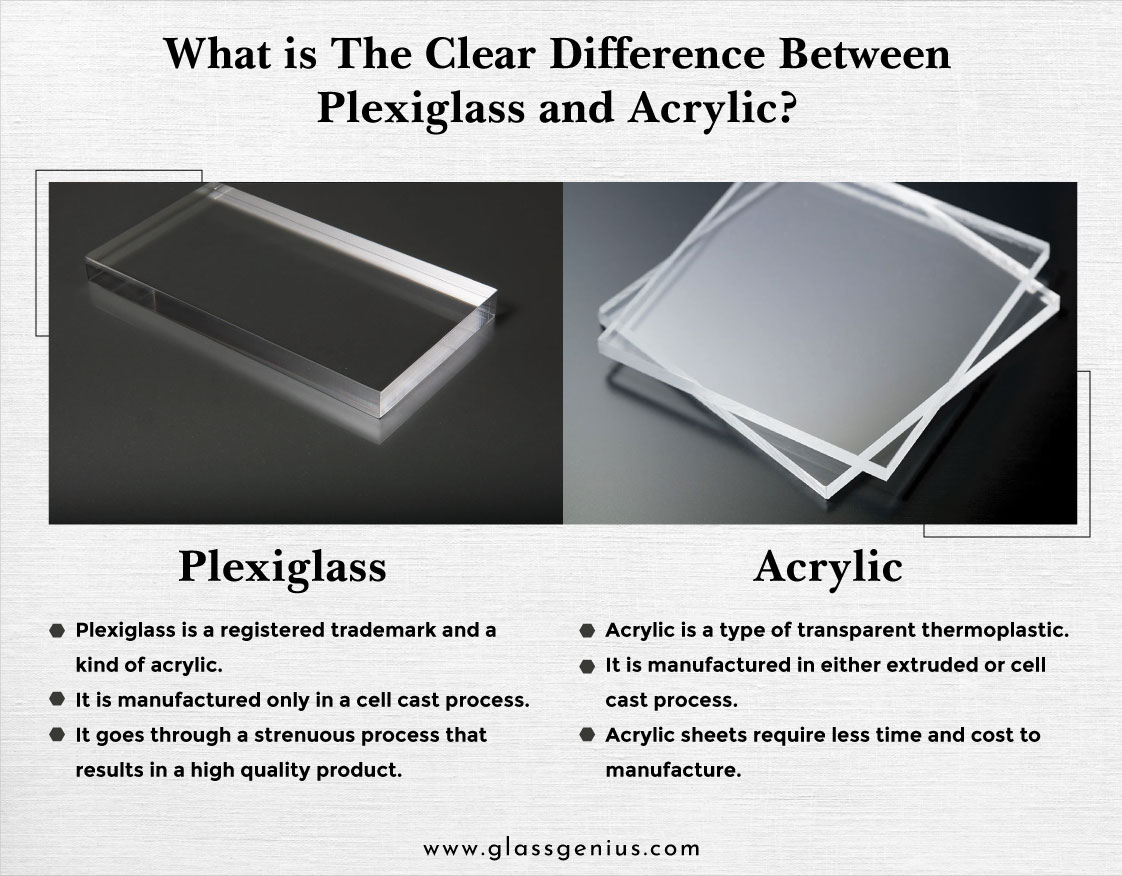
Prepare yourself, because the fancy scientific name for Plexiglass sounds like something a robot would order at a very specific coffee shop: Poly(methyl methacrylate). Yes, say that five times fast after a double espresso. Good luck. For our sanity, and because we’re not currently in a chemistry lecture (thank goodness), we'll stick to Plexiglass, or its snappier acronym, PMMA. It’s basically the friendly neighborhood superhero name for this incredible material.
So, what’s the secret sauce in this recipe? The main ingredient, the star of the show, is a molecule called methyl methacrylate. Imagine it as a tiny, highly excitable LEGO brick. By itself, it’s a liquid. You wouldn’t want to build a window out of it, trust me. But here’s where the magic, or rather, the chemistry, happens.
Must Read
The Kitchen Counter to Super Material Transformation
Picture this: you have a whole bunch of these individual methyl methacrylate LEGO bricks. They’re buzzing around, minding their own business. Then, a couple of clever chemists (we'll get to them in a sec) figured out how to make them link arms. And not just link arms, but hold hands, then hug, then form a giant, unbreakable human (or rather, molecular) chain gang. This process is called polymerization. Each individual "brick" is a monomer, and when they link up, they form a massive polymer. Ta-da! Instant solid material!
It’s like baking a cake. You start with flour, eggs, sugar—all separate ingredients. But you add a little heat, a little magic (and a lot of stirring), and suddenly you have a delicious, cohesive cake. In the case of Plexiglass, the "heat" and "magic" involve catalysts, initiators, and carefully controlled conditions to get those methyl methacrylate molecules to bind together in long, strong chains.
Who Discovered This Wizardry?
You can thank two separate but equally brilliant teams for Plexiglass's existence. In Germany, a chemist named Otto Röhm was tinkering around in the early 20th century, specifically the 1930s. He was looking for ways to improve plastics. Around the same time, across the pond in jolly old England, another chemist, William Chalmers, was also on the same track. Both independently figured out how to turn this liquid monomer into a solid, transparent plastic. So, it wasn't one Eureka! moment, but more like a simultaneous, global "AHA!" moment. Imagine the frantic telegrams!
Not Just Any Old Glass Replacement
Now, why go through all this trouble when we have perfectly good glass? Well, Plexiglass has some serious superpowers. For starters, it's about half the weight of glass. If you've ever tried to lift a pane of glass, you'll appreciate that! But here's the real kicker: it's also significantly more impact-resistant. We're talking 10 to 20 times more resistant to shattering than traditional glass. You can hit it, drop it (within reason!), and it'll likely just shrug off the blow, whereas regular glass would be in a million tiny pieces, demanding a trip to the ER.
This strength made it a superstar during World War II, where it was used for aircraft canopies and gun turrets. Imagine flying a plane with a flimsy glass bubble! Not ideal. Plexiglass offered clarity and durability in the skies.
Beyond Windows and Tanks: Surprising Cameos
But Plexiglass isn't just for things you see through. Oh no. Its versatility is legendary. Did you know it's used in some dental fillings? Or even as a component in bone cement for orthopedic surgeries? Yep, the very same stuff that makes up those fancy museum displays might be holding someone's hip together. Talk about range!
It's also why those massive public aquariums can exist without springing a leak and turning the street into an impromptu shark exhibition. And those incredibly clear hockey rink barriers that protect fans from flying pucks (and occasionally flying players)? You guessed it: PMMA. While it's often mistakenly called "bulletproof glass," it's more accurately described as bullet-resistant. It can take a serious beating before giving up the ghost, offering protection in places like bank teller windows.
However, it does have a kryptonite: scratches. While tough against impact, it's softer than glass, so it can scratch more easily. Hence why you should always use a soft cloth and proper cleaner, not your sleeve, when wiping down your Plexiglass masterpiece!
The Unsung Hero
So, the next time you see a clear, plastic-like material, whether it’s protecting art in a gallery, keeping you dry at a bus stop, or letting you see the majestic beauty of a sea turtle, give a little nod of appreciation. It's not just a fancy type of plastic. It's the result of clever chemists turning a simple liquid into a remarkably strong, transparent, and incredibly versatile material. It's the unsung hero of transparency, making our world a little clearer, a little safer, and a whole lot more interesting. And now you know its delicious, tongue-twister secret!