
What Is Nuclear Energy Made Of
Ever wondered what makes the lights twinkle, your phone charge, or your toaster pop with such magnificent energy? It feels a bit like magic, doesn't it? Well, buckle up, buttercup, because today we're peeking behind the curtain of one of the most astonishing power sources out there: nuclear energy!
And guess what? It’s not some alien goo or a secret wizard's potion. It’s actually made of stuff you can find right here on Earth, just behaving in an incredibly clever, almost playful way.
The Teeny-Tiny Building Blocks: Atoms!
Before we dive into the nuclear part, let's talk about the ultimate tiny LEGO bricks of the universe: atoms. Everything around you – yes, even you, me, and that ridiculously fluffy cat – is made of zillions of these miniature marvels.
Must Read
Think of an atom as its own miniature solar system. It has a central "sun" and tiny "planets" zipping around it. That little central sun is the superstar of our story, and it's called the nucleus.
The nucleus is where all the action is for nuclear energy. It's the sturdy, super-dense heart of the atom, holding onto a tremendous amount of bundled-up energy, just waiting for its moment to shine.
Our Star Ingredient: Uranium!
Now, not just any old atom has enough oomph to become a nuclear energy superstar. We need a special, super-heavyweight champion of the atom world, and that title proudly belongs to Uranium!
Imagine Uranium as a grumpy, slightly overweight but incredibly powerful rock. It’s a naturally occurring metal, just dug up from the ground, looking rather unassuming. But don't let its humble appearance fool you!
Uranium is like the shy superhero of the periodic table, quietly packed with an explosive secret!
Specifically, we often look for a particular type of uranium called Uranium-235. This specific atomic flavor is extra special because its nucleus is a bit... fidgety. It's prone to splitting!
The Big Reveal: How Uranium Unleashes Its Power
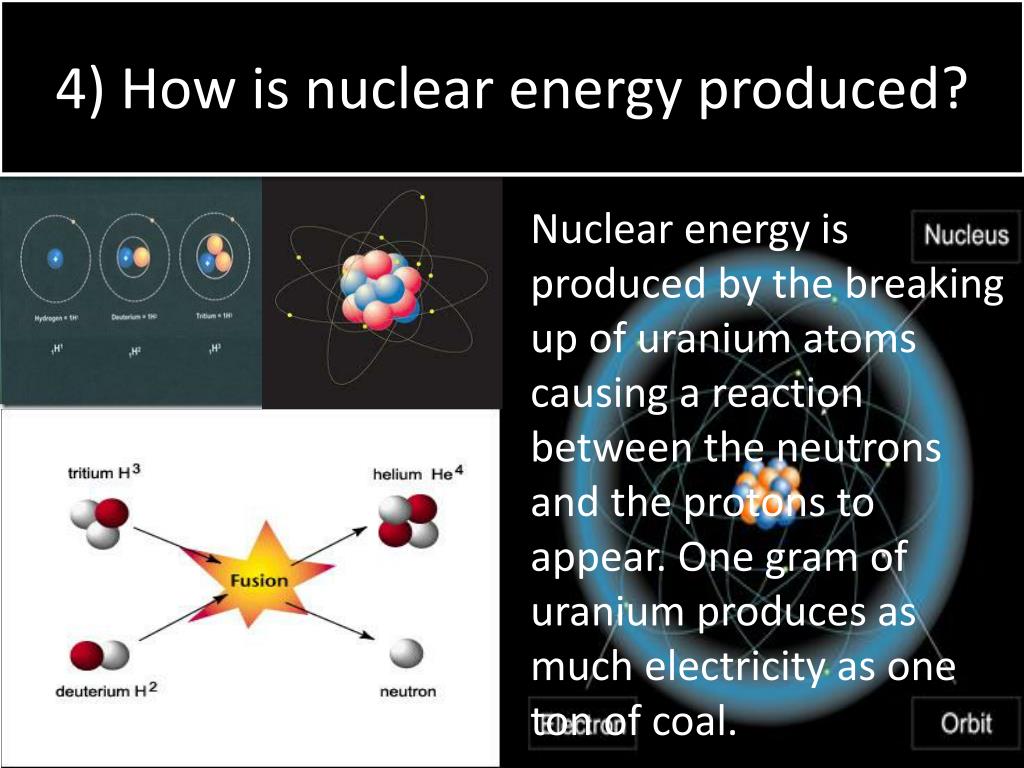
So, we have our special Uranium-235 atom with its packed nucleus. How do we get that energy out? We give it a tiny, gentle nudge. We literally split it!
This process is called nuclear fission. Imagine taking a really big, perfectly round cookie and giving it a gentle tap right in the middle. Poof! It breaks into two smaller, equally delicious cookies.
But here's the magic trick: when a Uranium-235 nucleus splits, it doesn't just make smaller pieces. It also releases a massive burst of pure, unadulterated energy!
Think of it as tiny, controlled atomic fireworks, where the "fireworks" are pure heat and light!
And here's the really clever part: when that big cookie splits, it also sends out a few tiny crumbs flying. These crumbs (which are actually tiny particles called neutrons) can then go on to tap other big Uranium-235 cookies!
This creates a spectacular domino effect, or what scientists playfully call a chain reaction. One split leads to two, two leads to four, and suddenly you have a controlled, continuous party of splitting atoms, all releasing energy!
What Is That Energy, Exactly?
When those Uranium nuclei split, the "energy" they release isn't some sparkly plasma beam. It's primarily heat. Yep, just good old, honest-to-goodness warmth, but in super-concentrated, high-five-from-the-sun amounts!
This heat is incredibly powerful. Enough heat, in fact, to make entire lakes of water boil faster than you can say "super-heated steam!"
And that, my friends, is essentially what nuclear energy is "made of" in terms of its immediate output: incredibly intense, carefully managed heat, born from the splitting of special atoms.
The Nuclear Power Plant: Where the Magic Happens!
So, how do we turn this incredible atomic heat into something useful, like powering your colossal gaming PC or your dazzling disco ball?
We do it in a place called a nuclear power plant. Think of it as a super high-tech, incredibly safe fortress designed to harness this atomic warmth.
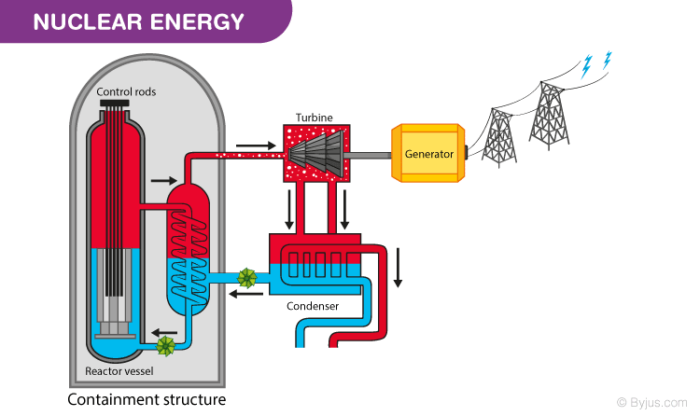
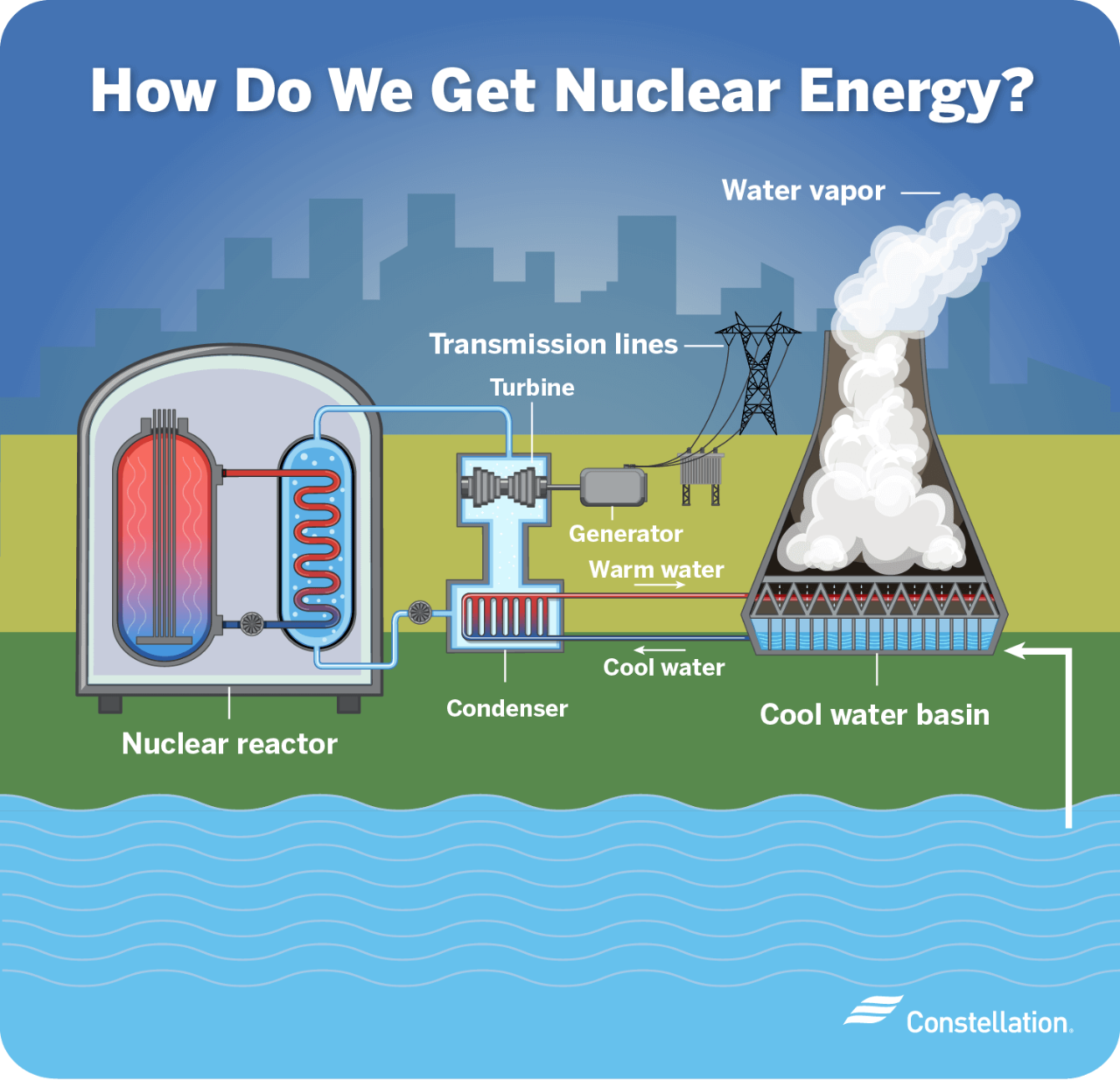
Inside the plant, we arrange bundles of processed uranium (often shaped into little pellets and then into long rods) within a special chamber called a reactor core. This is our atomic oven.
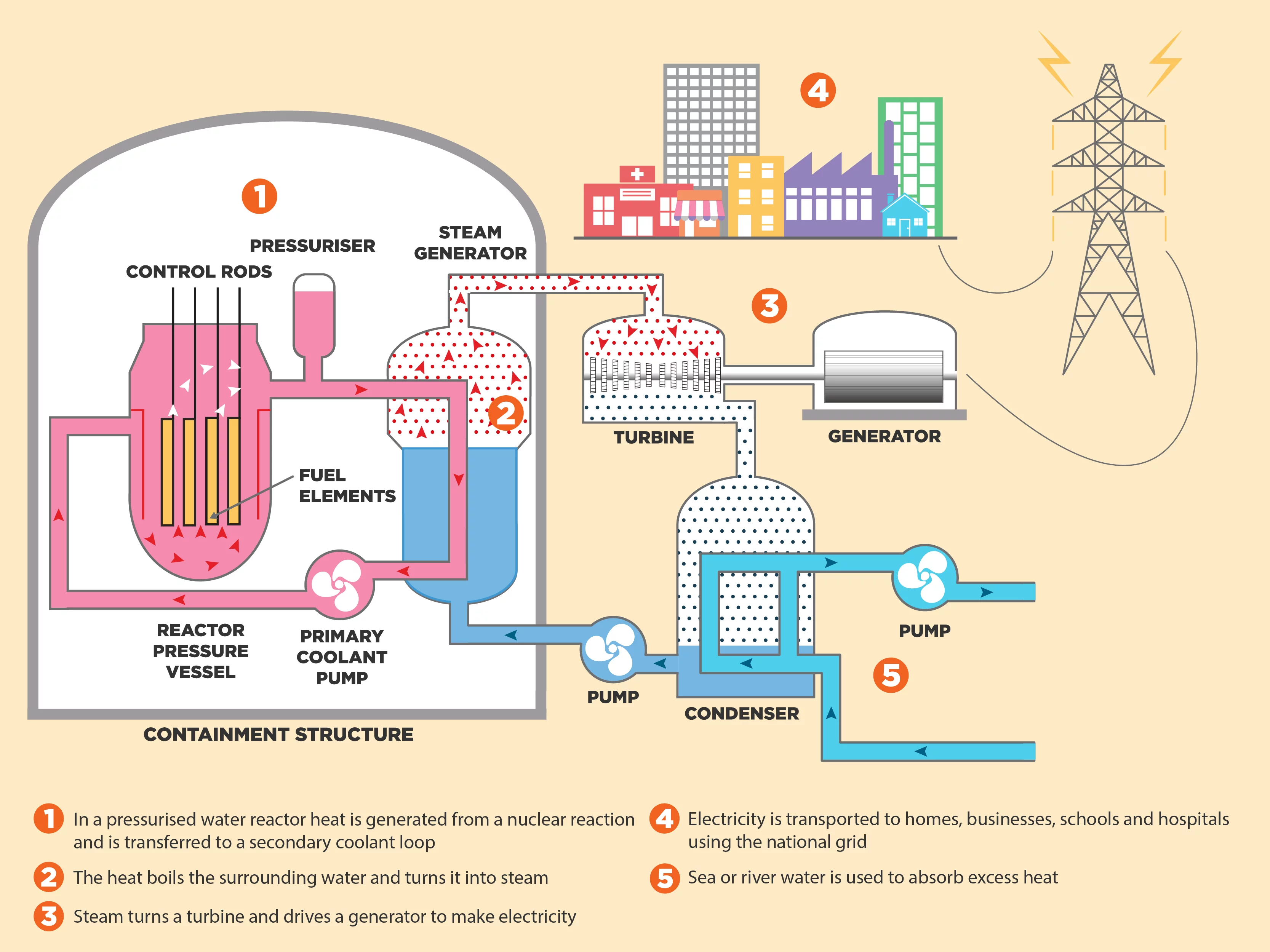
In the core, the controlled chain reaction happens, generating massive amounts of heat. This heat is then used to boil water, turning it into super-pressurized steam.
This isn't just any steam; it’s like a turbocharged cloud monster, eager to spin things. The steam is directed towards massive spinning machines called turbines, which look a bit like giant, sophisticated pinwheels.
As the steam pushes against the blades of the turbine, it spins it around at mind-boggling speeds. And what happens when you spin something really fast that's connected to a special wire-coiled magnet? You make electricity!
So, in a nutshell: special rock splits → creates immense heat → boils water → makes super steam → spins giant pinwheels → powers your world!
More Than Just Uranium: The Supporting Cast
While Uranium is definitely the star, it's not a one-rock show. There are other important "ingredients" and components that make nuclear energy production safe and efficient.
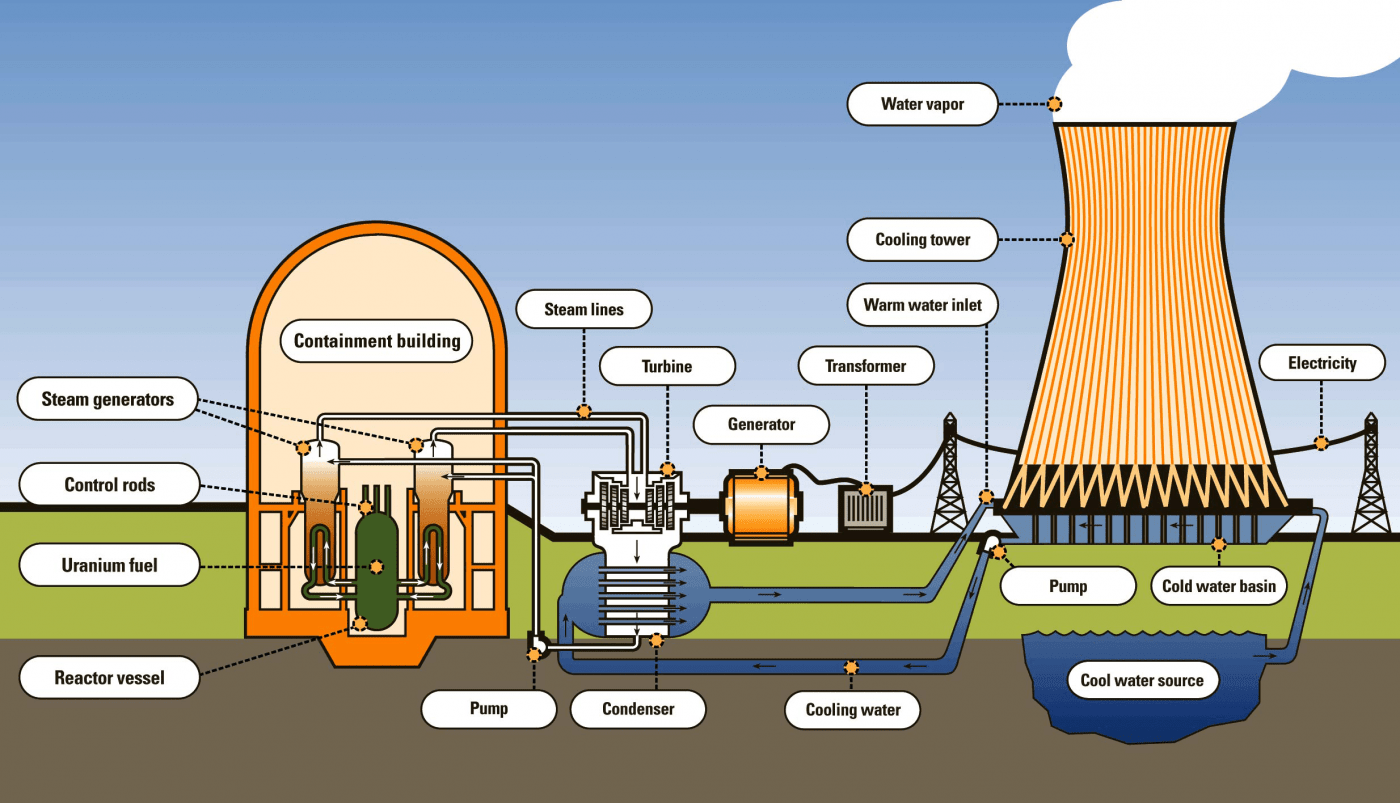
Things like water, which is essential not only for making steam but also for cooling everything down. It’s like the plant’s personal, super-efficient air conditioner and steam generator all rolled into one.
Then there are control rods, usually made of materials like boron or cadmium. These are like the nuclear party poopers (in a good way!). They absorb those flying neutron crumbs, slowing down or even stopping the chain reaction if needed.
They ensure the atomic party doesn't get too wild, keeping everything perfectly safe and under control. It's precision engineering at its finest!
And of course, there's all the sturdy steel and concrete that make up the reactor's protective shell. It’s like a super-strong, multi-layered hug for the core, keeping everything safely contained.
The Wonderful World of Atomic Power!
So, there you have it! Nuclear energy isn’t made of mystery. It’s made of incredibly small, naturally occurring atoms, specifically the heavy-hitter Uranium-235.
When these atoms are gently persuaded to split, they unleash a phenomenal amount of pure, glorious heat. That heat is then expertly captured to boil water, create steam, spin turbines, and ultimately generate the clean electricity that lights up our lives.
It’s a truly elegant and powerful process, harnessing the very forces that power stars, all contained and controlled within our amazing power plants. Isn't science just the coolest?