What Is Meant By Shear Stress
Ever had one of those days where you feel like the universe is just trying to slide you sideways? Like you're trying to walk in a straight line, but the very ground beneath your feet seems to have other plans? Or maybe you've attempted to spread cold butter on toast, and it just… skids across the surface, ripping the bread underneath? Congratulations, my friend, you've just had a close encounter with shear stress!
Don't let the fancy-schmancy engineering term scare you. Shear stress sounds like something a grumpy professor would drone on about, but it's actually super relatable. Think of it less as rocket science and more like the universe's mischievous way of saying, "Let's see if we can get things to slide past each other!"
So, What Exactly Is This Slippery Character?
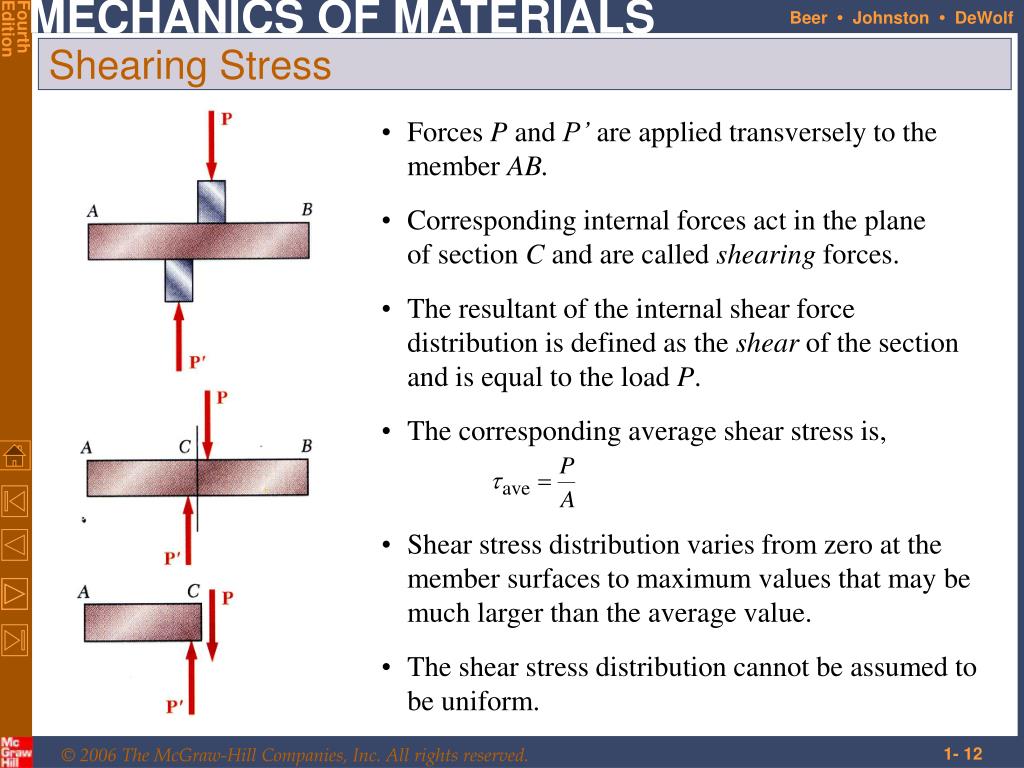
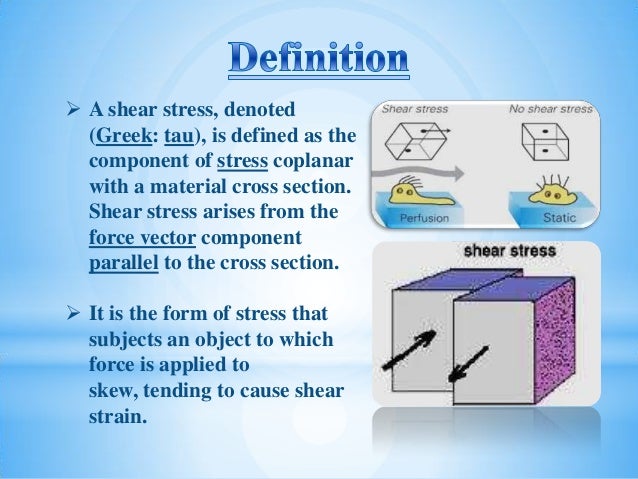
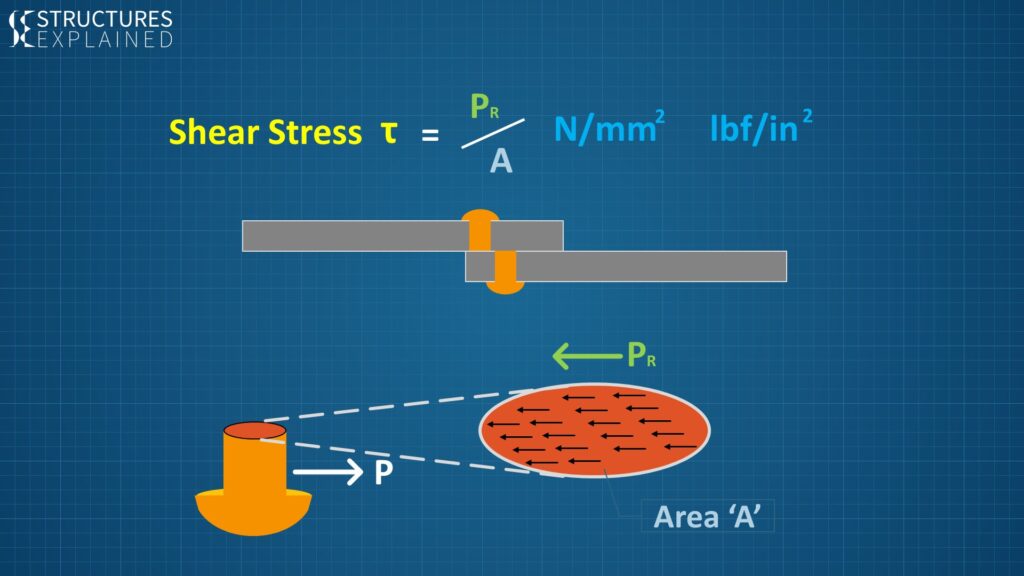
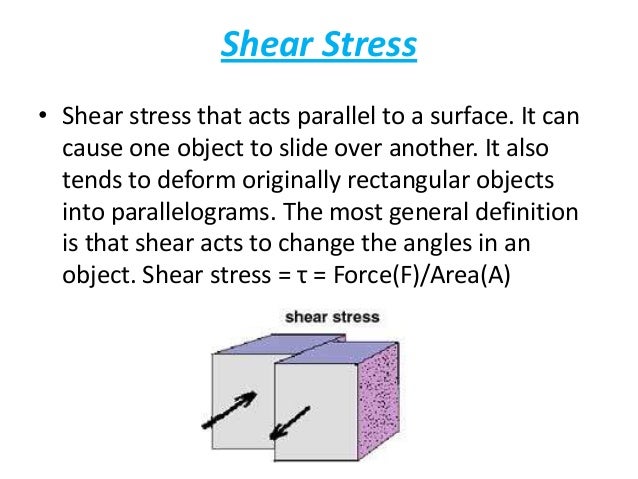
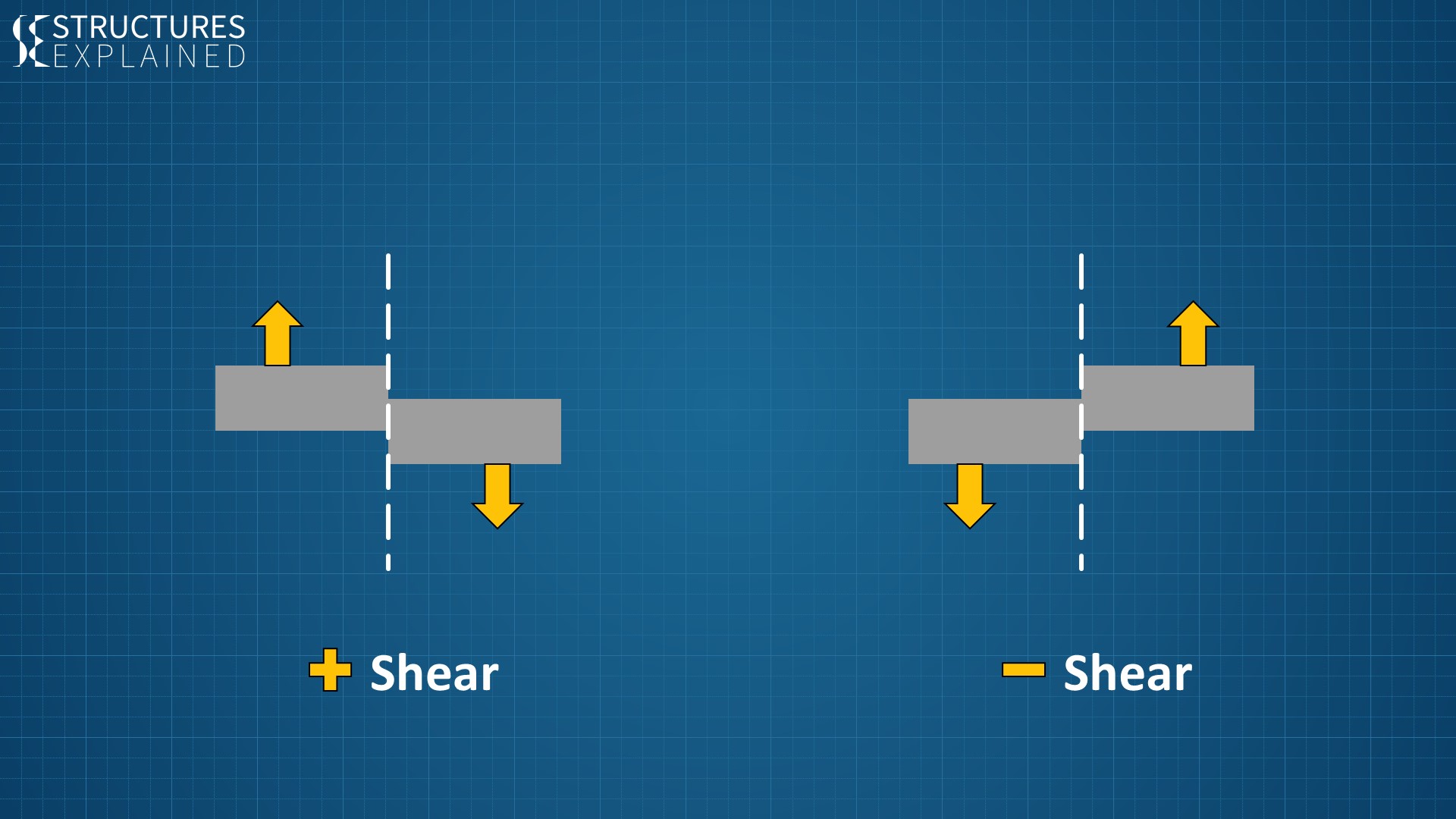
In the simplest, most chill terms, shear stress happens when forces act parallel to a surface or cross-section of an object. Instead of pushing or pulling something straight on (like squishing a marshmallow or stretching a rubber band), shear stress is all about forces that are trying to make one part of an object slide past another part.
Must Read
Imagine a perfectly stacked deck of cards. You place your hand on the top card and gently push it forward. What happens? The top card slides, but the ones beneath it try to stay put, creating a delightful little diagonal lean. That right there? That's shear stress doing its thing between each card. Each card is experiencing a force trying to make it slide relative to its neighbors.
Everyday Antics of Shear Stress
Let's dive into some hilarious, everyday examples where shear stress is the uncredited star of the show:
The Butter vs. Toast Showdown
Remember our cold butter dilemma? When you try to spread it, your knife applies a force that's parallel to the surface of the bread. The butter wants to slide, but it also has some internal resistance (especially if it's straight out of the fridge!). The result? The bread, unable to withstand the internal struggle, often tears or crumbles. Pure shear stress chaos!
The Scissors: A Shearing Masterclass
When you cut paper with scissors, you're not just tearing it. The two blades are designed to apply opposing forces very close to each other, creating a concentrated shear force. One blade pushes down, the other pushes up, and together they create a clean slice by literally shearing the paper fibers apart. It's like a tiny, perfectly synchronized dance of destruction.
The Stubborn Label Struggle
Ever tried to peel a particularly adhesive label off a jar, only for it to tear in annoying little strips? You're pulling up, but the adhesive is holding down. The label isn't just ripping straight across; it's tearing along lines where the pulling force is trying to make one part of the label slide past another, overcoming the internal strength of the paper. Frustrating, yes, but also a textbook example of shear stress at play!
High-Fives (or Awkward Low-Fives)
Think about a perfect high-five. Your hand isn't just hitting another hand head-on; there's a slight sliding motion, a little friction as your palms connect and move past each other. It's subtle, but that quick, parallel force is a touch of shear stress, adding that satisfying 'smack' sound. In contrast, an awkward low-five might involve more direct impact, less shear. Food for thought at your next celebratory moment!
Washing Your Hands: Friction's Buddy
When you lather up and vigorously rub your hands together, you're creating a whole lot of friction. And guess what friction is? It's often a manifestation of shear forces! Your hands are sliding past each other, creating stress within your skin (in a good, clean way!) and between the soap molecules. The soap itself acts as a shear-reducing agent, allowing your hands to glide and clean more effectively.
Why Should We Care About This Sneaky Force?
Beyond laughing at our toast-ripping woes, understanding shear stress is actually a pretty big deal. Engineers use it to design everything from bridges that can withstand wind (which creates shear forces) to airplanes that don't fall apart mid-flight. Our bones, muscles, and even the blood flowing through our veins experience shear stress, influencing their behavior and health. So, while it's fun to joke about, it's also fundamental to how the world works and how things stay together (or gracefully fall apart).
Next time you spread some jam, cut a coupon, or even just shuffle your feet on the carpet, take a moment to appreciate the unsung hero that is shear stress. It's that invisible force, always working to make things slide, tear, or just generally keep things interesting in the grand, chaotic ballet of everyday physics. And now you know its name, you savvy individual!