
What Is In Nuclear Power Plants
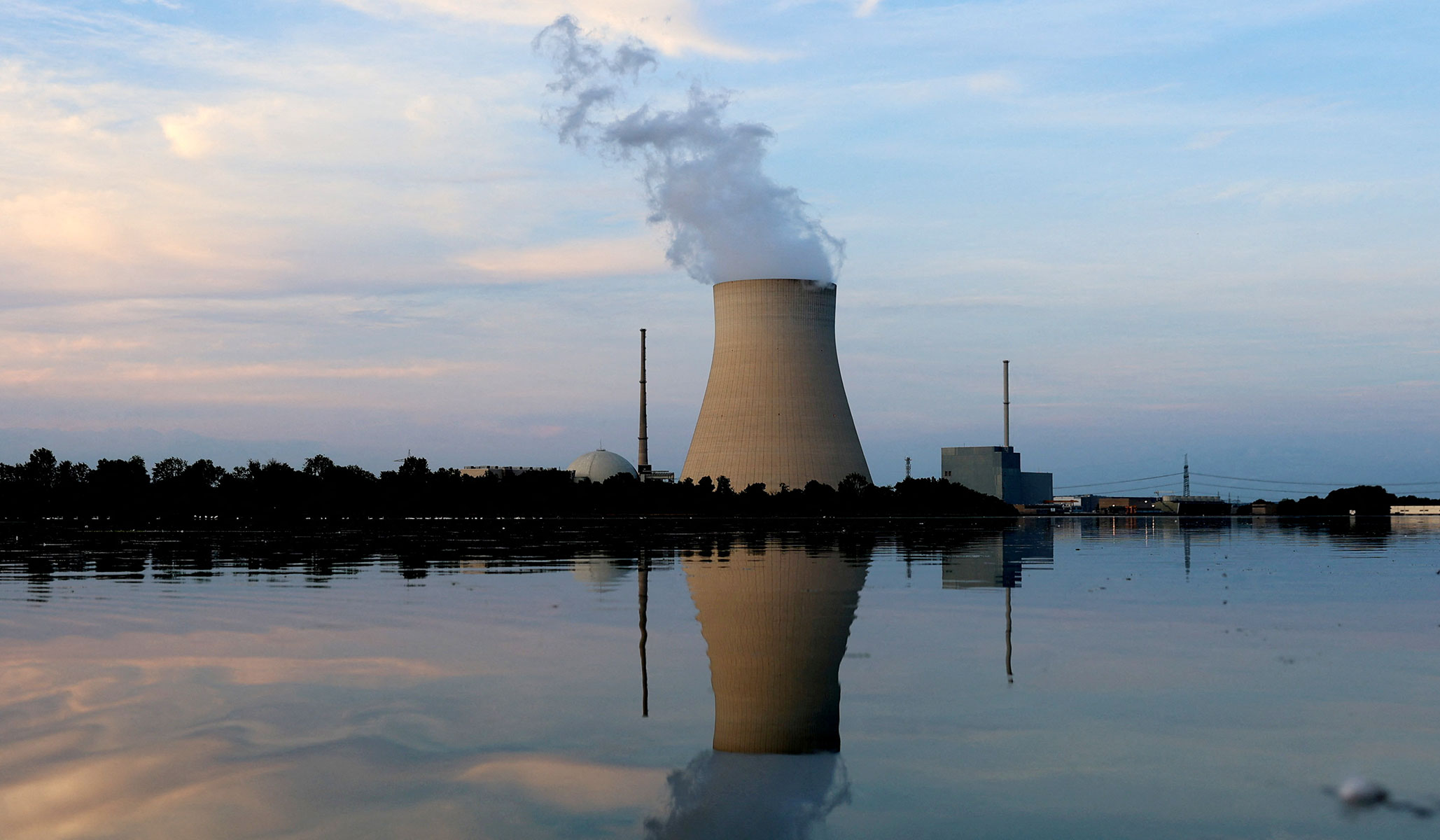
Ever gazed at those iconic, often imposing structures of a nuclear power plant and wondered what secret, magical ingredients they’re hiding? Most of us, let’s be honest, probably picture something straight out of a Hollywood blockbuster.
We imagine bubbling green chemicals, flashing red alarms, and maybe even a supervillain twirling a mustache in a control room full of bewildering buttons. It’s all very dramatic and thrilling in our minds.
But here’s my slightly "unpopular" opinion: what’s actually inside is far less dramatic, and in many ways, surprisingly… normal. It's incredibly clever, yes, but its core principles are astonishingly simple.
Must Read
Forget the sci-fi thriller. Think more along the lines of a really, really well-engineered pressure cooker. Or perhaps the world’s most robust, meticulously maintained tea kettle. It's certainly not as complicated as assembling IKEA furniture without the instructions.
The Star of the Show: The Fuel
Right at the very heart of the energy generation is the fuel. Now, don't imagine a glowing, unstable liquid you need to handle with tongs. It's actually solid, unassuming pellets of uranium.
These tiny, dense little energy nuggets look rather boring, much like a charcoal briquette, but with immense potential. They're not actively doing anything exciting on their own, just sitting there.
These pellets are carefully stacked into long, thin tubes called fuel rods. Think of them like super-dense, very special pencils, each packed with potential warmth.
Hundreds of these fuel rods are then bundled together. It’s a very orderly, precise arrangement, ensuring everything is exactly where it should be for optimum performance.
The important part is that this uranium isn't exploding like a bomb! It's undergoing a highly controlled process called fission. This means its atoms are gently, steadily splitting apart.
Each tiny split releases a little puff of heat. It’s more like a constant, gentle internal glow, a low-temperature simmer, than any kind of giant fireball. Very polite, really.
The Reactor Core: The "Special Oven"
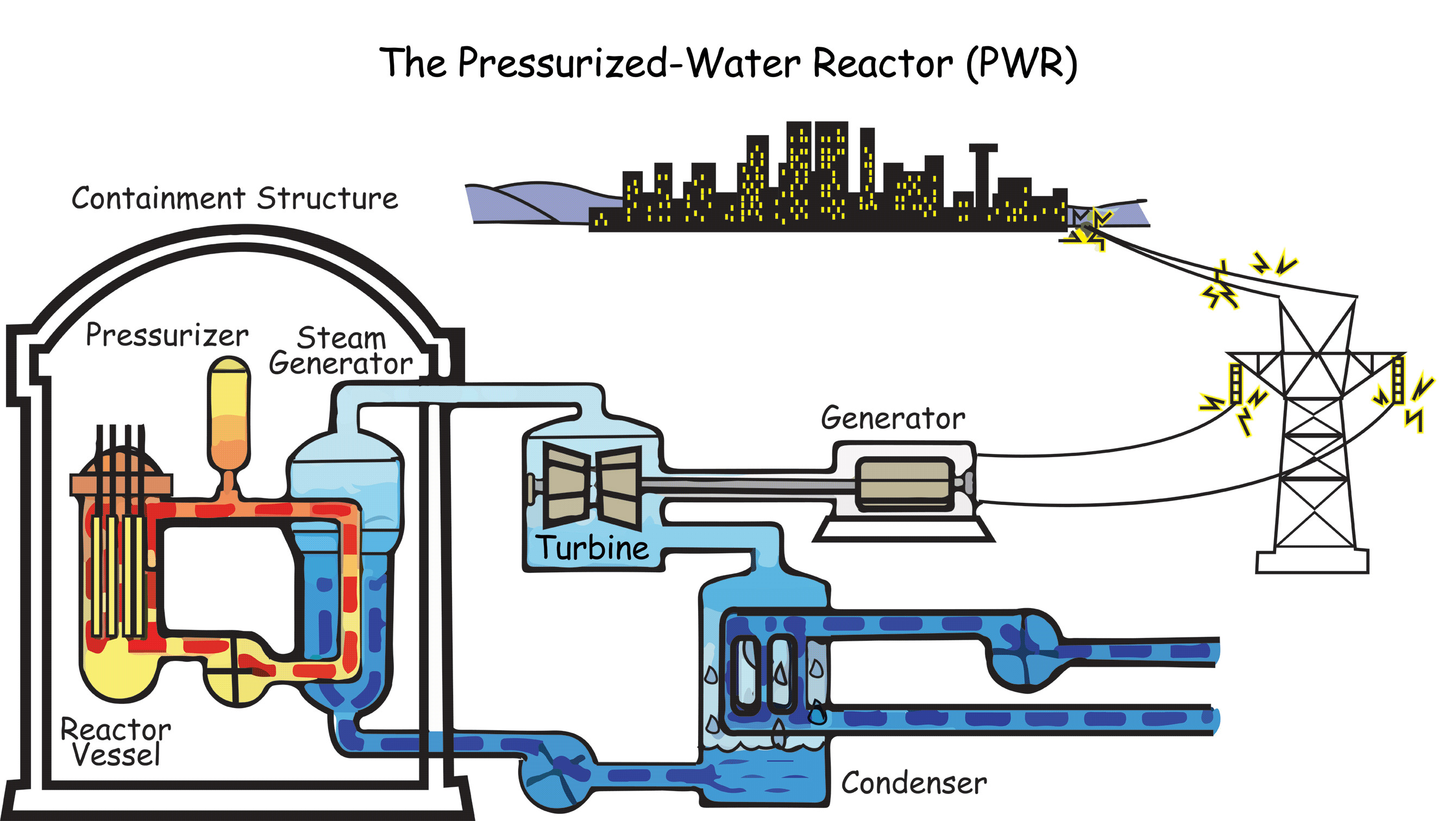
All those bundles of fuel rods live inside what's called the reactor core. This is truly the central hub, the chamber where all that gentle heat-making actually happens.
You can easily picture it as an incredibly strong, thick-walled steel and concrete pressure vessel. It’s designed to contain everything perfectly, ensuring no heat or anything else escapes unexpectedly.

Inside this core, the uranium is just getting warm, a bit like a constantly warm rock. It’s all about creating heat in a measured, predictable way.
"It's not about uncontrolled chaos; it's about a very controlled, sustained warmth, like a slow-cooker on a perpetual simmer."
Special control rods, often made of materials like boron or cadmium, are inserted between the fuel rods. These act like the dimmer switch on a light, or even a brake pedal.
They soak up any excess particles, allowing operators to precisely adjust the heat output. They can slow it down, speed it up, or even completely stop the fission process with reassuring ease.
The Unsung Hero: Water, Lots of Water!
So, if the uranium is making heat in our special oven, what stops it from getting too hot? That’s where the mighty, humble water comes in! And when I say water, I mean lots and lots of it.
Incredibly pure, highly pressurized water circulates directly through the reactor core, surrounding the fuel rods. This isn't just tap water; it's been treated to be super clean.
This water acts as an incredibly efficient heat sponge. It silently and effectively picks up all that warmth generated by the uranium fuel. It gets intensely hot itself, but because it’s under such immense pressure, it doesn't boil inside the reactor core.
Think of the reactor as a very robust, very advanced water heater. Its primary job is simply to heat water to an extremely high temperature, all while keeping it in liquid form.
This primary loop of superheated, pressurized water then leaves the reactor, carrying all that precious warmth with it, ready for its next job.
The Steam Generators: Our Giant Kettle
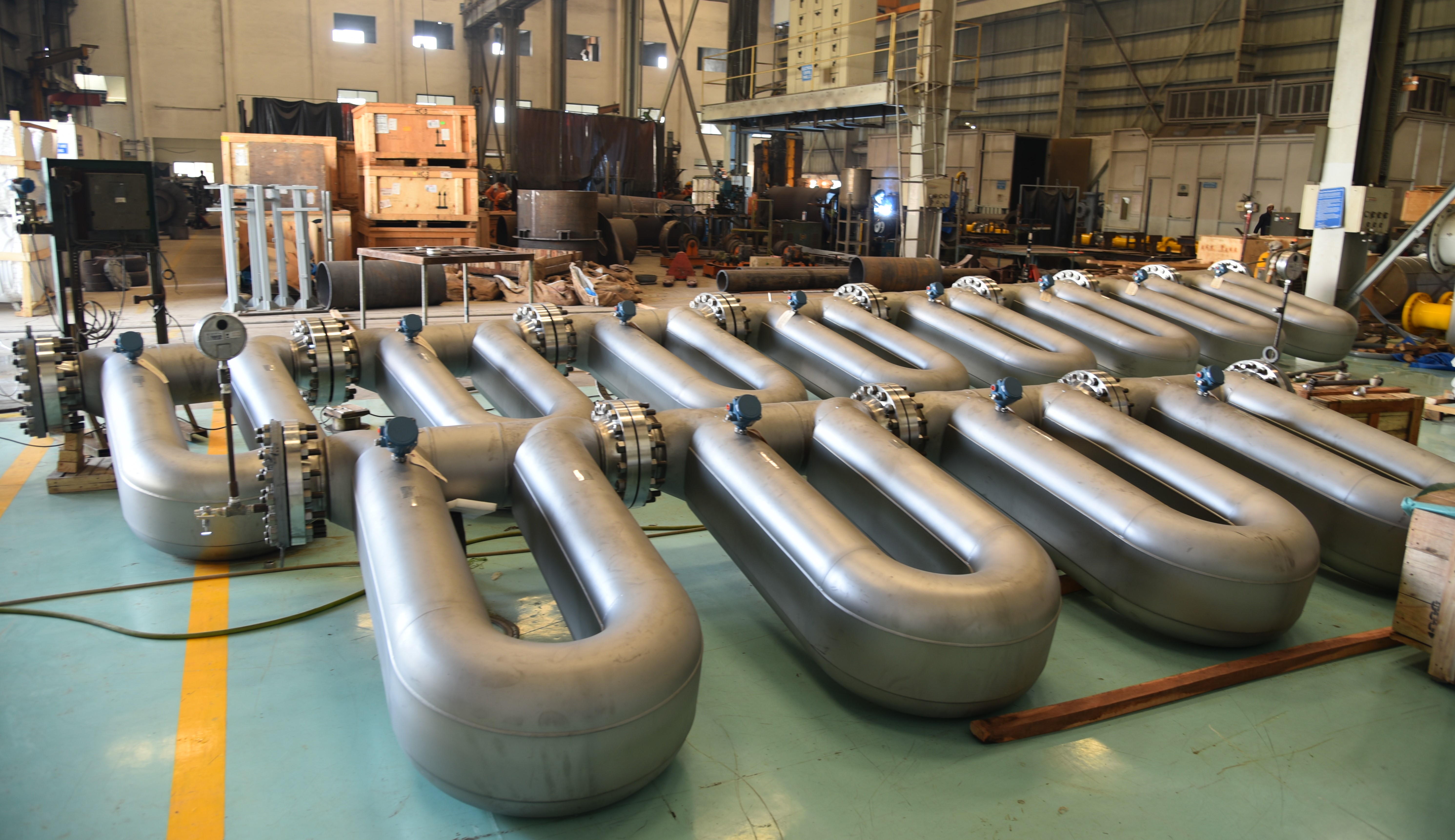
Now, that super-hot, pressurized water from the reactor isn't actually used to directly make electricity. Instead, it goes into huge, intricate devices called steam generators.

This is where our primary loop of hot water meets a completely separate loop of ordinary water. The reactor water flows through thousands of tiny, strong tubes inside the steam generator.
As it flows through these tubes, it transfers its immense heat to the water in the second loop. This second loop of water, under slightly lower pressure, boils furiously from the transferred heat.
Voila! We now have vast quantities of superheated, high-pressure steam. It's essentially the world's largest, most powerful kettle, constantly producing enormous clouds of pure steam.
This crucial separation of water loops is a major safety feature, by the way. It ensures nothing from the reactor ever mixes directly with the steam that will drive the rest of the plant.
The Turbine: The Giant Pinwheel
That powerful, high-pressure steam has one incredibly important job: to spin a colossal turbine. Picture a truly gigantic, multi-bladed pinwheel or a highly refined, monstrous windmill.
The sheer force of the steam, rushing past the turbine blades, pushes them with incredible power, making the entire assembly rotate at astonishing speeds. This is pure kinetic energy at work.
It’s really just big, strong gusts of steam making something go 'round and 'round, much like a child's toy pinwheel in a strong breeze, but on an industrial scale that boggles the mind.
So, at its very essence, a nuclear power plant is, you guessed it, an elaborate and very expensive way to boil water and make a giant fan spin. It's less magic, and far more clever, sturdy engineering.
The Generator: Power Time!
The turbine isn't just spinning for show, of course. It’s directly connected to an enormous electrical generator. This is where the spinning motion is magically turned into usable power.
When the turbine spins, it also spins powerful magnets inside the massive generator. This rapid rotation of magnets, through the elegant principles of electromagnetism, creates electricity.
Yes, it’s the exact same kind of electricity that powers your refrigerator, charges your phone, and lights up your living room. It's the grid-ready power we all rely on.
It’s essentially a super-sized version of the tiny generator that lights up your bicycle wheel as you pedal through the night. Just, you know, a million times more powerful and requiring absolutely no leg effort from you.
The Cooling Towers: The "Smoke" That Isn't Smoke
Ah, the iconic, often-misunderstood structures! Those huge, often conical towers puffing out white clouds are the cooling towers. They're probably the most recognizable, yet most mislabeled, part of the plant.
A great many people assume they’re emitting smoke, pollution, or something mysterious. Unpopular opinion alert, once again: they're not! Those impressive white plumes are almost entirely pure water vapor.
It’s just steam, exactly like what comes out of your teakettle or a cloud forming in the sky. After the steam has spun the turbine, it has done its job and needs to be cooled back down into liquid water so it can be reused.
The cooling towers are the plant’s way of releasing that excess heat into the atmosphere, often via the process of evaporation. It’s just the plant taking a massive, steamy, perfectly harmless breath.
The Brains of the Operation: The Control Room
Of course, all this elaborate boiling, spinning, and cooling needs constant, careful oversight. This incredibly important task happens in the control room.
It’s not a single, giant "doom button" that could cause chaos. Instead, imagine a remarkably calm, highly organized room filled with highly trained, specialized operators. They are intently watching an array of screens, dials, and gauges.
They ensure every single part of the "fancy kitchen" is running smoothly, safely, and efficiently. They are the ultimate multitaskers, always one step ahead.
"Think of them as the super-attentive head chefs, constantly checking the temperature and pressure of their enormous, high-tech cooking pot, making tiny adjustments to keep everything perfect."
These folks are experts in their field, constantly monitoring everything that moves, heats, or flows. They are there to maintain absolute stability and predictability, not to create any kind of drama or excitement.
Layers of Protection: The Fort Knox of Energy
One final, absolutely reassuring thought: nuclear power plants are constructed with truly insane levels of safety in mind. We're talking multiple, redundant layers of incredibly thick concrete and robust steel.
It’s not just one big box holding everything in; it’s more like a Russian nesting doll of protection. There’s a box within a box, within another box, each designed to contain and protect.
Each critical component is surrounded by massive containment structures engineered to withstand almost any imaginable external force, from earthquakes to extreme weather.
And it's not just physical barriers. There are backup systems for the backup systems, and then even more backup systems for those backup systems. It’s like the engineers just kept asking, "But what if that fails?" and then built another safety net, and another.
So, the next time you happen to glimpse a nuclear power plant, try to discard those dramatic, sci-fi villain images. Instead, allow yourself to marvel at a true feat of engineering, a giant, incredibly safe, and well-managed system.
At its core, it’s just a remarkably sophisticated pressure cooker, powered by some very special rocks, boiling water to spin a really big fan, which then generates your electricity. My truly unpopular opinion? It’s really not that scary once you gently peek behind the dramatic curtain.
It’s mostly just super-smart, super-strong, and super-safe plumbing. And perhaps, just perhaps, that's a playfully simple truth we can all agree on, even if it makes for a slightly less thrilling movie plot.