
What Is Electric Made Out Of
Ever flicked a light switch, charged your phone, or brewed a morning coffee, and wondered, "What even IS this magic stuff?" We use it constantly, rely on it utterly, yet electricity remains this invisible, almost mystical force. It's not a liquid you pour, nor a gas you inhale. So, if you can't bottle it up or see it float, what on earth is electric made out of?
Let's demystify it without needing a physics degree. Think of it less as a 'thing' and more as a phenomenon – a spectacular cosmic dance involving the tiniest particles you can imagine.
It All Starts with Electrons
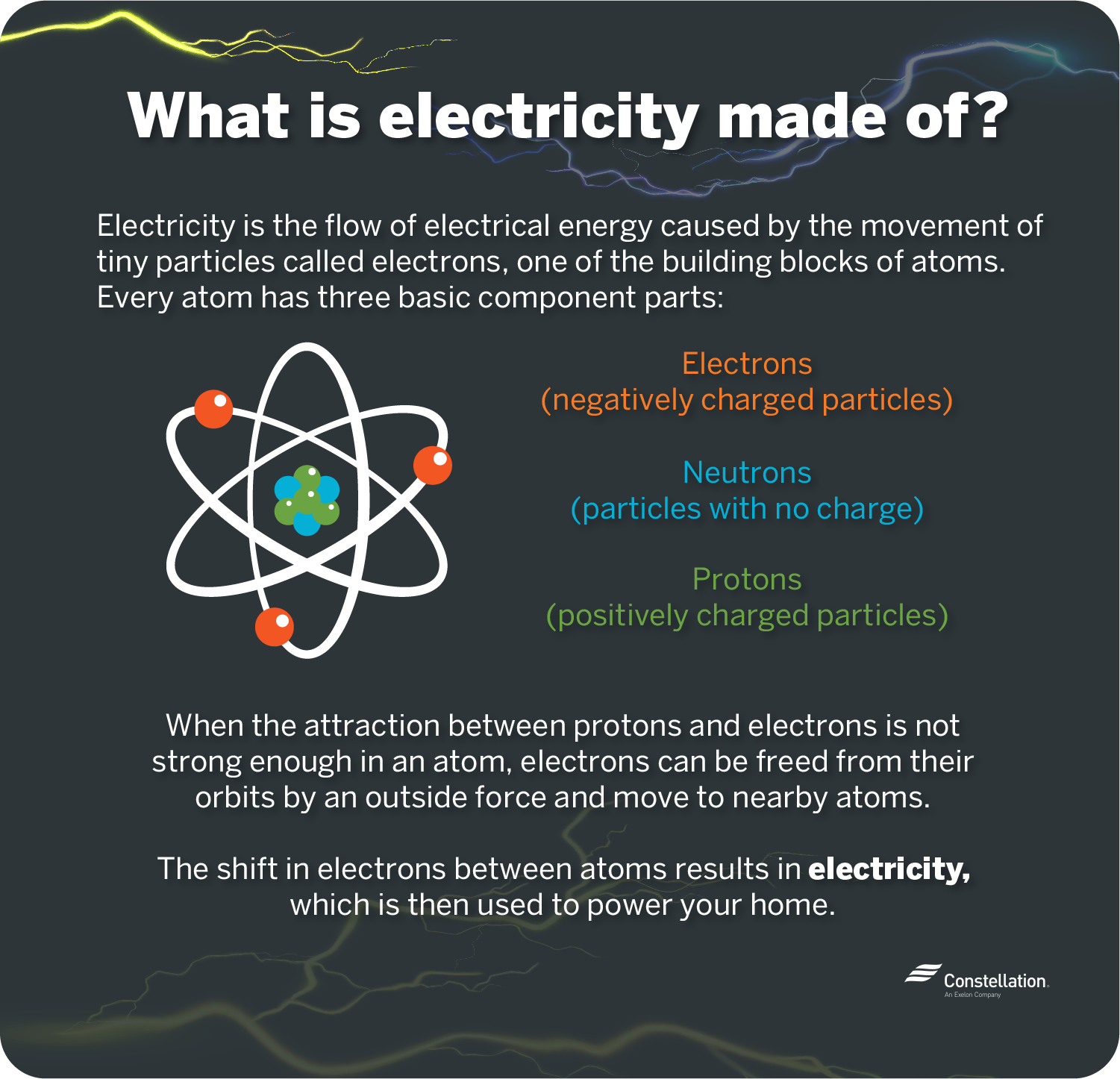
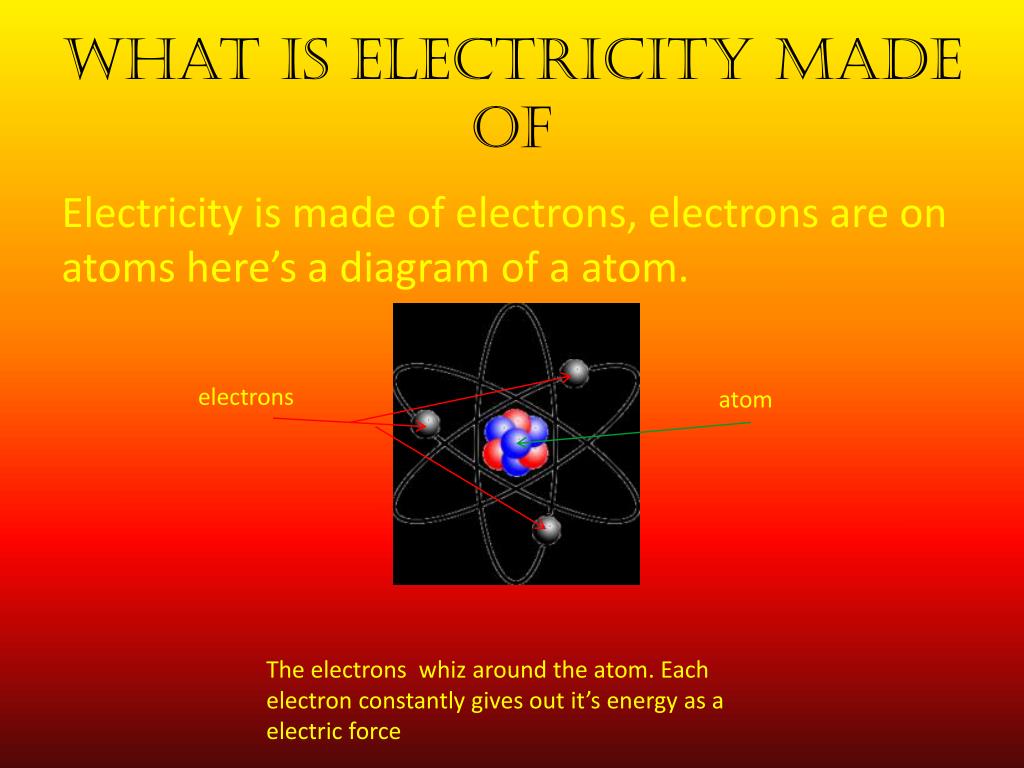
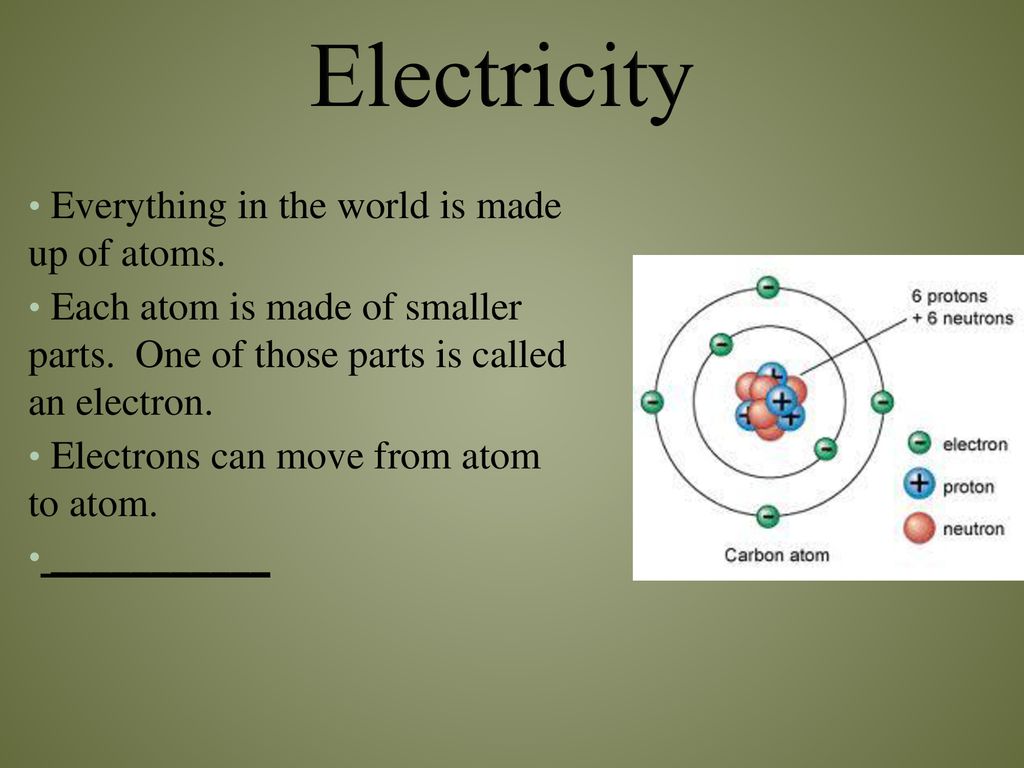
At its heart, electricity is all about electrons. These aren't some exotic, hard-to-find element; they're fundamental components of every atom, which in turn makes up literally everything around you – your chair, your coffee mug, even you! Electrons are tiny, negatively charged particles that orbit the nucleus of an atom, much like planets around a sun. When we talk about "electric," we're essentially talking about the movement or flow of these electrons.
Must Read
Imagine a bustling city street. The individual people are like electrons. When they start moving in a specific direction, that's what creates the current we call electricity. Simple, right?
The Superhighway for Electrons: Conductors
Not all materials are created equal when it comes to electron flow. Some materials are like superhighways, offering little resistance and letting electrons zip through freely. These are called conductors. The best conductors are typically metals.
- Copper: This is the workhorse of our electrical world. Look inside almost any cable or wire, and you'll find copper. Why? Because its atoms have 'free' electrons in their outer shells, meaning they're not tightly bound and can easily jump from one atom to the next, creating that lovely flow. Plus, it's relatively inexpensive.
- Silver: Believe it or not, silver is actually a better electrical conductor than copper! It's why high-end audio equipment or specialized electronics might use silver, but it's far too pricey for your everyday household wiring.
- Gold: While a decent conductor, gold's real superpower in electronics is its resistance to corrosion. That's why you often find it used for connectors in high-quality devices – ensuring a reliable connection for a long time.
Fun Fact: Lightning, nature's most dramatic display of electricity, often strikes the tallest object because it offers the easiest, most conductive path to the ground for those highly charged electrons!
The Roadblocks: Insulators
On the flip side, we have materials that are like solid brick walls, preventing electrons from moving freely. These are called insulators, and they're just as crucial as conductors for our safety and the efficient delivery of power.
.PNG)
Think about the plastic coating on your phone charger or the rubber grip on a pair of pliers. These materials have electrons that are tightly bound to their atoms, making it very difficult for them to leave and create a current. Common insulators include:
- Rubber and Plastic: Your go-to for protecting wires and electrical components. They keep those energetic electrons where they belong – inside the wire!
- Glass: Often used in things like light bulb casings.
- Ceramics: You see ceramic insulators on power lines; they're excellent at preventing electricity from escaping into the support poles.
Practical Tip: Always check your appliance cords for fraying! If the insulating plastic is damaged, those free-flowing electrons are exposed, creating a potential shock hazard. Better safe than sorry!
Where Do the Electrons Come From?
So, we know electricity is moving electrons, and we know what guides or blocks them. But where do these electrons get their marching orders? This is where power generation comes in. Whether it's a hydroelectric dam using falling water, a wind turbine harnessing the breeze, or a solar panel capturing sunlight, the core principle is often about forcing electrons to move.

Generators, at their simplest, use magnets and coils of wire to push electrons through those conductors. It’s an ingenious way to turn mechanical energy (like a spinning turbine) into the electrical energy that powers our homes.
The Zap of Static Electricity
Ever rubbed a balloon on your hair and watched it stand on end? Or gotten a little zap after shuffling across a carpet? That's static electricity. It's not a continuous flow, but rather an imbalance of electrons. When you rub objects together, electrons can transfer from one surface to another, leaving one object with an excess of negative charge (electrons) and the other with a deficiency (a positive charge). The "zap" is those electrons trying to find their way back to equilibrium.
It’s a powerful reminder that electrons are always there, even when they’re not actively flowing in a circuit.
A Force We Often Take for Granted
So, what is electric made out of? It's not a single ingredient but rather the dynamic behavior of electrons, facilitated by conductors and safely contained by insulators. It's a continuous ballet of subatomic particles, guided by clever engineering, that literally lights up our lives, connects us across continents, and keeps our modern world spinning.
Next time you flip a switch, take a moment to appreciate this invisible army of electrons working tirelessly behind the scenes. It's a fundamental force, intricately woven into the fabric of the universe, and it’s a constant, silent partner in almost every moment of your daily life.