
What Is Duty Cycle In Welding
Alright, pull up a chair, grab a metaphorical (or actual) coffee, because we're about to demystify something that sounds super technical but is actually kinda hilarious once you get it: Duty Cycle in Welding. You know that feeling when you're on a roll, sparks are flying, metal is joining, and then... thunk. Your welder just sighs and refuses to work? Yeah, that's often duty cycle gently (or not-so-gently) tapping you on the shoulder.
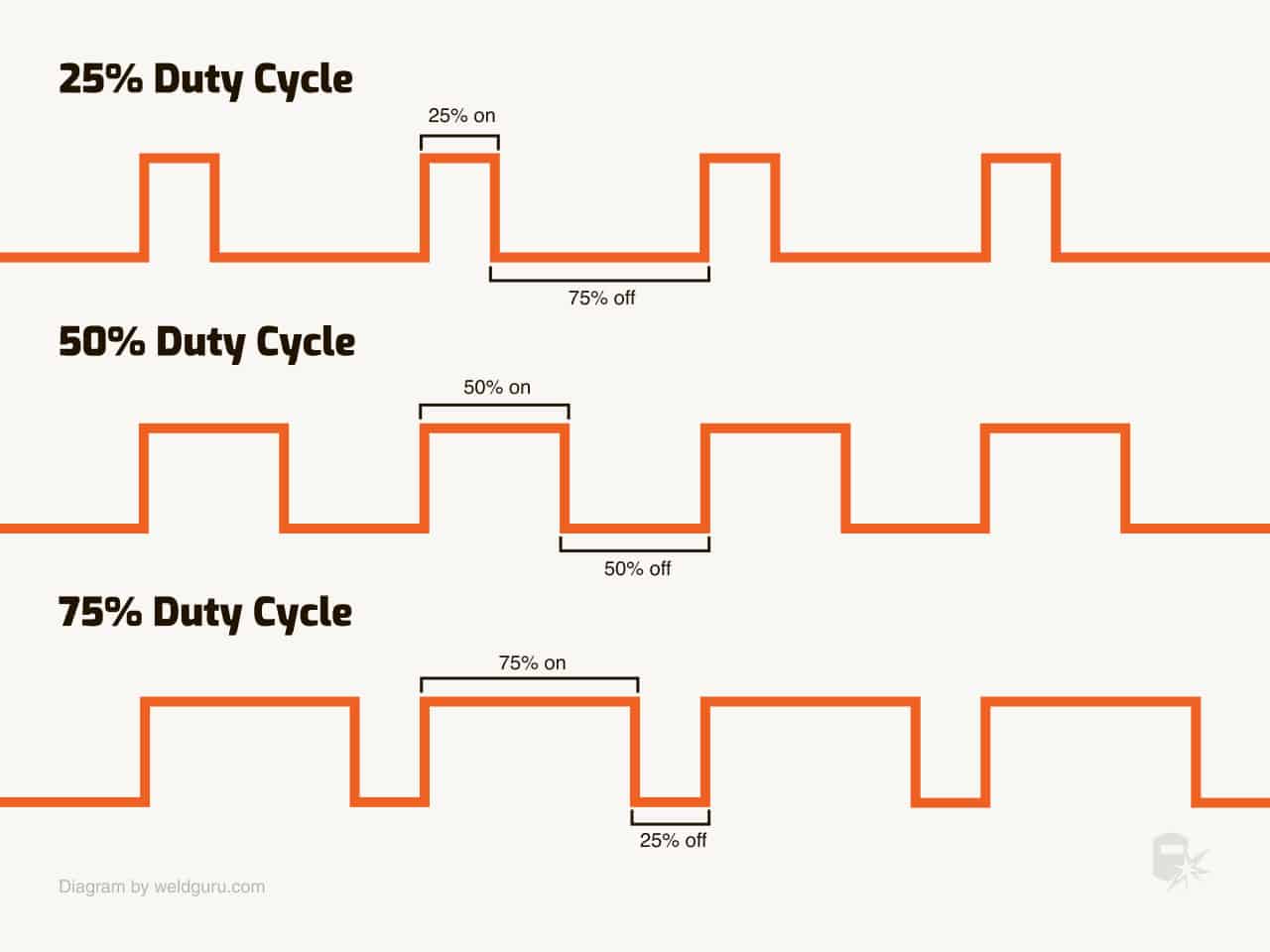
So, what the heck is it? In the simplest terms, imagine your welding machine is a marathon runner. It can sprint for a while, but eventually, it needs a breather. Duty cycle tells you how long your welding machine can actually weld in a 10-minute window before it needs to chill out. No, seriously, it’s always based on a 10-minute period. Think of it as your machine's mandated coffee break, but without the actual coffee. More like a 'don't-explode-and-catch-fire' break.
Let's say your shiny new welder boasts a 60% duty cycle at 100 amps. What does that mean? It means in any 10-minute span, you can be actively welding for 6 minutes (60% of 10 minutes) and then your machine absolutely insists on resting for the remaining 4 minutes. During those 4 minutes, it's usually just humming, letting its internal components cool down, probably silently judging your weld beads.
Must Read
Why Does My Welder Need a Siesta?
Good question! Because welders, like most of us after a really intense gym session, get hot. Really, really hot. Inside your welding machine, there are transformers, rectifiers, circuit boards – a whole lot of sensitive electronics that generate heat when you're drawing all that power to melt metal. If these components get too hot, they start throwing a tantrum. Or, more accurately, they break. Permanently. And replacing a fried welder is roughly as fun as getting a root canal while explaining quantum physics to a squirrel.
Ignoring the duty cycle is like driving your car with the accelerator floored, redlining it constantly, hoping it'll just keep going. It won't. Eventually, something gives. With a welder, it's often the 'thermal overload' light that dramatically flashes, telling you, "I warned you, human!" Then the machine shuts down. That's its way of saying, "I'm taking my ball and going home until I cool off."
Amps and Attitudes: The Relationship
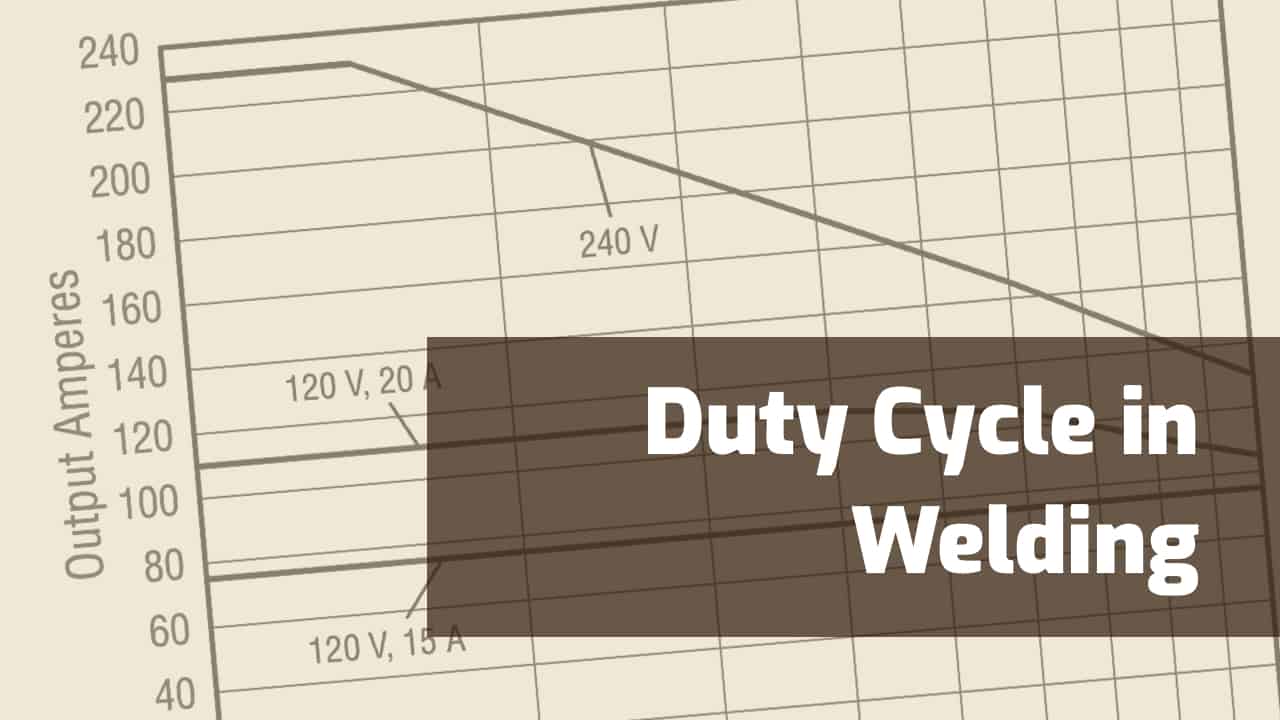
Here's where it gets interesting: duty cycle isn't a fixed number; it's tied to the amperage you're welding at. Imagine trying to lift a feather versus a small car. The feather is easy; you can do it all day. The car? You'll be resting after a few seconds. The same goes for your welder.
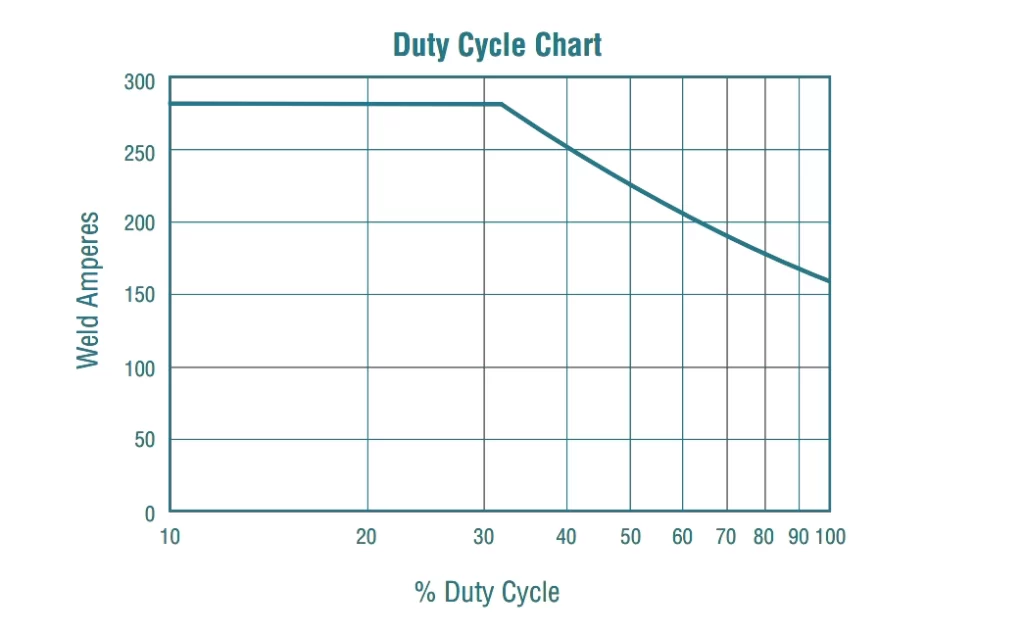
If your machine has a 60% duty cycle at 100 amps, it almost certainly has a lower duty cycle at, say, 200 amps. Maybe 30% or even 20%. Because welding at higher amperages means more power, more heat, and a shorter "sprint" time before it needs to recover. Pushing more power through the machine is like asking your marathon runner to carry a backpack full of bricks. They'll still run, but not for as long.
This is why understanding your machine's specific ratings is crucial. A small hobby welder might have a 20% duty cycle at 90 amps, meaning you get 2 minutes of welding time per 10 minutes. An industrial beast, however, might happily hum along at 100% duty cycle at lower amps, welding literally all day long without breaking a sweat (or a circuit). That's the difference between a casual jogger and an Olympic sprinter who has been genetically engineered for endurance.
The Dreaded Thermal Overload (and What Happens Next)
When you ignore your welder's pleas for a break and push it past its duty cycle, the thermal overload circuit kicks in. This is a safety mechanism designed to save your investment from self-immolation. It cuts the power, usually leaving you staring at an unlit arc and a very sad piece of metal. You might hear the fan still whirring, that's it trying its best to cool things down. It's like your personal pit crew, but for heat management instead of tire changes.
Sometimes, if you're really abusive, you might even smell that dreaded "magic smoke" escaping from the electronics. And once the magic smoke leaves, it's notoriously difficult to put it back in. That's usually when your welding machine transitions from a powerful tool to an extremely heavy and expensive paperweight. So, unless you're aiming to create a modern art sculpture titled "The Price of Ignorance," always respect the duty cycle.

Practical Tips for the Savvy Welder
1. Read the Manual: Yes, I know. It's boring. But it's where your machine's exact duty cycle ratings are. Knowledge is power, and also saves you money on replacement parts.
2. Listen to Your Machine: If it's sounding strained, smelling weird, or that little yellow light comes on, take a break. Your machine is talking to you!
3. Plan Your Welds: For longer welds, consider breaking them into segments. Weld a bit, clean your weld, maybe grab a drink, then weld again. You're giving the machine a mini-break without losing your flow.
4. Consider Your Environment: Welding in a scorching garage in July will stress your machine more than welding in a cool, air-conditioned shop. Ambient temperature matters!
5. Your Own Duty Cycle: Let's be honest, you also have a duty cycle. Welding is taxing. Take breaks, stretch, hydrate. A refreshed welder makes better welds than an overheated, grumpy one.
So there you have it! Duty cycle isn't some mystical dark art; it's just your welder's way of saying, "Hey, I'm working hard for you, but I need to pace myself." Understand it, respect it, and your machine will serve you faithfully for years to come. Ignore it, and you'll learn a very expensive lesson about the importance of a good, long rest. Happy welding!