What Is Difference Between Soldering And Brazing

Imagine you're building a magnificent Lego castle. You've got the walls, the towers, the moats... but how do you actually stick those pesky bricks together permanently? Okay, Lego doesn't require permanent bonding (thank goodness!), but what if it did? That's where our dynamic duo, soldering and brazing, ride in to save the day! They're like the super glue of the metal world, but with fire! Ooh, exciting!
So, what's the difference? Well, think of it like this: soldering is like melting cheese on a cracker. Brazing? More like cementing those crackers together with molten chocolate... but stronger. Much stronger.
Soldering: The Delicate Dance
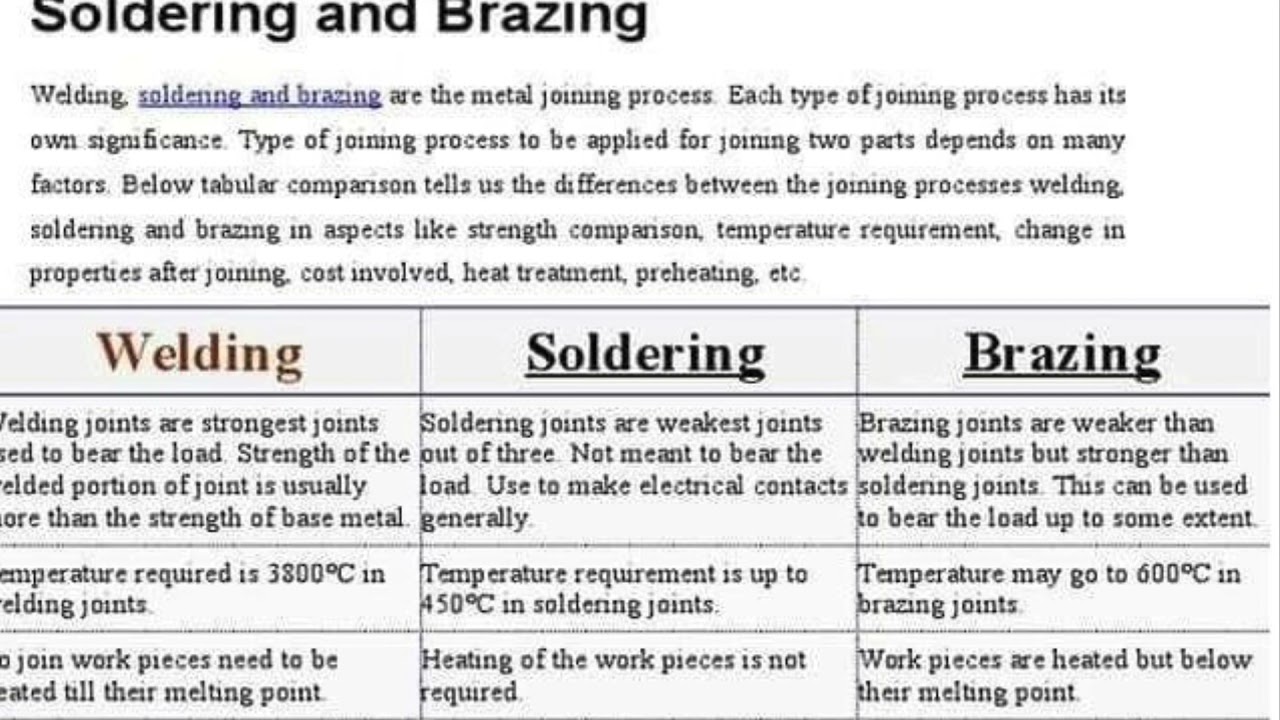
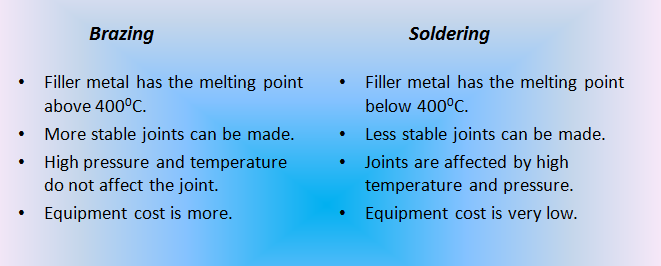
Soldering is the kinder, gentler of the two. It's the method your tech wizard friend uses to fix your phone's charging port (hopefully!). It uses a filler metal, usually a blend including tin and lead (though lead-free options are increasingly popular), that melts at a relatively low temperature – typically below 450°C (842°F). Think of it as the gourmet glue of electronics. The base metals you're joining – say, copper wires – don't actually melt themselves. The solder just flows between them, creating a bond as it cools.
Must Read
It's a delicate dance because too much heat, and you risk frying the delicate components nearby. Imagine trying to melt that cheese on your cracker with a blowtorch! Not pretty. It's perfect for electronics, jewelry, and other applications where precision is key and high strength isn't the primary concern. Think Christmas lights – all those tiny wires are held together with solder. A little flame, a little metal, and voila! Festive cheer (until one bulb goes out, of course).
Brazing: The Muscle Man
Brazing, on the other hand, is the muscle man. This technique requires higher temperatures, above 450°C (842°F). It also uses a filler metal, often alloys containing brass, silver, or aluminum. Like soldering, the base metals don't melt, but the higher temperatures involved create a significantly stronger bond. Think of it like welding's slightly less intense cousin.

Because of its strength, brazing is used in applications where things really need to stay put. Joining copper pipes in your plumbing? Brazing. Building bicycle frames? Brazing. Manufacturing heat exchangers? You guessed it... brazing! It's like the molten chocolate that binds those Lego bricks together permanently. You wouldn't want your bicycle frame held together with cheese, would you?
While it requires more heat and specialized equipment, brazing offers a robust and reliable connection. It's the go-to method when structural integrity is paramount. Plus, watching a skilled brazer at work is strangely mesmerizing. The intense heat, the flowing metal, the sparks... it's like a mini-firework display, but for responsible adults!
![Difference Between Brazing and Soldering [Guide with PDF]](https://www.theengineerspost.com/wp-content/uploads/2023/03/Difference-Between-Brazing-and-Soldering.jpg)
So, Which One to Choose?
Choosing between soldering and brazing depends entirely on the job at hand. Need to repair a delicate electronic circuit? Grab your soldering iron. Building a metal gate that needs to withstand the test of time? Brazing is your friend. It’s about understanding the properties of each technique and matching them to the specific requirements of your project.
Think of it like this: soldering is like using a small paintbrush for detail work, while brazing is like using a broader brush for larger strokes. Both have their place in the artistic masterpiece that is metal joining!
And the next time you're admiring a beautifully crafted piece of jewelry or marveling at the structural integrity of a bridge, remember the unsung heroes of joining technology: soldering and brazing. They may not be as glamorous as the finished product, but they’re the backbone – or rather, the bonded joints – that hold it all together. Who knew melting metal could be so fascinating?
And hey, if all else fails, there's always duct tape... Just kidding! (Please don't use duct tape for structural repairs.)