
What Is Difference Between Amplifier And Receiver
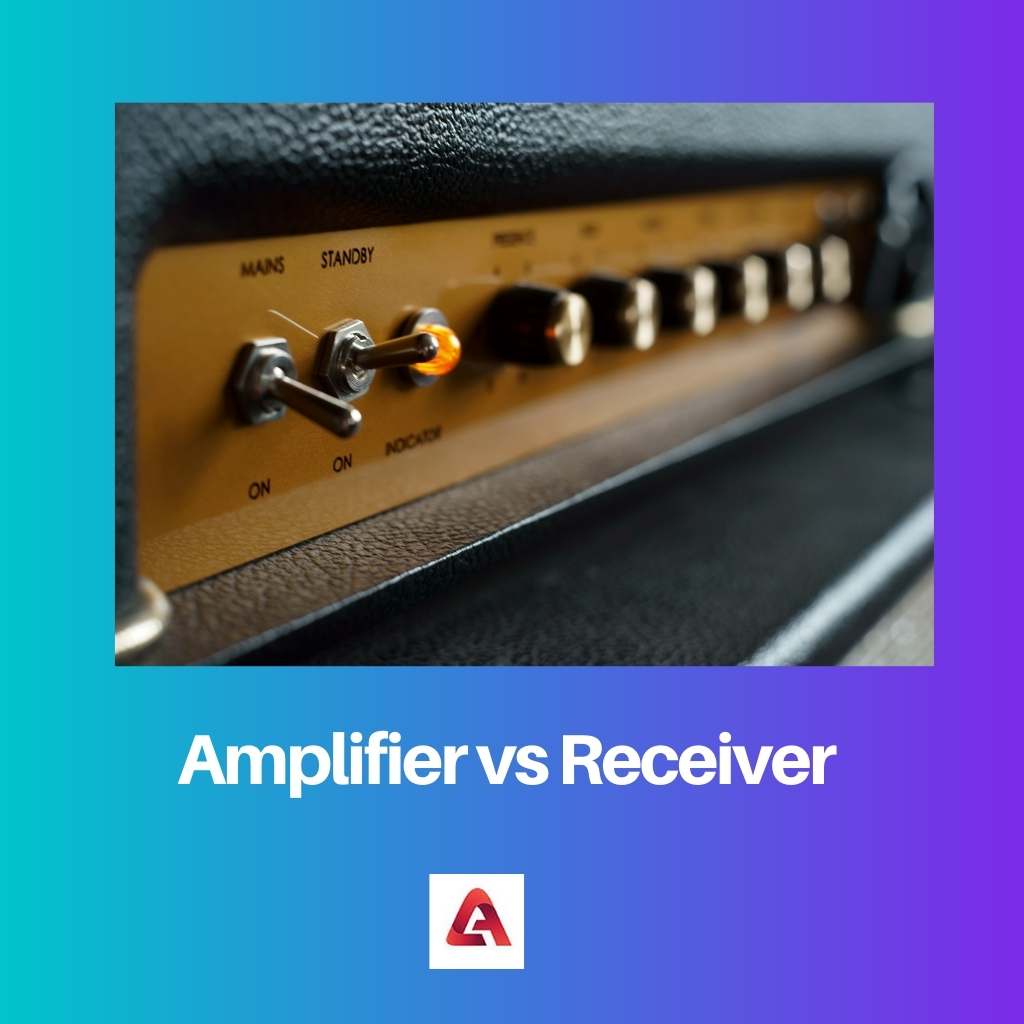
Ever wondered how that tiny whisper from your guitar becomes a stadium-shaking roar? Or how the subtle nuances of a movie soundtrack fill your living room? The secret lies in understanding the unsung heroes of audio: the amplifier and the receiver. While often used interchangeably, these devices have distinct roles in bringing your audio dreams to life.
For artists, hobbyists building their own sound systems, or even just casual listeners wanting a better audio experience, understanding the difference between these two is crucial. Knowing how they work lets you tailor your setup for optimal sound quality. Are you a musician looking to practice without disturbing the neighbors? An amplifier, coupled with headphones, can be your best friend. Planning a home theatre? A receiver is likely what you need to orchestrate the sound.
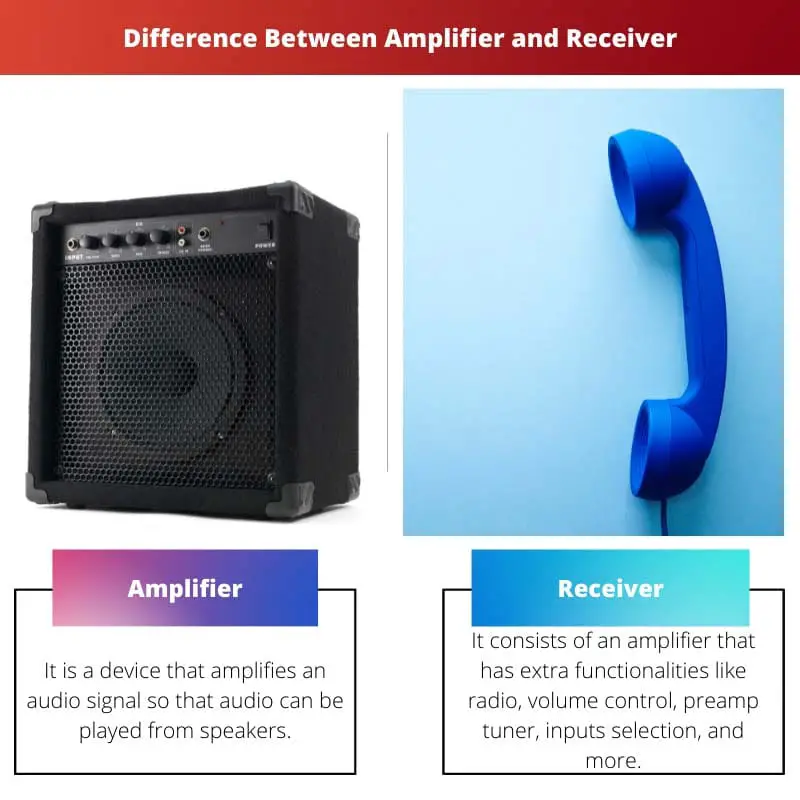
So, what exactly is the difference? Think of the amplifier as a dedicated muscle. Its sole purpose is to take a weak audio signal, say from your instrument, and make it stronger. It boosts the voltage or current of the signal, allowing it to drive speakers. Amplifiers come in various forms: guitar amps, headphone amps, and power amps are common examples. A classic tube amp, for instance, is favored by guitarists for its warm, overdrive sound. Solid-state amplifiers are often prized for their clean, precise audio replication.
Must Read
On the other hand, the receiver is like the command center of your audio system. It integrates multiple functions. It includes an amplifier, yes, but also features a preamplifier (which handles initial signal processing), a tuner for receiving radio signals, and often includes input/output connections for various devices like Blu-ray players, gaming consoles, and streaming devices. Receivers are often categorized by their channels (e.g., 5.1, 7.2), indicating the number of speakers they can support in a surround sound setup. They also boast advanced features like Bluetooth connectivity, network streaming capabilities, and Dolby Atmos support for immersive audio experiences.
Want to experiment at home? If you play an instrument, try plugging it directly into a small practice amplifier. Notice how the volume and tone controls shape the sound. Then, if you have a home theater receiver, explore its menu options. Try adjusting the equalizer settings or experimenting with different surround sound modes. Pay attention to how these adjustments impact the overall listening experience. Playing with these settings will quickly demystify the function of these devices.
Ultimately, understanding the difference between an amplifier and a receiver empowers you to create a personalized audio experience. It’s not just about louder sound; it’s about clearer, richer, and more immersive sound. And who wouldn't enjoy a system that allows you to fully appreciate your favourite music, movies, and games? Happy listening!


