What Is Destructive And Non Destructive Testing

Hey there, curious minds! Ever wondered how we know if that bridge you drive over every day is safe? Or how engineers are sure your phone won't explode (hopefully!)? Well, buckle up, because we're diving into the fascinating world of Destructive and Non-Destructive Testing! Trust me, it's way cooler than it sounds. And no, we're not talking about robots deciding whether to terminate humanity (phew!).
Let's start with the basics. Imagine you're baking a cake. (Okay, maybe imagining baking a cake is easier for some of us… ahem!). How do you know if it's cooked properly? You probably stick a toothpick in it, right?
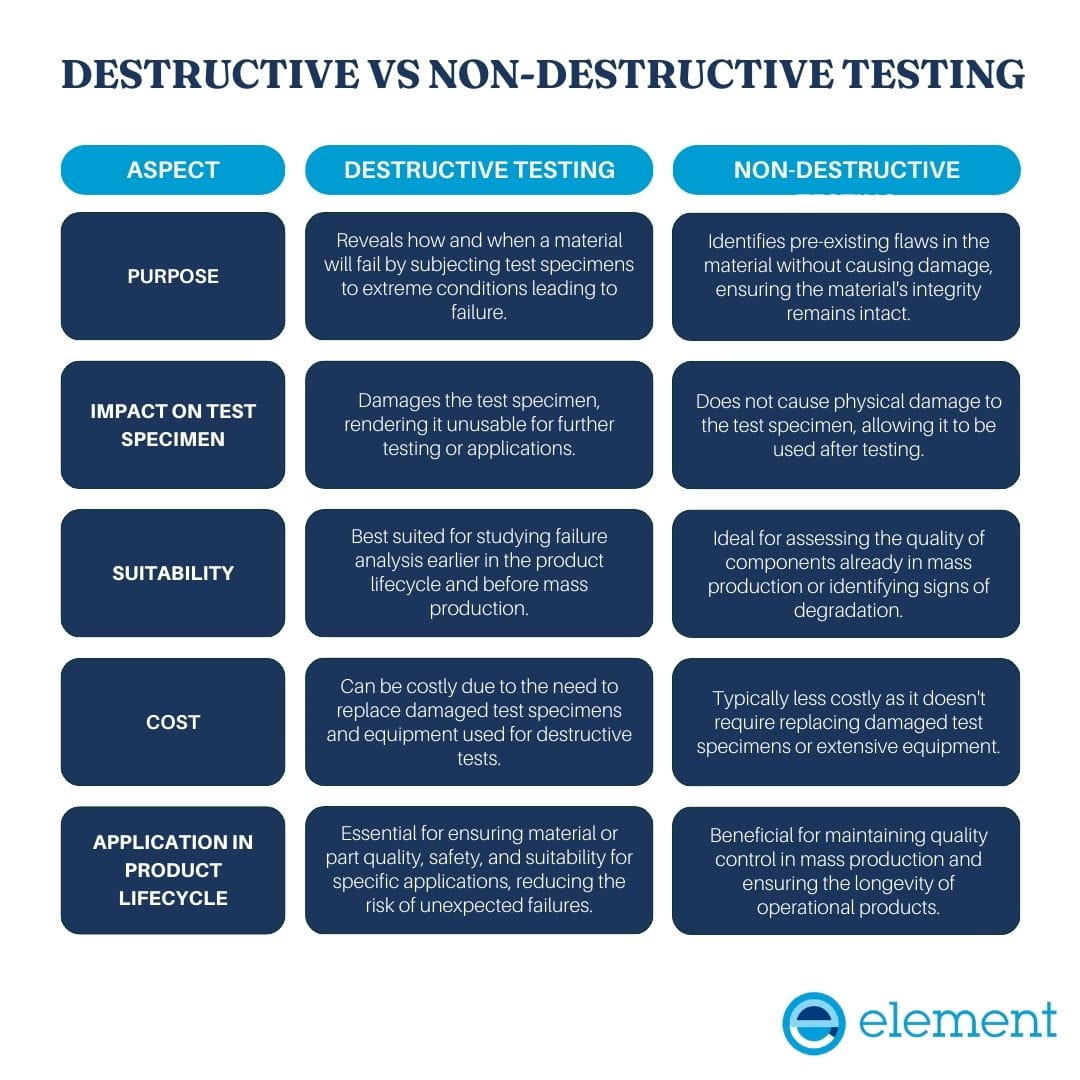
That, my friends, is kind of like destructive testing. You're taking a small sample (the toothpick hole) and using it to judge the whole thing (the cake). In the world of engineering, destructive testing means… well, destroying something to see how strong it was. Think of it like stress-testing a metal beam until it snaps. We learn a lot from that snap – its breaking point, its weaknesses, its potential flaws. But, obviously, we can't use that beam for anything anymore. It's toast!
Must Read
Why would anyone want to destroy something? Great question! It's all about understanding. By pushing a material to its absolute limit, engineers gather crucial data about its properties. This data informs design choices, manufacturing processes, and helps predict how similar materials will behave in real-world conditions. Safety, after all, is paramount. And let’s be honest, sometimes watching stuff break in a controlled environment is just plain satisfying. (Don’t tell anyone I said that!)
Some common methods for destructive testing include:
- Tensile testing: Pulling something until it breaks. Classic!
- Impact testing: Hitting something really hard to see how it holds up. Think sledgehammer meets sample.
- Fatigue testing: Repeatedly stressing something until it fails. Like the engineering equivalent of poking someone until they snap.
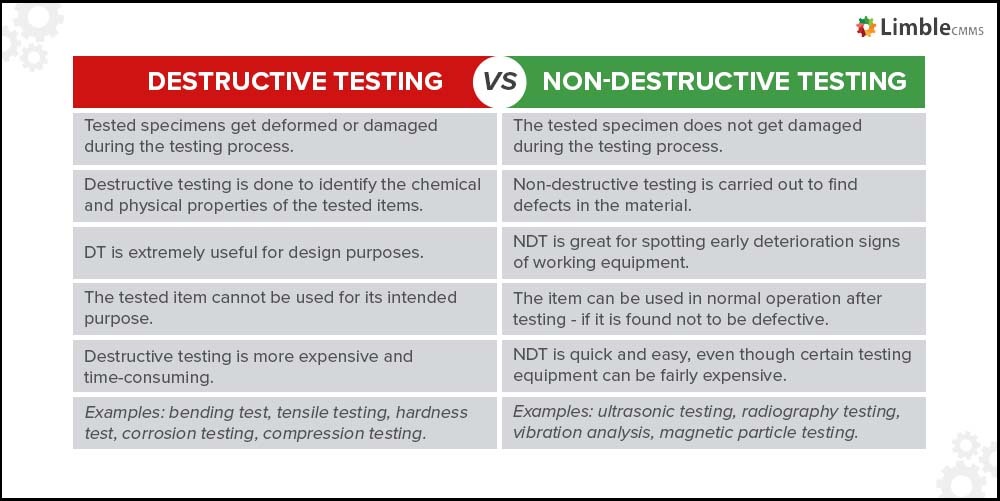
Now, let’s switch gears to something a little less… violent. Enter Non-Destructive Testing (NDT)! As the name suggests, NDT allows us to evaluate the properties of a material, component, or system without causing damage. It's like giving your cake a quick visual inspection and smelling it to see if it's ready, before committing to the toothpick test.
So, how does NDT work its magic? Through a variety of clever techniques that exploit different physical phenomena. Think X-rays (like when you break a bone), ultrasound (like when you're checking on a baby), or even just a really, really good magnifying glass! The goal is to identify internal flaws, surface defects, or variations in material properties without compromising the integrity of the object being tested.
Imagine the possibilities! Inspecting airplane wings for cracks without taking the plane out of service. Checking pipelines for corrosion without digging them up. Ensuring the structural integrity of historical monuments without chipping away at them. Pretty amazing, right?
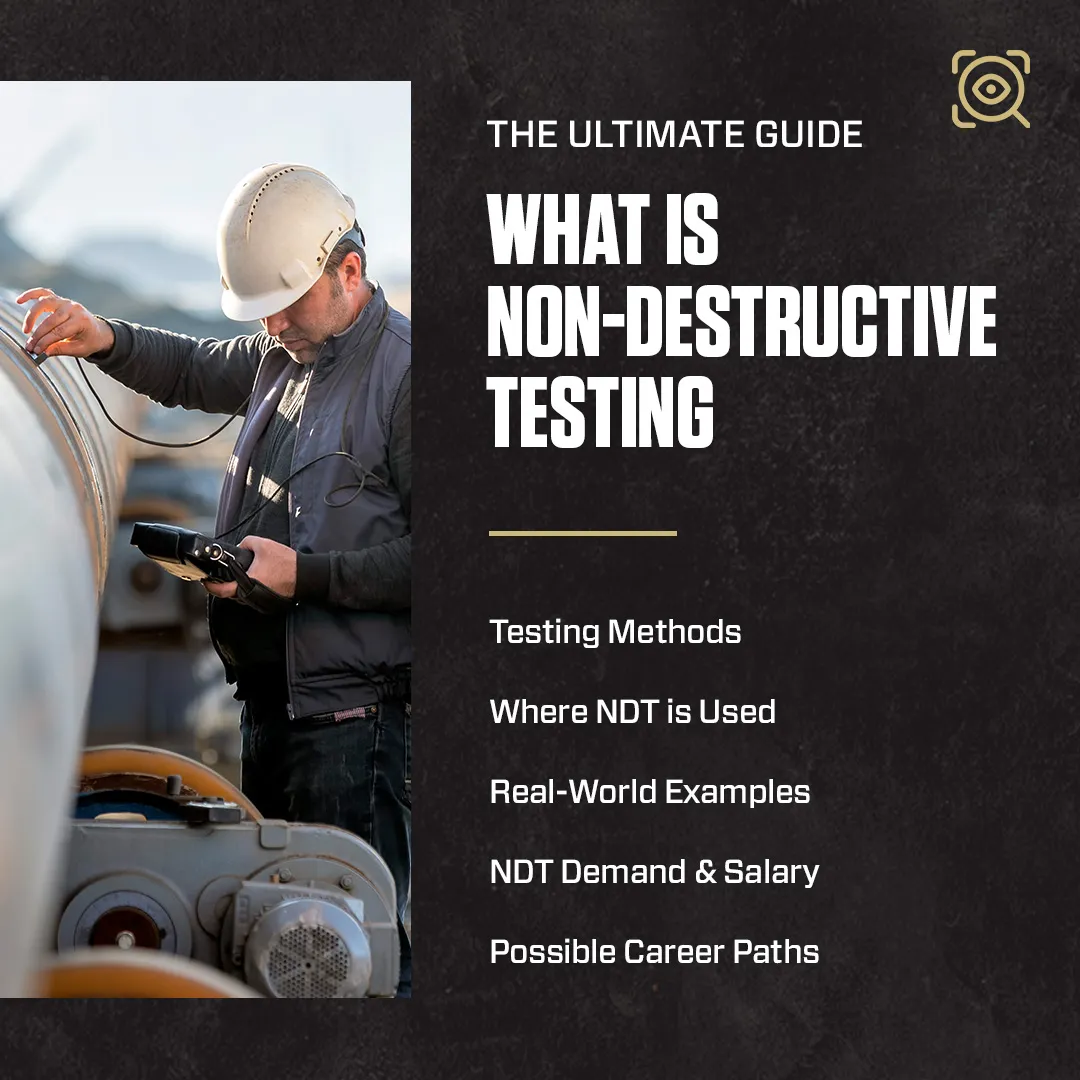
Here are some of the most popular NDT methods:
- Radiography: Using X-rays or gamma rays to create images of the internal structure.
- Ultrasonic testing: Using sound waves to detect internal flaws.
- Visual inspection: Looking for surface defects with the naked eye (or with the help of magnification). Simple, but effective!
- Magnetic particle testing: Detecting surface cracks in ferromagnetic materials.
- Dye penetrant testing: Using a colored dye to highlight surface cracks.
Why is NDT so important? Well, it saves time, money, and resources! Think about it: if you can identify a potential problem early on, you can fix it before it becomes a major catastrophe. This leads to increased safety, improved product quality, and reduced maintenance costs. Who wouldn't want that?
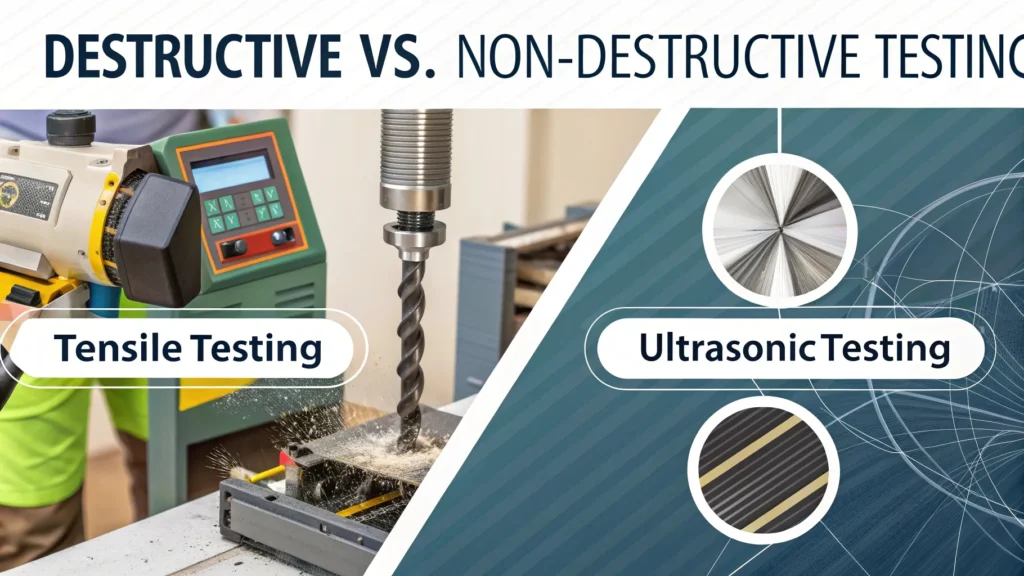
So, which is better: Destructive or Non-Destructive Testing? It's not really a competition! They both play vital roles in ensuring the safety and reliability of the things we use every day. Destructive testing provides valuable data about material properties, while NDT allows us to inspect structures and components without causing damage. They're two sides of the same coin, working together to make the world a safer, more reliable place.
Whether it's ensuring the strength of a skyscraper or the integrity of a tiny microchip, destructive and non-destructive testing are the unsung heroes of modern engineering. It’s the reason you can (probably) trust that bridge you drive over, and the plane you fly in. It's pretty cool to know that there are people out there dedicating their time to making sure everything is safe and sound! (High five to all the testers out there!)
Feeling inspired? There’s a whole universe of knowledge waiting to be explored in the world of materials science and engineering. Delve deeper into specific testing methods, research fascinating case studies, and maybe even consider a career in this vital field! The possibilities are endless, and the impact you can have is truly significant. So go forth and explore! Who knows, maybe you'll be the one making our world a safer, stronger place.