
What Is Dc And Ac In Electricity
Alright, pull up a chair, grab yourself a coffee – or maybe something a bit more electrifying – because we're about to demystify something you interact with every single day without ever really thinking about it: electricity. Specifically, its two main personalities: DC and AC. Think of them as the odd couple of the power world, constantly bickering but somehow making everything work.
Imagine electricity as a tiny, invisible parade of electrons. Now, how those electrons march determines if you're dealing with DC or AC. It’s not magic, just physics with a really good marketing team.
Meet DC: The Steady Eddie of Electrons
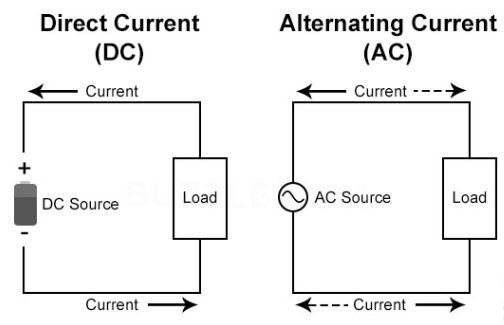
First up, we have DC, which stands for Direct Current. And let me tell you, DC is the most disciplined, predictable electron flow you'll ever meet. It’s like that friend who always takes the same route to work, never deviates, and always knows exactly where they're going.
Must Read
With DC, electrons march in one direction only. From point A to point B, no detours, no U-turns, no "ooh, shiny!" moments. Think of it as a one-way street for electrons. This makes DC fantastic for things that need a steady, reliable push of power.
Where do you find this consistent current? Everywhere! Your smartphone? DC. Your laptop battery? DC. That flashlight you use during power outages (because you always remember to charge it, right?)? You guessed it, DC. Your car battery, those little button cells in your watch, even the mighty sun's solar panels – all Direct Current champions. It’s the power behind all your portable gadgets and anything that runs on a battery.

The beauty of DC is its simplicity. It’s clean, it’s consistent, and it's perfect for delicate electronics that hate surprises. The downside? It doesn't like traveling long distances. It gets tired, loses its oomph, and peters out pretty quickly without a lot of help. Imagine trying to push a whole river of water up a mountain with just a garden hose. That's DC trying to power a city block from miles away.
Now for AC: The Wild Child of Watts
And then there's AC, short for Alternating Current. If DC is the predictable friend, AC is that other friend who changes their mind every five seconds, can't decide where they want to go for dinner, and probably ends up doing a spontaneous road trip across the country. These electrons are energetic, to say the least.
Instead of flowing in one steady direction, AC electrons are constantly switching back and forth, reversing their direction in a frantic, rhythmic dance. In North America, they do this incredible reversal act 60 times a second (that's 60 Hz!). In many other parts of the world, it’s 50 times a second. Imagine trying to march in a parade where the commander yells "LEFT! RIGHT! LEFT! RIGHT!" at lightning speed. It’s exhausting just thinking about it!
So, why would anyone want such indecisive electrons? Because AC is incredibly good at traveling long distances. It can be easily "stepped up" to very high voltages for efficient transmission across vast power lines, and then "stepped down" to safer voltages for your home. It’s like magic, but with transformers instead of wands.
Everything you plug into a wall socket in your home – your fridge, your TV, your toaster, that giant neon sign you secretly keep in your garage – runs on AC. It's the powerhouse that lights up entire cities, powers factories, and brings you that delightful hum from your computer tower.
The Epic Battle: Edison vs. Tesla (and the Elephant)
This isn't just a technical difference; it was once the subject of a bitter, no-holds-barred rivalry known as the "War of the Currents." In one corner, you had Thomas Edison, the famous inventor, championing his beloved DC. In the other, the brilliant, eccentric Nikola Tesla (and his patron, George Westinghouse), pushing for AC.
Edison was convinced DC was safer and superior, and he went to some extreme lengths to prove AC was dangerous. He literally campaigned against it, even reportedly funding public electrocutions of animals (including an elephant!) using AC, trying to terrify people into sticking with DC. Talk about a shocking marketing strategy!
But despite Edison's theatrical (and frankly, horrifying) efforts, Tesla's AC won the day. Its ability to travel miles without huge energy loss, thanks to easy voltage transformation, made it the undisputed champion for powering homes and industries. If you've ever seen those massive power lines strung across the countryside, you're looking at Tesla's legacy in action.
The Modern World: A Beautiful Coexistence
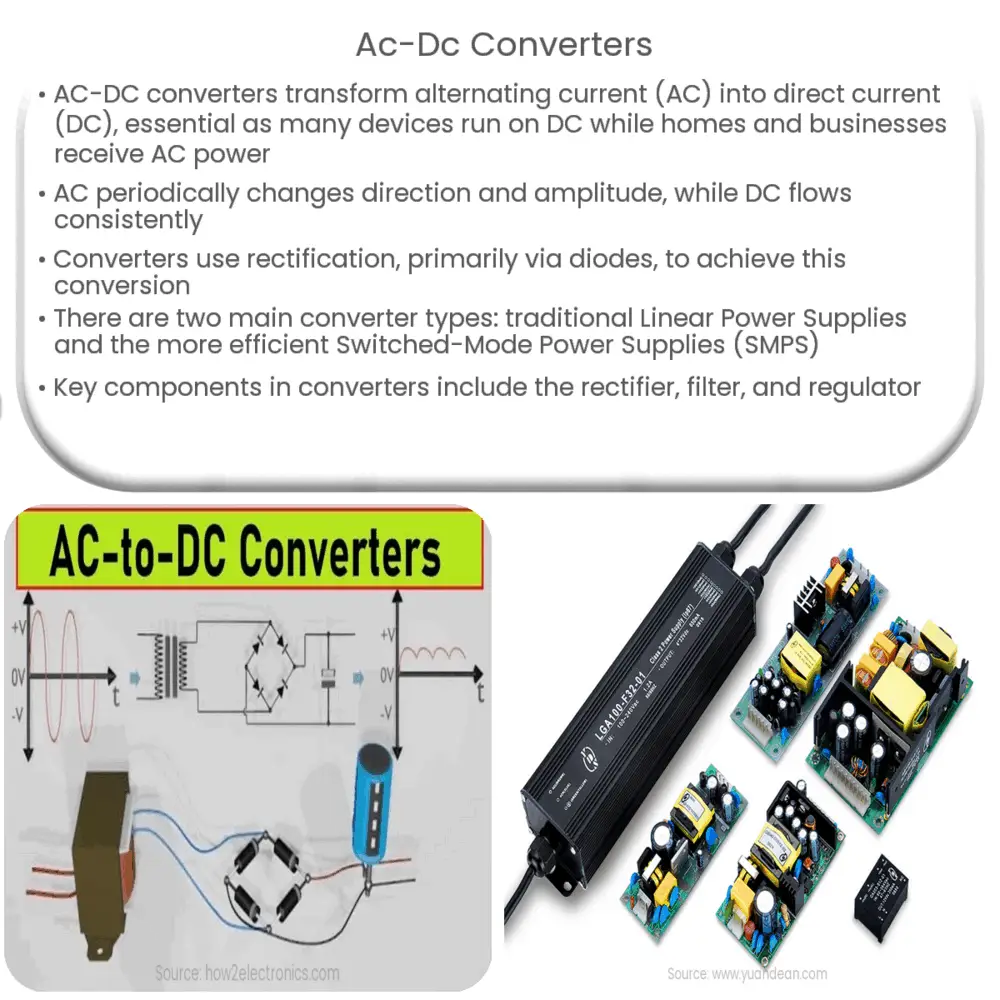
So, does that mean DC is obsolete? Heavens no! In our modern world, these two former rivals are actually the best of friends, working hand-in-hand. You see, while the electricity comes to your home as AC, many of your devices actually prefer DC.
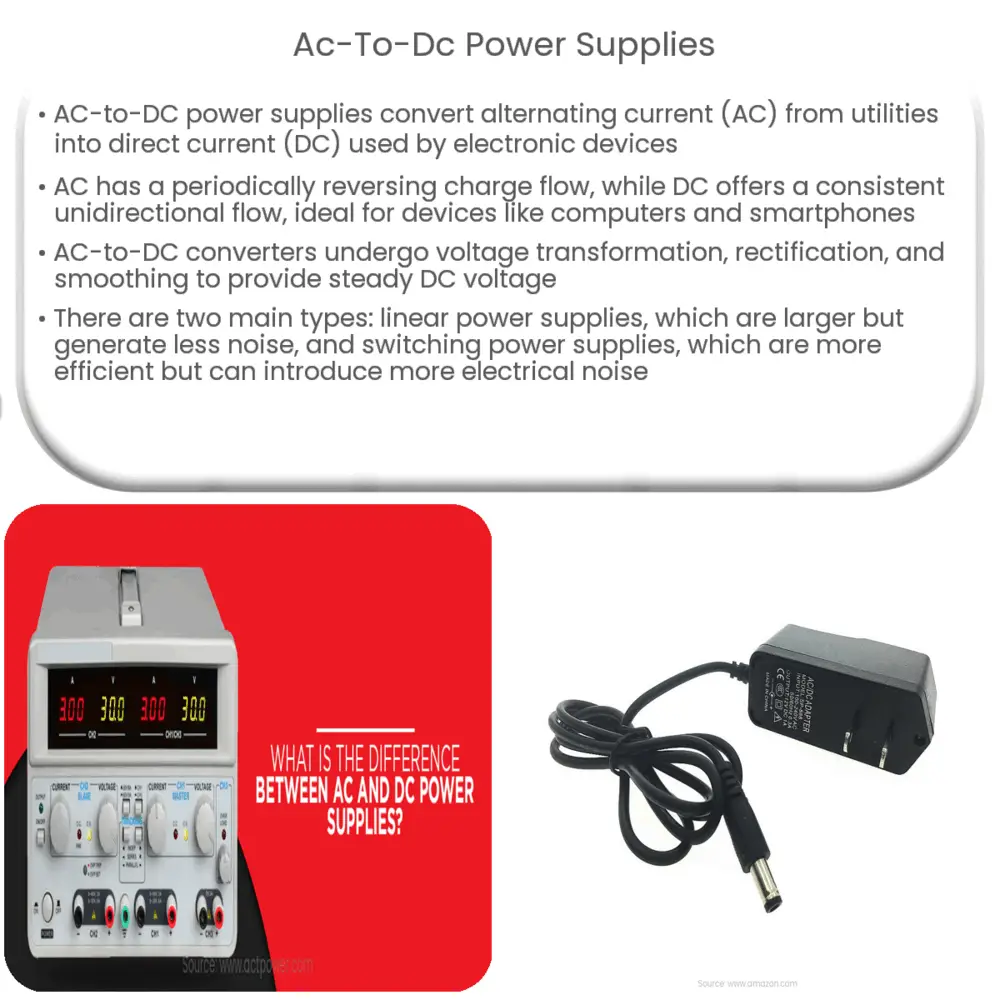
Think about your phone charger. That little brick or dongle you plug into the wall? That's not just a fancy adapter; it's a miniature electrical diplomat, translating the aggressive incoming AC from your wall into the polite, steady DC your phone battery craves. It’s an AC-DC converter, working tirelessly to keep your gadgets juiced up.
Even though our homes are wired for AC, many modern applications are seeing a resurgence of DC. Solar panels produce DC directly. Electric vehicles run on DC. Modern data centers, packed with servers, are exploring DC power distribution because it's more efficient for their specific needs. It’s a full-circle moment!
So, the next time you flip a light switch or plug in your phone, take a moment to appreciate the invisible dance happening behind the scenes. Whether it's the steady march of DC or the frantic jig of AC, these two forces are literally powering your world. And isn't that just a little bit electrifying?