
What Is Carbon Fiber Made Of
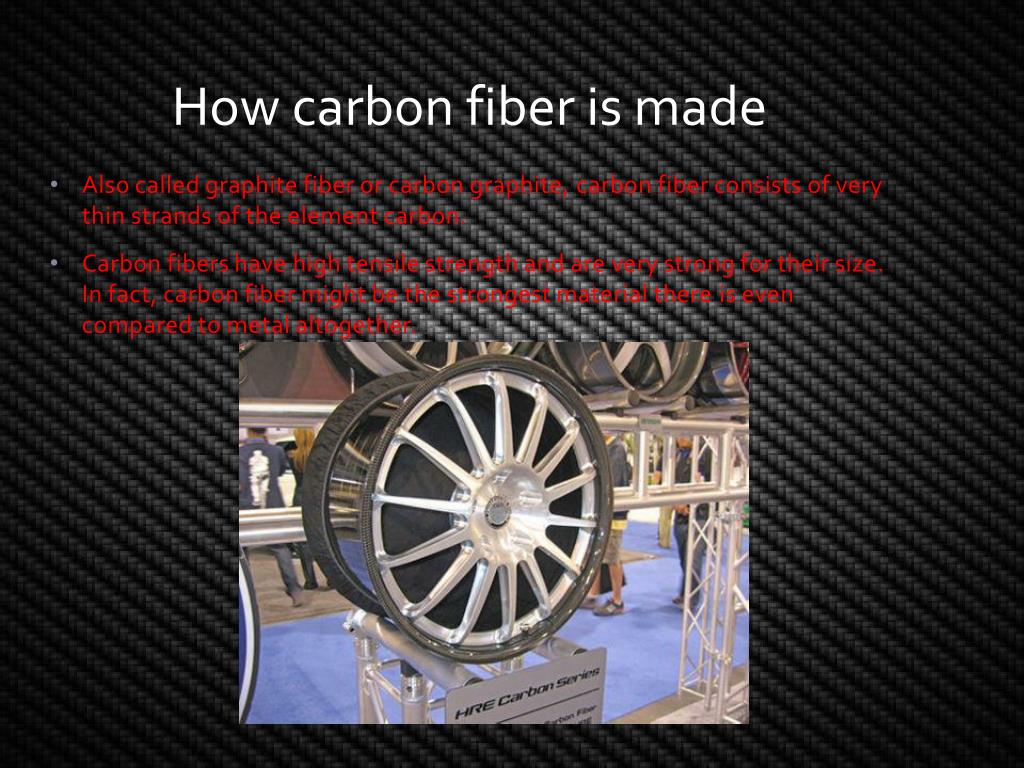
Ever wondered what makes high-performance bikes so light, or why fancy sports cars look so sleek and are incredibly strong? Chances are, you've encountered a superhero material called carbon fiber. It's everywhere, from airplanes soaring above us to the latest high-tech gadgets and even prosthetics. It's super strong, super light, and let's be honest, it looks pretty cool too with its distinctive weave.
But have you ever paused to think: What is carbon fiber actually made of? Is it some space-age metal? A special kind of plastic? Or something else entirely? Prepare to have your mind gently blown, because the answer is both surprisingly simple and incredibly clever.
The Big Secret: It's Mostly... Carbon!
Okay, perhaps that's not a huge shocker, given the name. But it's not just any old carbon. Think about it: a pencil lead is made of carbon (graphite), and diamonds are also made of carbon. Yet, one is soft and breaks easily, and the other is the hardest natural material on Earth. The magic isn't just what it is, but how those carbon atoms are arranged and treated.
Must Read
So, if it’s not pencil lead, and it’s not diamonds (imagine how expensive a carbon fiber bike would be then!), what kind of carbon are we talking about? The journey to becoming carbon fiber is a bit like a dramatic makeover for a rather ordinary starting material.
From Humble Beginnings: The PAN-tastic Transformation
Believe it or not, most carbon fiber doesn't start as pure carbon. It typically begins its life as a synthetic polymer called Polyacrylonitrile, or PAN for short. Sounds fancy, right? PAN is basically a type of plastic, often used in things like acrylic fabrics. If you have a sweater that feels a bit like wool but isn't, it might have some PAN in it!

Imagine taking something that feels a bit like a synthetic yarn and turning it into a material strong enough to build an airplane wing. That's the impressive feat we're talking about.
The Heat is On: Baking Out Everything But Carbon
This is where the real alchemy happens. The PAN fibers undergo a series of intense heating processes. Think of it like baking, but on a super industrial, ridiculously hot scale.
First, the PAN fibers are slowly and carefully heated in ovens at lower temperatures (though still very hot by human standards!). This step, called stabilization, changes the chemical structure of the fibers, making them more stable and ready for the next extreme stage. It's like gently toasting them to prepare them for the main event.
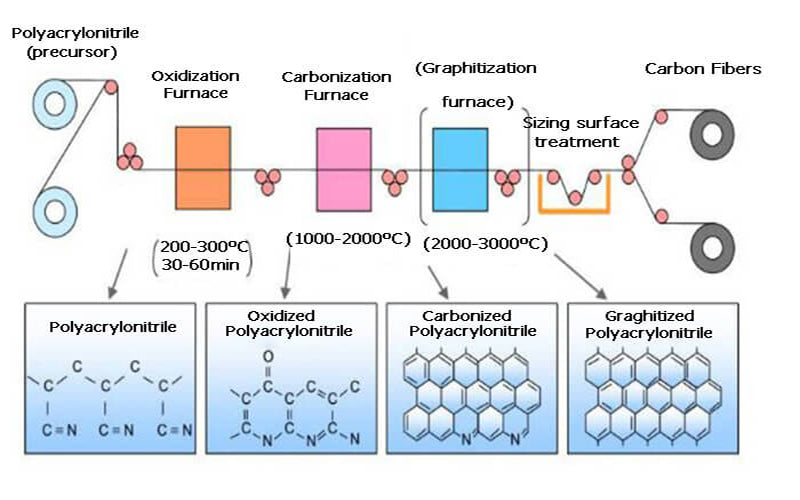
Next comes the big one: carbonization. The stabilized fibers are moved into furnaces and heated to mind-boggling temperatures – often between 1,000 to 3,000 degrees Celsius (that's 1,800 to 5,400 degrees Fahrenheit!). And here's the crucial part: this happens in an oxygen-free environment. Why no oxygen? Because if there were oxygen, the fibers would simply burn to ash.
In this incredible heat, everything but the carbon atoms gets driven out of the fibers. All the hydrogen, nitrogen, and oxygen atoms literally burn off, leaving behind incredibly pure, long, tightly bonded chains of carbon atoms. Imagine taking a complex molecule and essentially incinerating everything from it until only its carbon skeleton remains. Pretty neat, huh?
From Naked Fiber to Sticky Stuff
Once those pure carbon strands are formed, they're incredibly strong but also a bit inert. To make them play nice with other materials later, they get a couple more treatments. First, their surface is slightly etched or oxidized. This creates tiny imperfections, almost like microscopic hooks, that help them bond better with the "glue" that will eventually hold them together.

Then, they're coated with a protective layer, often called sizing. This coating protects the delicate fibers from damage during handling and further processing, and also helps them stick even better to the resin.
The "Fiber" Part: Building the Super Material
What we have now are individual, hair-thin strands of pure carbon. They're strong, yes, but also flexible like thread. To turn them into the rigid, shape-holding material we know, these individual carbon fibers are twisted together into yarns, much like cotton is spun into thread. These yarns are then woven into sheets or laid out in specific patterns. This is where you see the characteristic "weave" that makes carbon fiber so recognizable and cool-looking.
But even these woven sheets aren't rigid on their own. They need a partner! That partner is usually a strong, adhesive plastic called epoxy resin. Think of the carbon fibers as the super-strong rebar in concrete, and the epoxy resin as the concrete itself. The fibers provide the incredible strength and stiffness, while the resin holds them all together, transferring loads between them, and giving the material its solid shape.

Together, this combination of carbon fibers and resin is called a composite material. It’s the ultimate team-up: the fibers doing the heavy lifting, and the resin ensuring they stay in formation.
Why Is It So Awesome?
So, why go through all this trouble? Because the result is astonishing. Carbon fiber composites offer an incredible strength-to-weight ratio. They're significantly stronger and stiffer than steel for the same weight, and much lighter than aluminum for the same strength. This means engineers can design structures that are incredibly robust but also incredibly lightweight, leading to fuel efficiency in planes, speed in race cars, and agile performance in sports equipment.
It’s truly a marvel of modern materials science – taking a common element, carbon, and through ingenious processing, transforming it into one of the most high-performance materials on Earth. Next time you spot that cool carbon fiber weave, you'll know it's not just a fancy look; it's the result of some serious heat and a whole lot of clever chemistry!