
What Is An Areal Flood Warning
Ever scroll through your phone and see a weather alert pop up? Maybe it’s for a thunderstorm, or a tornado watch. But have you ever paused on something a little more specific, like an Areal Flood Warning? Sounds a bit fancy, right? Like something out of a sci-fi movie about water management.
Well, fear not, curious reader! It's not nearly as complicated as it sounds, and actually, it’s pretty darn interesting how meteorologists give us these specific heads-ups. Let's peel back the curtain and chill out with the concept of an Areal Flood Warning.
So, What's the Deal with "Areal"?
Think of "areal" as simply meaning "related to an area." So, an Areal Flood Warning is basically a heads-up that a whole area is likely to experience flooding. But wait, isn't all flooding in an area? Good point! This is where it gets nuanced, and frankly, quite clever.
Must Read
You've probably heard of other flood warnings, like a Flash Flood Warning. That's for when water suddenly, you guessed it, flashes over an area – usually due to intense, rapid rainfall that quickly overwhelms drainage systems or causes small creeks to burst their banks. Think of it like a sudden, violent downpour turning a street into a river in minutes. Super intense, super dangerous, super fast.
Then there are River Flood Warnings. These are pretty straightforward: a river or stream is expected to overflow its banks. This usually happens after a lot of rain upstream, or perhaps snowmelt. It's like a bathtub slowly filling up and eventually spilling over the sides. You get the picture.

The Special Sauce of the Areal Warning
An Areal Flood Warning is a bit different. It’s not about one specific river bursting its banks, and it's not about an immediate, sudden wall of water. Instead, it's about widespread, generally shallow flooding across a larger geographical area. Imagine the ground itself becoming saturated, and water just starts pooling everywhere because there's nowhere else for it to go.
Picture this: You’ve had several days of steady, moderate rain. Not a downpour, not a storm, just a persistent, soggy drizzle that refuses to quit. Or maybe you've had a strong, but not extreme, rainfall event that covers a large region. The ground becomes like a giant, over-saturated sponge. It simply can't soak up any more water.

What happens next? Well, all that extra water has to go somewhere! It starts to collect in low-lying areas, fields, streets, and sometimes even basements. Drains might get overwhelmed, not by a sudden deluge, but by the sheer, relentless volume of water over time. It’s like trying to empty a swimming pool with a coffee stirrer – it just can’t keep up.
Why Do We Need This Specific Warning?
This type of flooding might not look as dramatic as a flash flood, but it can still be incredibly disruptive and dangerous. Think about urban areas with lots of concrete and less natural ground to absorb water. An Areal Flood Warning here means that even if a river isn't threatening to overflow, your local streets could become impassable. Underpasses might fill up, and low-lying intersections could become miniature lakes.
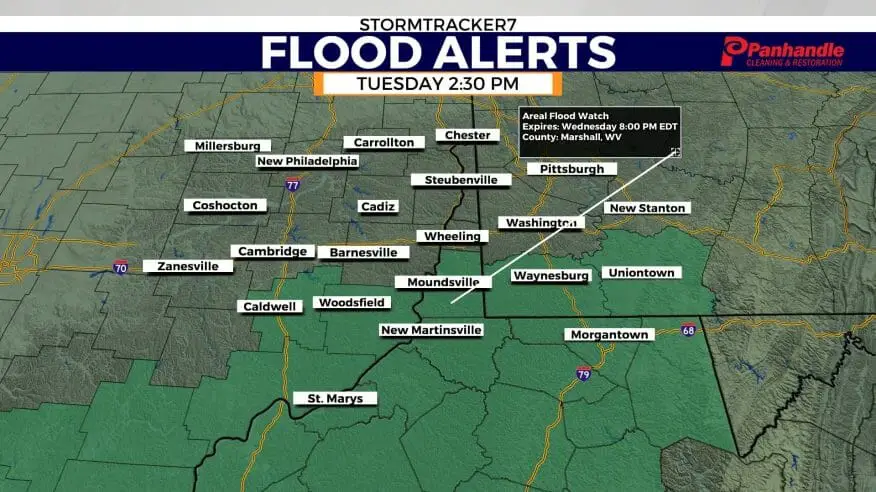
It’s also super important for rural areas, where large fields might become completely submerged, affecting agriculture and making certain roads impassable. It’s a heads-up that travel could become difficult or even hazardous due to widespread water covering roads, not just a specific bridge or river crossing.
The cool thing about this warning is its focus on the cumulative effect of rainfall. It tells us that enough water has fallen (or is expected to fall) over a broad area to cause flooding problems, even if no single weather event was catastrophic. It's the "death by a thousand puddles" scenario, if you will, but much more serious.
What Should You Do When You See One?
When an Areal Flood Warning pops up, it’s a gentle nudge to be aware and cautious. It’s not usually a call for immediate evacuation like a flash flood warning might be, but it’s definitely a signal to:
- Be extra careful on the roads: Remember the golden rule: "Turn around, don't drown!" Even shallow water can hide hazards, or be deeper and stronger than it looks.
- Check your home: If you have a basement, make sure sumps are working, and consider moving valuables off the floor.
- Stay informed: Keep an eye on local weather updates and road closures.
- Limit unnecessary travel: Why risk it if you don't have to?
The Unsung Heroes Behind the Scenes
Meteorologists and hydrologists are constantly monitoring weather patterns, ground saturation levels, and drainage capacities to issue these warnings. They use sophisticated models, radar data, and rain gauges to understand how much water is falling and where it’s likely to go. It’s a fascinating blend of science and real-world application, all designed to keep us safe and informed.
So, next time you see that "Areal Flood Warning" pop up, instead of just dismissing it, take a moment to appreciate the science and forethought behind it. It’s a very specific, very useful tool in our weather-watching toolkit, helping us understand that sometimes, it’s not about one big splash, but rather a widespread, soggy situation that warrants our attention. Stay curious, stay informed, and stay dry!