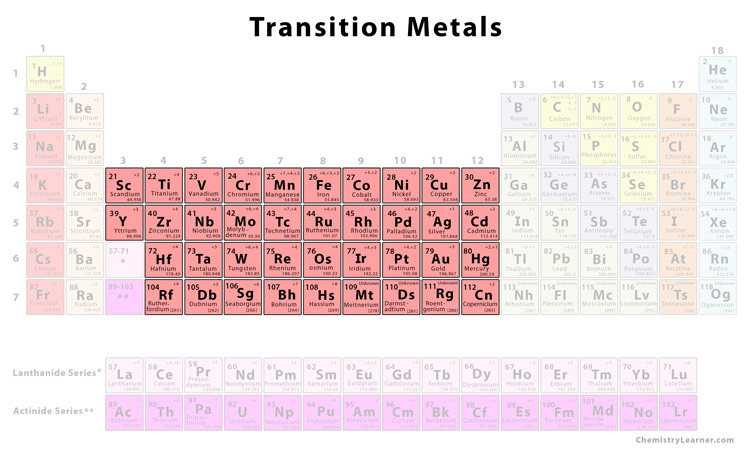
What Is A Transition Metal On The Periodic Table
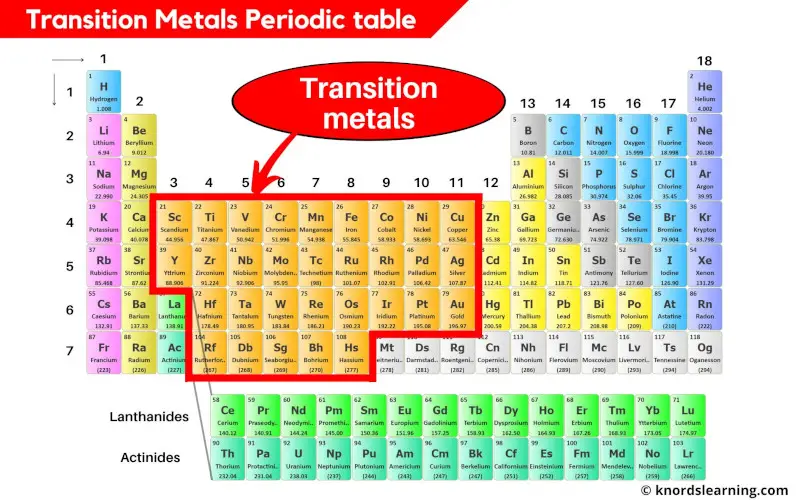
Ever wondered what gives your favorite jewelry its sparkle, or what allows your car to withstand the daily grind? Chances are, transition metals are playing a starring role! These elements, often found lurking in the middle of the periodic table, aren't just any old atoms; they're the unsung heroes of chemistry, responsible for a surprising number of things we use and enjoy every day. Understanding them is like unlocking a secret level of appreciating the world around you.
So, what exactly are transition metals? Well, they're a group of elements (mostly in groups 3-12 on the periodic table) that have a special ability: their atoms can form ions with partially filled d orbitals. Don't let the science jargon scare you! This simply means they have electrons hanging out in a specific area of their atom that aren't completely paired up. This unpaired nature is what gives them many of their unique and useful properties.
One of the coolest things about transition metals is their ability to form colorful compounds. Think of the vibrant blue of copper sulfate crystals, the rich red of rust (iron oxide), or the dazzling gold jewelry you might own. These colors arise because the unpaired electrons in the d orbitals can absorb specific wavelengths of light, reflecting the rest. This property makes them crucial in pigments for paints, dyes, and even those mesmerizing fireworks displays!
Must Read
But transition metals are much more than just pretty faces. They're also fantastic catalysts. A catalyst is something that speeds up a chemical reaction without being consumed in the process. Many industrial processes, like the production of plastics and fertilizers, rely heavily on transition metal catalysts to make them more efficient and cost-effective. For example, iron is a key catalyst in the Haber-Bosch process, which is used to produce ammonia – a vital component of fertilizers that sustains global agriculture. Without these catalysts, many of the things we take for granted would be much more expensive or even impossible to produce.
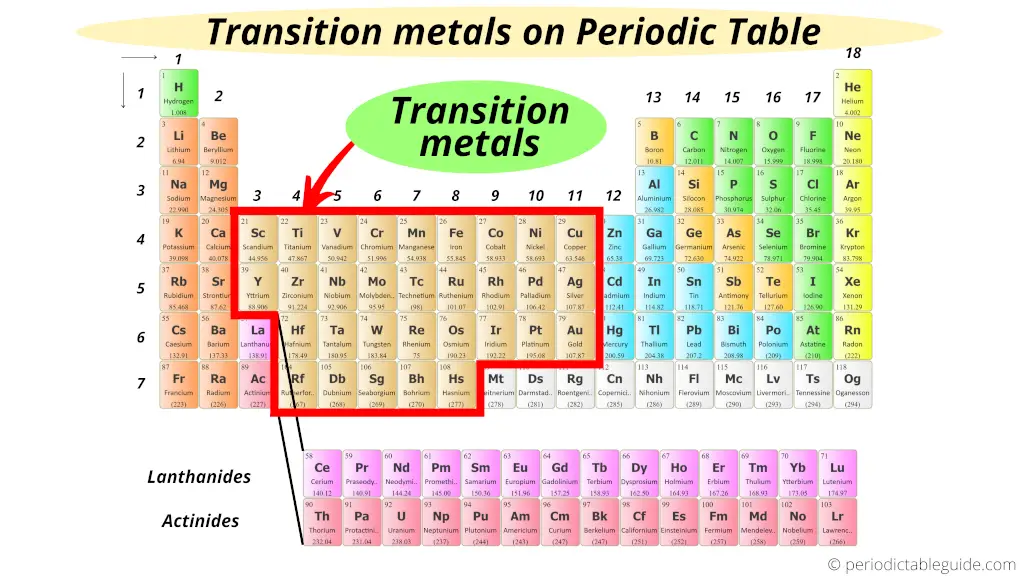
Another important benefit is their strength and durability. Many transition metals, such as iron, titanium, and nickel, are incredibly strong and resistant to corrosion. This makes them ideal for building bridges, cars, airplanes, and countless other structures that need to withstand harsh conditions. Their ability to form strong alloys (mixtures of metals) further enhances their versatility.
In short, transition metals are the workhorses of the periodic table. From the pigments that color our world to the catalysts that drive industrial processes and the strong metals that build our infrastructure, these elements are essential to modern life. The next time you see something colorful, durable, or used in a chemical process, take a moment to appreciate the amazing properties of these often-overlooked chemical elements. Understanding transition metals opens your eyes to the intricate and fascinating world of chemistry that's happening all around you!