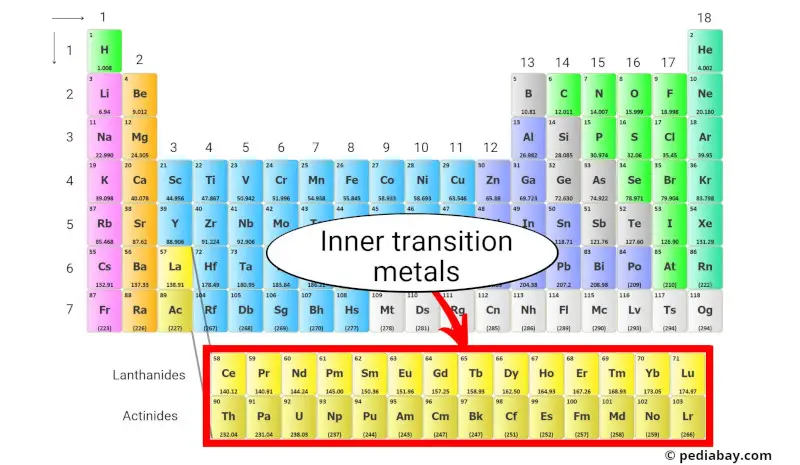
What Is A Transition Element On The Periodic Table
Ever wondered what gives your jewelry its sparkle, or what makes your car's paint so vibrant? Chances are, the answer lies hidden within a special group of elements on the periodic table: the transition elements! These chemical chameleons are more than just building blocks; they're the artists of the atomic world, adding color, strength, and reactivity to our everyday lives. Understanding them is like unlocking a secret code to the world around you.
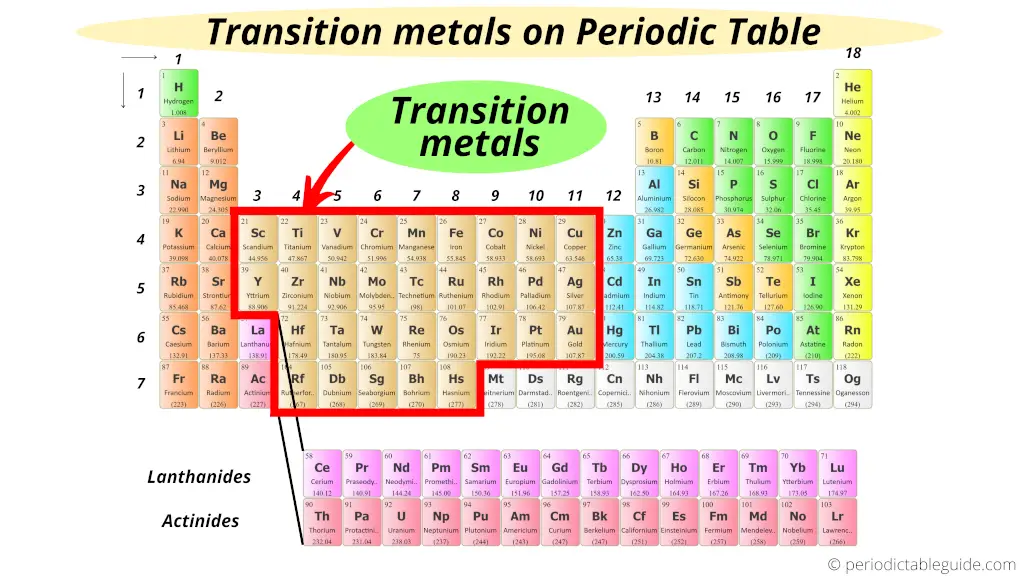
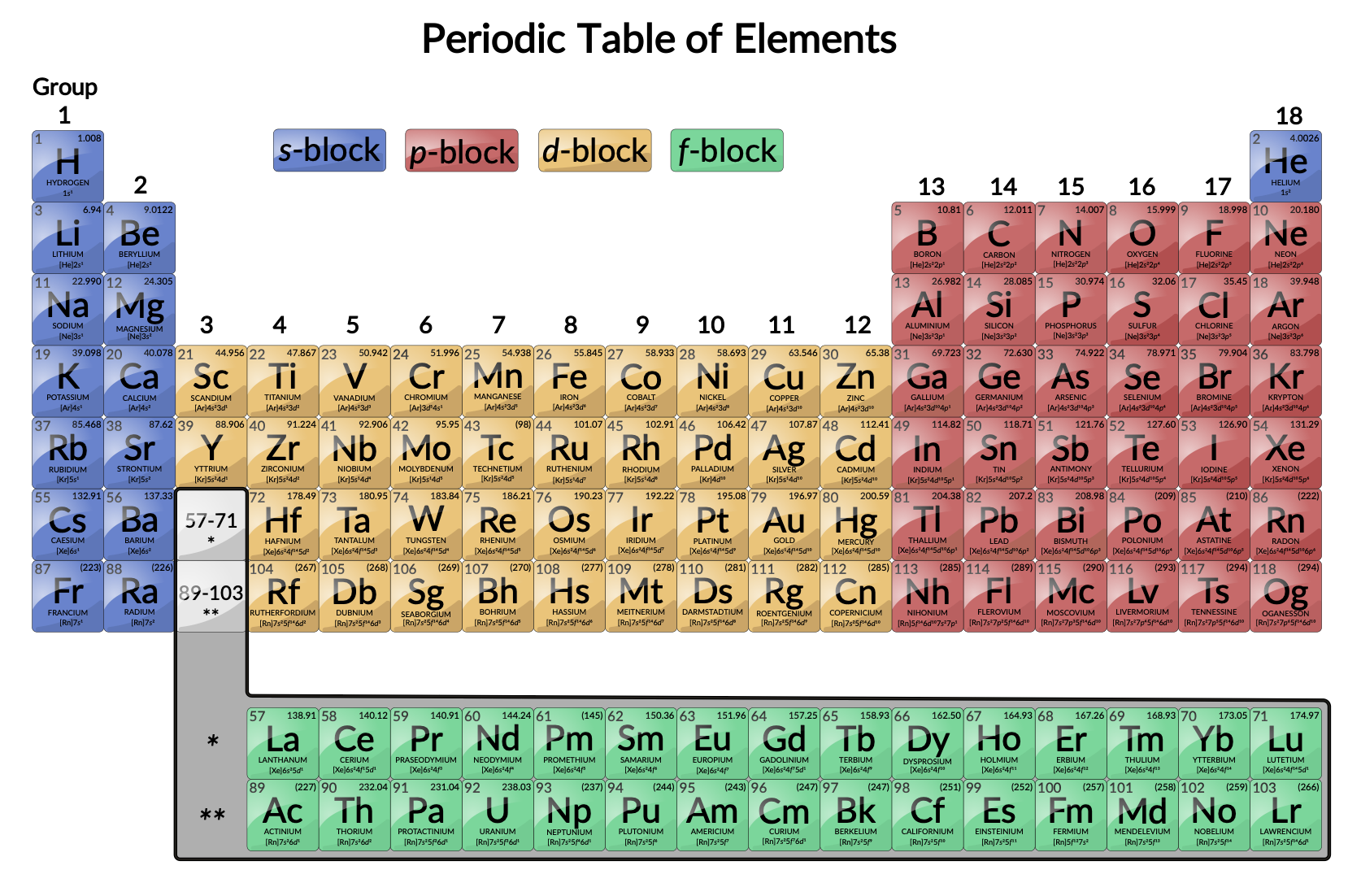
So, what exactly are transition elements? Simply put, they're the elements occupying the central block of the periodic table, nestled between Groups 2 and 13. Think of them as the 'cool kids' hanging out in the middle of the periodic party. More formally, they are defined as elements that have a partially filled d orbital. This unique electronic structure is the key to their fascinating properties. This partially filled d orbital allows the transition elements to lose and share electrons in a variety of ways, resulting in multiple possible oxidation states.
One of the biggest benefits of understanding transition elements is appreciating their role in catalysis. Many transition metals, like platinum, palladium, and iron, act as catalysts, speeding up chemical reactions without being consumed themselves. Think of them as tiny matchmakers, bringing reactants together in a way that lowers the energy needed for the reaction to occur. This is crucial in industrial processes, like the production of fertilizers and plastics, and even in the catalytic converters in our cars, which help reduce harmful emissions.
Must Read
Another remarkable characteristic of transition elements is their ability to form colored compounds. Remember that vibrant blue in copper sulfate crystals, or the deep green of nickel solutions? This color arises from the way their d electrons absorb and reflect light. This property makes them invaluable in pigments, dyes, and even in the screens of our electronic devices. The beautiful variety of colors is truly a spectacle of chemistry!
Beyond color and catalysis, transition elements contribute significantly to the strength and durability of many materials. Iron, chromium, nickel, and manganese are crucial components of steel, a material that forms the backbone of modern infrastructure. The addition of these elements enhances steel's resistance to corrosion, making it ideal for buildings, bridges, and vehicles. This ability to alloy with other metals and create strong and stable materials is a cornerstone of engineering.
In conclusion, transition elements are not just abstract entries on the periodic table; they are the workhorses of the chemical world, playing essential roles in catalysis, coloration, and materials science. By understanding their unique properties and the benefits they provide, you can gain a deeper appreciation for the chemistry that shapes our world, from the jewelry you wear to the cars you drive. So, next time you see a splash of color or a sturdy structure, remember the amazing transition elements and the incredible chemistry they enable!