What Is A Seer Rating In Hvac

Picture this: it’s the middle of summer, sun blazing, and your home is an oasis of cool. Ahhh, bliss! We often take our air conditioning for granted, just flipping a switch and expecting magic. But have you ever stopped to think about how that cool air gets there, or more importantly, how efficiently it does its job? That, my friends, is where a little something called the SEER rating swoops in, and trust me, it’s way cooler than it sounds!
So, What Even Is SEER?
Let's break down the mystery. SEER stands for Seasonal Energy Efficiency Ratio. Sounds pretty official, right? But really, it's just a way of measuring how much cooling power your air conditioner or heat pump delivers for every bit of electricity it uses over an entire cooling season. Think of it like this: your AC unit is working hard, day in and day out, to keep you comfy. The SEER rating tells you how much "oomph" it's giving you versus how much electricity it's guzzling down.
It's basically the MPG (miles per gallon) for your air conditioner! Just like a car with a higher MPG travels further on the same amount of fuel, an AC unit with a higher SEER rating can cool your home more effectively using less electricity. Pretty neat, huh?
Must Read
Why Should You Even Care About This Number?
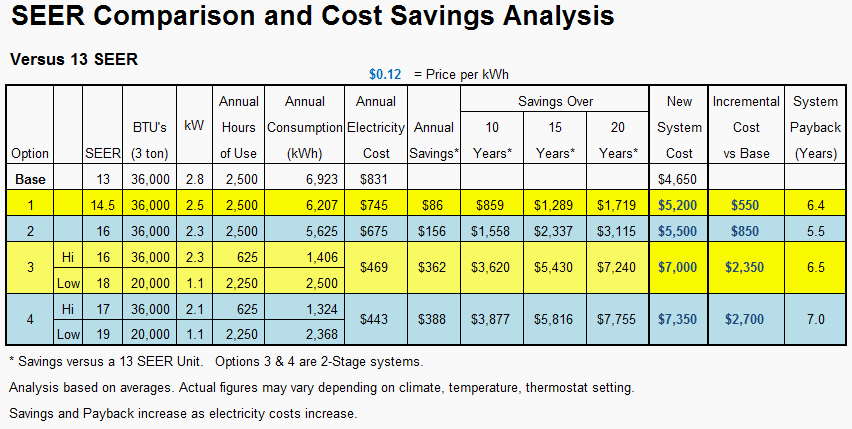
Good question! Why obsess over a couple of digits on a label? Well, for starters, it directly impacts your wallet. A higher SEER rating means your unit is a superhero when it comes to conserving energy. And what does saving energy mean for you? Lower electricity bills! Imagine getting the same level of comfort but paying less each month. That's a win-win in my book!
It’s not just about money, though. Think about it: less energy consumed means less strain on our power grids and a smaller carbon footprint. So, a high-SEER unit isn't just a smart choice for your budget; it's a little high-five to planet Earth. You're basically being an eco-warrior without even having to wear a cape (unless you want to, no judgment here!).

The Evolution of Efficiency: From Basics to Boomers
SEER ratings aren't a new concept, but they've certainly evolved. Back in the day, around the 1970s, AC units were often rated around SEER 6. That's like driving a gas-guzzling vintage muscle car – cool, but expensive to run! Fast forward to today, and the minimum SEER standard for new AC units in most parts of the U.S. is SEER 14 or 15, with some states having even higher minimums. High-efficiency models can go all the way up to SEER 26 or even higher!
It’s like comparing an old flip phone to the latest smartphone. Both make calls, but one does it with way more sophistication and efficiency. The technology inside these modern high-SEER units is genuinely impressive, often featuring variable-speed compressors and advanced sensors that can precisely match the cooling output to your home's needs. It's not just "on" or "off" anymore; it's a nuanced dance of cooling perfection.

Beyond the Number: What Else Makes It Cool?
Okay, so we know higher SEER equals less energy and more savings. But there's another hidden benefit: comfort! High-efficiency units often run more consistently, at lower speeds, rather than constantly cycling on and off. What does this mean for you?
- Better Dehumidification: By running longer and slower, these units pull more moisture out of the air, making your home feel cooler even at a higher thermostat setting. Say goodbye to that sticky, clammy feeling!
- More Consistent Temperatures: No more hot spots and cold spots. The continuous, gentle airflow helps maintain an even temperature throughout your home. It’s like a perfectly climate-controlled bubble!
- Quieter Operation: Because they're not constantly roaring to life at full blast, high-SEER units tend to be much quieter. Imagine enjoying your favorite show or a peaceful nap without the constant drone of your AC kicking in. Sweet silence!
Is a Higher SEER Always the Be-All and End-All?
While a high SEER rating is undeniably awesome, it's worth remembering that it's one piece of the puzzle. When you're thinking about a new HVAC system, you also need to consider things like the size of your home, how well it’s insulated, the quality of the installation, and even your local climate.

Sometimes, investing in better insulation or sealing up drafts might give you a bigger bang for your buck than going from a SEER 16 to a SEER 20 unit. It’s about creating a holistic approach to home comfort and energy efficiency. Always talk to a trusted HVAC professional who can assess your specific situation and recommend the best fit for your home and your budget.
The Takeaway: Be a Savvy Consumer!
So, the next time you're thinking about your home's cooling system, give a little nod to the humble SEER rating. It's not just a technical spec; it's a shorthand for how efficiently your comfort is being delivered, how much money you’re saving, and even how kindly you’re treating our planet.
Understanding SEER empowers you to make smarter choices for your home. You're not just buying an air conditioner; you're investing in comfort, savings, and a touch of environmental responsibility. And that, in my book, is pretty darn cool!