What Is A Renewable And Nonrenewable Resources

Ever wonder where the energy that powers your phone, heats your home, and drives your car actually comes from? It’s a pretty fascinating question, and the answer boils down to two main categories: renewable and nonrenewable resources. Understanding the difference is not only useful for being more environmentally conscious but also for making informed decisions about our future. Plus, it's surprisingly easy to grasp!
So, what’s the big deal? Well, for beginners, knowing the basics helps you understand news stories about climate change and energy policy. For families, it's a great way to start conversations about conservation and responsible living. And for hobbyists interested in things like gardening or DIY projects, understanding these resources can open up possibilities for sustainable practices and reducing your environmental footprint.
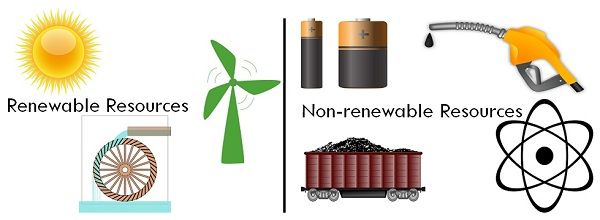
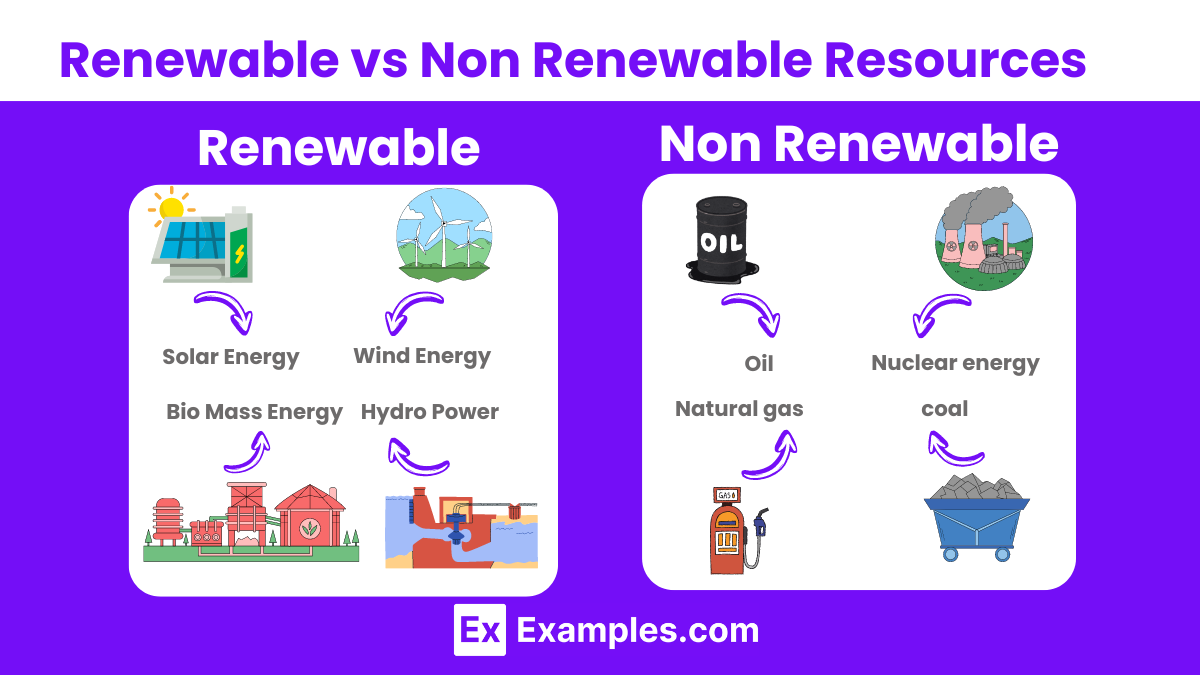
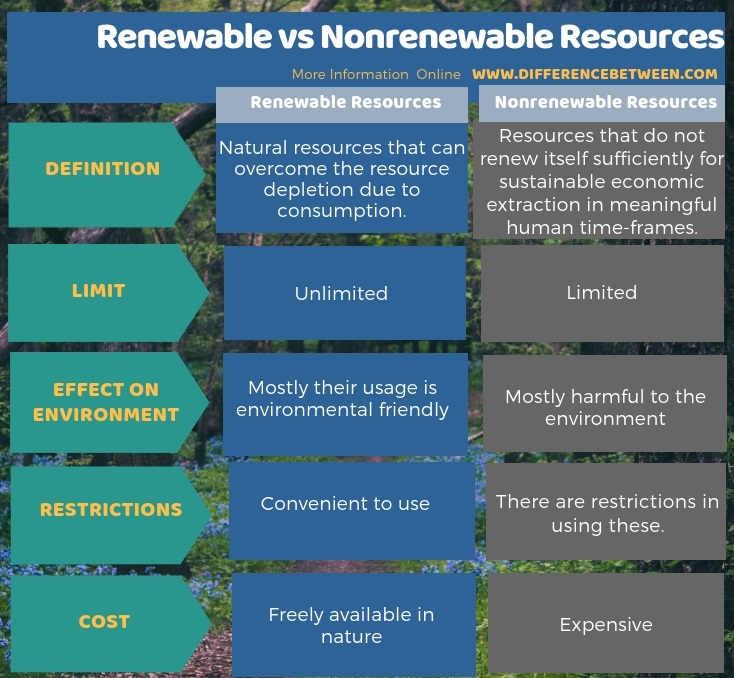
Let's dive in! Renewable resources are those that can be replenished naturally over time. Think of them as resources that nature constantly renews. The most common example is solar energy – the sun shines every day, providing us with a continuous supply of power. Another is wind energy, harnessed by wind turbines. Hydropower comes from the flow of water, typically from rivers or dams. Geothermal energy utilizes the Earth's internal heat, and biomass involves burning organic matter like wood or crops for fuel. A variation of biomass is biofuels, which are liquid fuels derived from plants.
Must Read
On the flip side, nonrenewable resources are those that exist in a finite amount and cannot be replenished within a human lifespan. Once we use them up, they're gone! The prime example is fossil fuels – coal, oil, and natural gas. These were formed over millions of years from the remains of ancient plants and animals. Nuclear energy, while technically not a fossil fuel, also relies on a finite resource (uranium) mined from the Earth. The key difference is that these resources are being used far faster than they can be naturally created.

So, how can you get started with understanding and utilizing these resources? Here are some simple tips:
- Begin small: Start by learning about your local energy sources. Where does your electricity come from?
- Conserve energy: Reducing your energy consumption is the easiest way to minimize your impact. Turn off lights, unplug electronics, and use energy-efficient appliances.
- Support renewables: Consider switching to a renewable energy provider if available in your area. Many utility companies offer options to purchase electricity from wind or solar farms.
- Educate yourself: Read articles, watch documentaries, and learn more about the benefits and challenges of different energy sources.
- Get involved: Support policies and initiatives that promote renewable energy and conservation.
Understanding the difference between renewable and nonrenewable resources is a critical step towards a more sustainable future. It’s empowering to know where our energy comes from and how we can make informed choices to protect our planet. Plus, exploring these concepts can be a fun and engaging way to connect with nature and the world around us!