
What Is A Renewable And Nonrenewable Resource

Alright, gather 'round, friends! Let's talk about something that sounds like it belongs in a textbook, but trust me, it's way more interesting than your Uncle Barry's slideshow about model trains. We're diving into the wild world of renewable and nonrenewable resources. Buckle up, buttercups!
Imagine you’re at an all-you-can-eat buffet. Glorious, right? Now, some of the food magically refills itself (renewable!), while other dishes, once gone, are gone forever (nonrenewable!). That's basically it! Okay, maybe not exactly like that, but you get the gist. And hopefully, you get seconds of the chocolate fountain.
Renewable Resources: The Buffet That Never Ends (Almost)
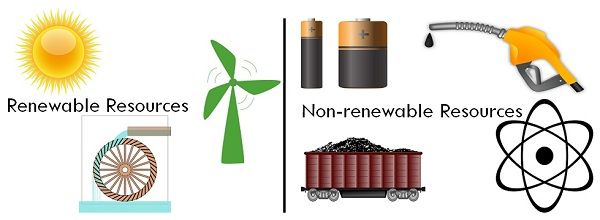
So, what exactly is a renewable resource? It's something that nature replenishes, like magic! Think of it as the eco-friendly Energizer Bunny. It keeps going and going…within reason, of course. If we're ridiculously wasteful, even renewable resources can get a bit grumpy.
Must Read
Let's look at some examples, shall we?
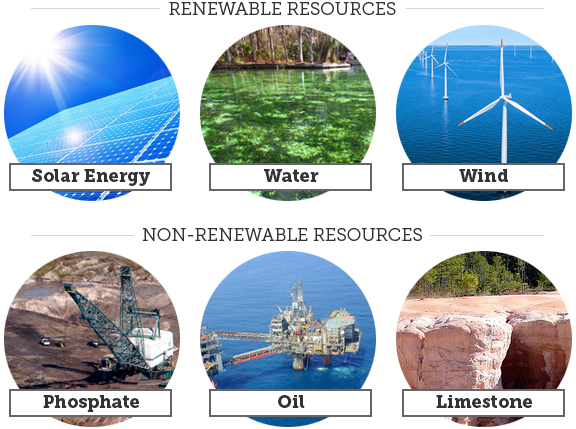
Solar Power: This one's a no-brainer. Every morning, the sun pops up (hopefully, unless you live in Seattle – my condolences). And it's blasting us with enough energy to power, like, a gazillion toasters. We just need to be clever enough to catch it with those fancy solar panels. Imagine powering your entire house with sunshine! You could finally tell your electric company, "So long, farewell, auf wiedersehen, goodbye!" in a triumphant operatic voice.
Wind Power: Okay, this one's a bit more… temperamental. You need wind, obviously. If you live in a perpetually calm, still-air-zone, wind power is about as useful as a screen door on a submarine. But when the wind does blow, those giant turbines spin around like crazy and generate electricity. Fun fact: some people think wind turbines are ugly. But I think they are kind of majestic, in a giant, metal, slightly-noisy sort of way.
Water Power (Hydropower): Think of a raging river, all that powerful water flowing downhill. Now imagine harnessing that power with a dam. Voila! Electricity. Hydropower is pretty awesome, but dams can also mess with the natural flow of rivers, which can make the fish (and other river critters) a bit unhappy. It's a delicate balancing act!
Geothermal Energy: The Earth is basically a giant ball of molten rock. And that molten rock is hot. Geothermal energy taps into that heat, using it to generate electricity or directly heat buildings. It's like having a giant, free radiator under your house. Just don't try digging down to it with a shovel. Trust me on this one.

Biomass: This one's a bit more… controversial. Biomass involves burning organic matter, like wood or crops, for energy. It can be renewable, but only if we replant what we burn and do it sustainably. Otherwise, it's just like chopping down all the trees and saying, "Oops!"
Nonrenewable Resources: The Buffet That Definitely Ends
Alright, time for the sad news. Nonrenewable resources are things that exist in limited quantities. Once we use them up, they're gone. Poof! Vanished. Sayonara. Think of them as the last slice of pizza at a party. Everyone wants it, but once it's gone, there's no more.
Here are some of the big players in the nonrenewable resource game:

Fossil Fuels (Coal, Oil, Natural Gas): These are the kings (or maybe the dinosaurs) of the nonrenewable world. They were formed millions of years ago from the remains of ancient plants and animals. We dig them up, burn them, and release all sorts of… stuff… into the atmosphere. They're incredibly useful, but also incredibly problematic. Think of them as that one friend who's always fun to hang out with but leaves a huge mess behind them.
Nuclear Energy (Uranium): Nuclear energy uses uranium, a radioactive element, to generate electricity. It doesn't produce greenhouse gases, which is good! But it does create radioactive waste, which is… less good. Storing that waste safely for thousands of years is a bit of a head-scratcher. It's like having a super-powerful battery that also comes with a giant, radioactive asterisk.
Minerals: Okay, this one's a bit broader. Think of all the stuff that comes out of the ground: iron, copper, gold, aluminum, etc. These are all finite resources. Once we've mined them all, that's it. Game over. So maybe think twice before buying that solid-gold toilet. Just a thought.
So, What's the Big Deal?
Here's the bottom line: We need to be smarter about how we use our resources. Burning fossil fuels like crazy is like setting your house on fire to stay warm. It works in the short term, but it's not exactly a sustainable strategy. Renewable resources are the future. They're cleaner, greener, and generally less likely to cause the planet to erupt in a fiery ball of doom. And who wants that?
Switching to renewable energy sources isn't always easy, but it's definitely worth it. Plus, imagine the bragging rights! You could tell all your friends, "I'm saving the planet, one solar panel at a time!" And that, my friends, is something to be proud of.
Now if you'll excuse me, I need to go research solid gold toilets. You know, for… research purposes.