
What Is A Metal In Chemistry
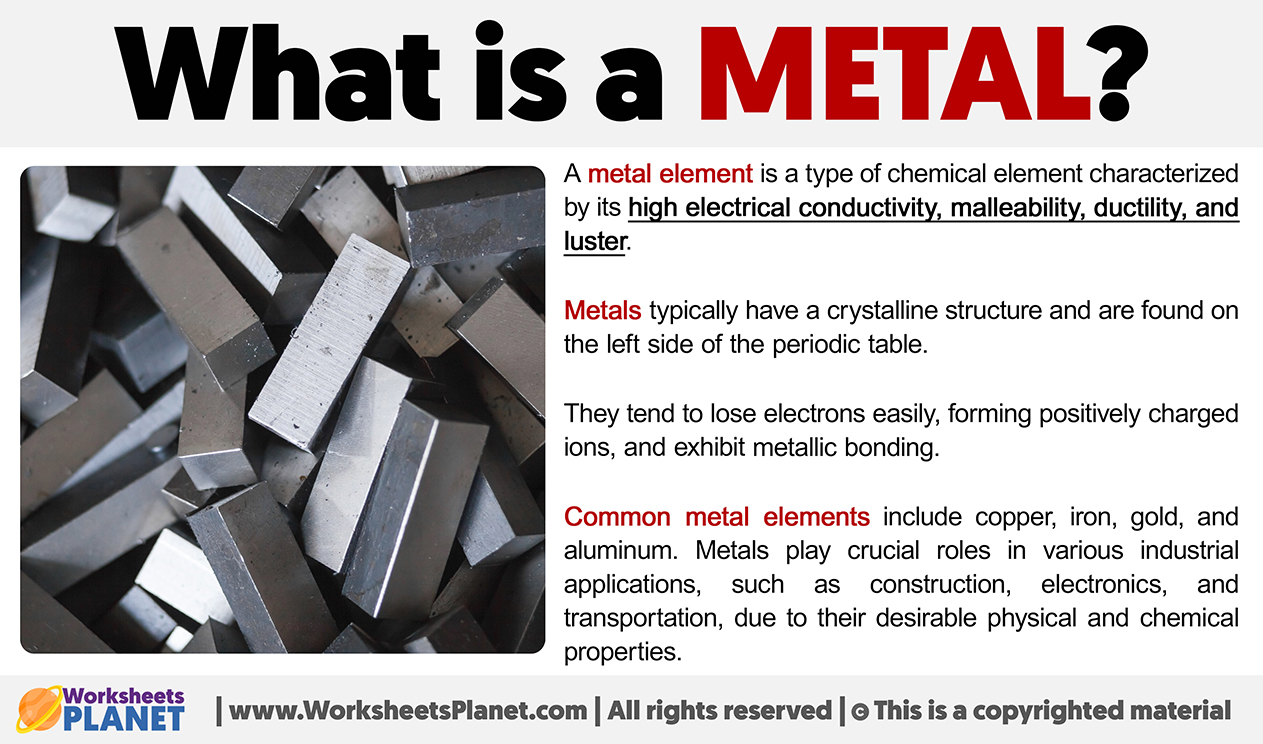
Ever held something shiny and solid and thought, "Yep, that's metal!"? You're probably right! But what really makes a metal a metal, chemically speaking? Get ready, because it's a little more nuanced and a lot more fun than you might think.
Most of us picture something like steel, silver, or gold. Hard, shiny, useful stuff. And sure, those are classic metals. But in the wild world of chemistry, being a metal is less about looking tough and more about some quirky, energetic behavior.
So, What's the Big Deal? The Core Properties!
First off, metals are mostly solid at room temperature. Your car? Solid. Your wedding ring? Solid. Your kitchen fork? Super solid. But here’s a fun curveball: there’s one famous metal that totally breaks this rule. Any guesses? It's mercury! The legendary liquid metal that used to be in thermometers. How cool is that?
Must Read
Another biggie: metals are lustrous. That's a fancy way of saying they're shiny. Think about polishing silver or the gleam of a brand-new copper pot. They catch the light beautifully, unlike say, a lump of coal.
They’re also incredibly malleable. This means you can hammer them into thin sheets without them shattering. That’s how we get aluminum foil for your leftovers or intricate gold leaf for fancy desserts. Try doing that with a rock!

And not just flat! Metals are also ductile, meaning you can pull them into a long, thin wire. Copper wires power our homes, and even incredibly fine gold wires are used in delicate electronics. It’s like magic how they stretch!
The Real Party Trick: Conductivity!
This is where metals truly shine (pun intended!). Metals are fantastic conductors of both heat and electricity. Ever touched a metal spoon that's been in hot soup? Ouch! That’s heat conductivity. And every time you flip a light switch, you're relying on metal wires to carry the electricity to power your bulbs.
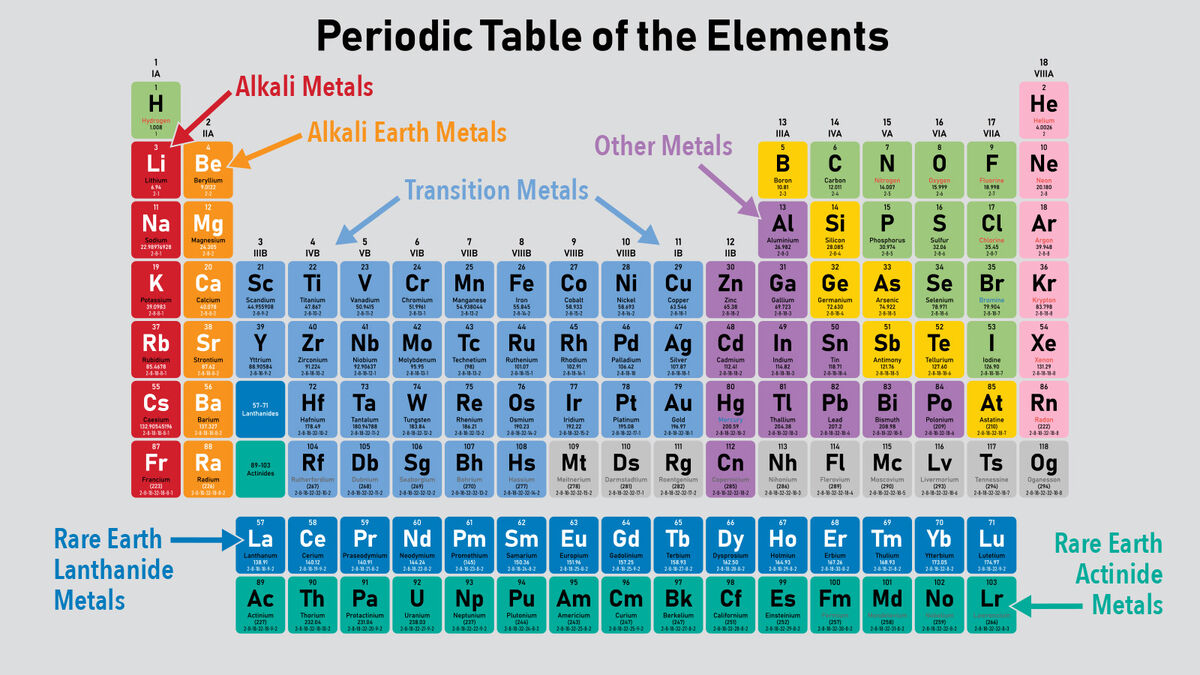
Why are they so good at this? It all comes down to their atomic structure. Imagine a bunch of metal atoms all hanging out. Instead of holding onto their outermost electrons tightly, metals are super chill about it. They basically say, "Hey, electrons! Go wild! We don't mind!"
This creates a "sea of electrons" that can zip around freely, carrying heat and electrical charge from one end of the metal to the other. It's like a mosh pit for tiny charged particles, and it's what makes metals so useful in our modern world.
Quirky Characters of the Metal Family
Beyond mercury, there are other metallic oddballs. Take gallium, for example. It’s a solid metal at room temperature, but if you hold a piece in your hand, your body heat will melt it into a silvery puddle! Imagine surprising your friends with that trick!
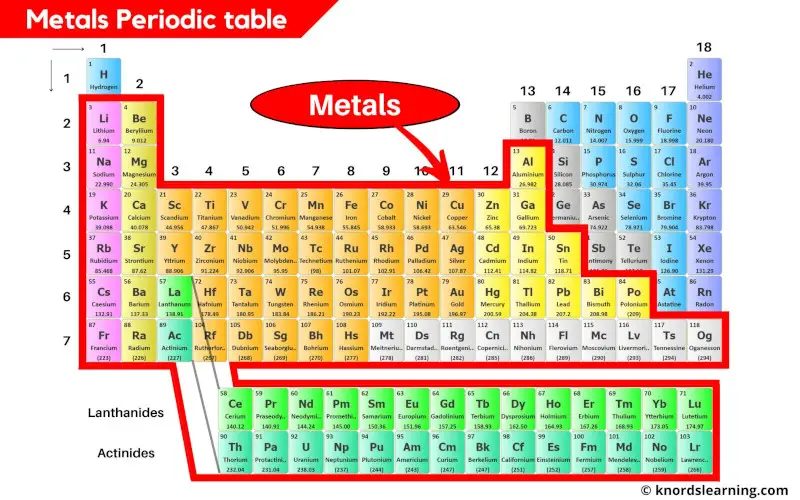
Then there are the alkali metals like sodium and potassium. These guys are super reactive. Throw a tiny piece of sodium into water, and prepare for a fizzing, flaming show! That's why they’re often stored under oil – to keep them away from naughty water and oxygen.
And let's not forget the precious metals. Gold is famous not just for its beauty but for being incredibly unreactive. It doesn't rust, it doesn't tarnish easily, which is why ancient treasures made of gold still look pretty fabulous today. It’s the ultimate low-maintenance metal!
Where Do Metals Live on the Periodic Table?
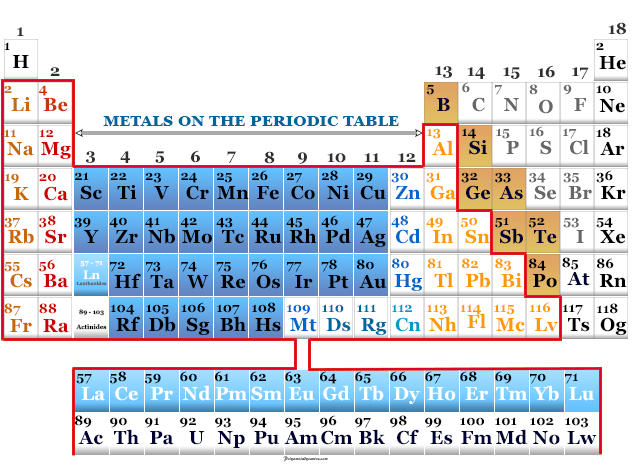
If you peek at a periodic table, metals dominate the landscape! They mostly hang out on the left side and in the big chunky middle section. The non-metals are huddled in the top right corner, and then there are the 'metalloids' chilling on the border, acting a bit like both – the ultimate fence-sitters of the element world.
So, from the mighty iron in our skyscrapers and our blood (yes, you have metal inside you!) to the tiny bits of copper in your smartphone, metals are absolutely everywhere. They conduct, they shine, they bend, and sometimes, they even melt in your hand!
Understanding what makes a metal a metal isn't just for chemists in labs. It helps us appreciate the amazing materials that build our world, from the biggest bridges to the smallest microchips. So next time you see something shiny, give it a little nod. It's probably doing some serious chemical heavy lifting, all thanks to those free-roaming electrons!