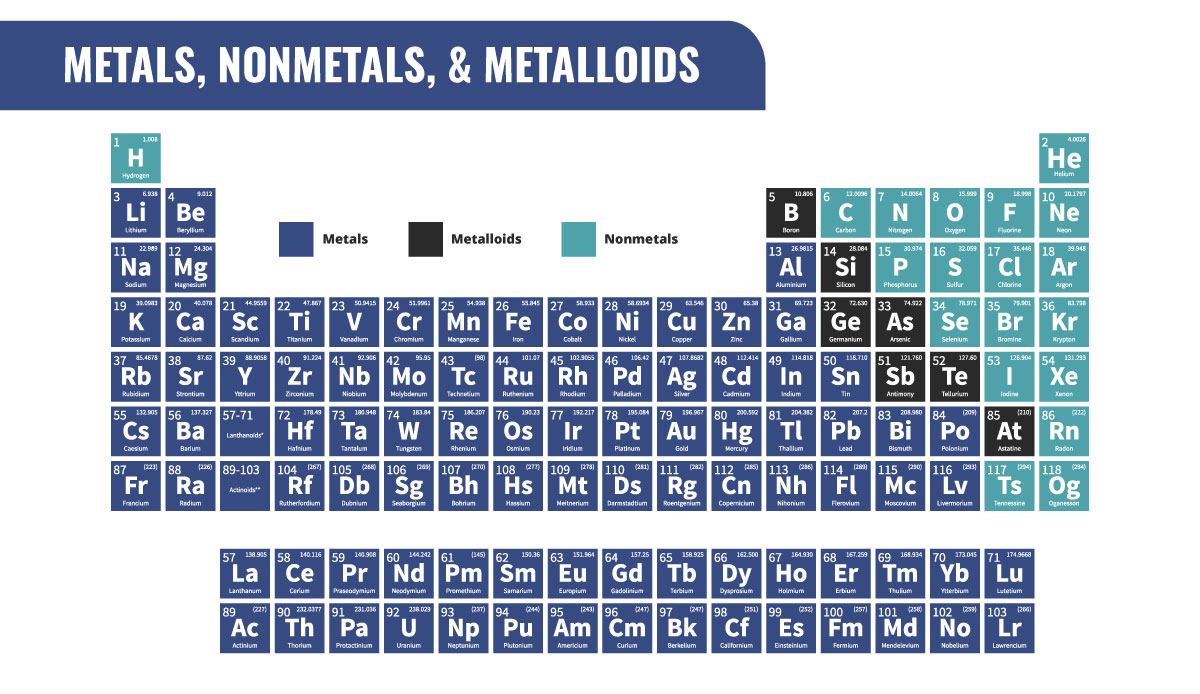
What Is A Metal And Non Metal
Hey there! Grab a comfy seat, want some more coffee? Excellent. So, listen, I was just thinking about something totally random, but also kind of fundamental to... well, everything. We see it every day, but do we ever really stop to think about it? I'm talking about the whole deal with metals and non-metals. Sounds super scientific, right? Like something out of a dusty textbook? But honestly, it's pretty cool when you break it down. Like a little secret world hiding in plain sight.
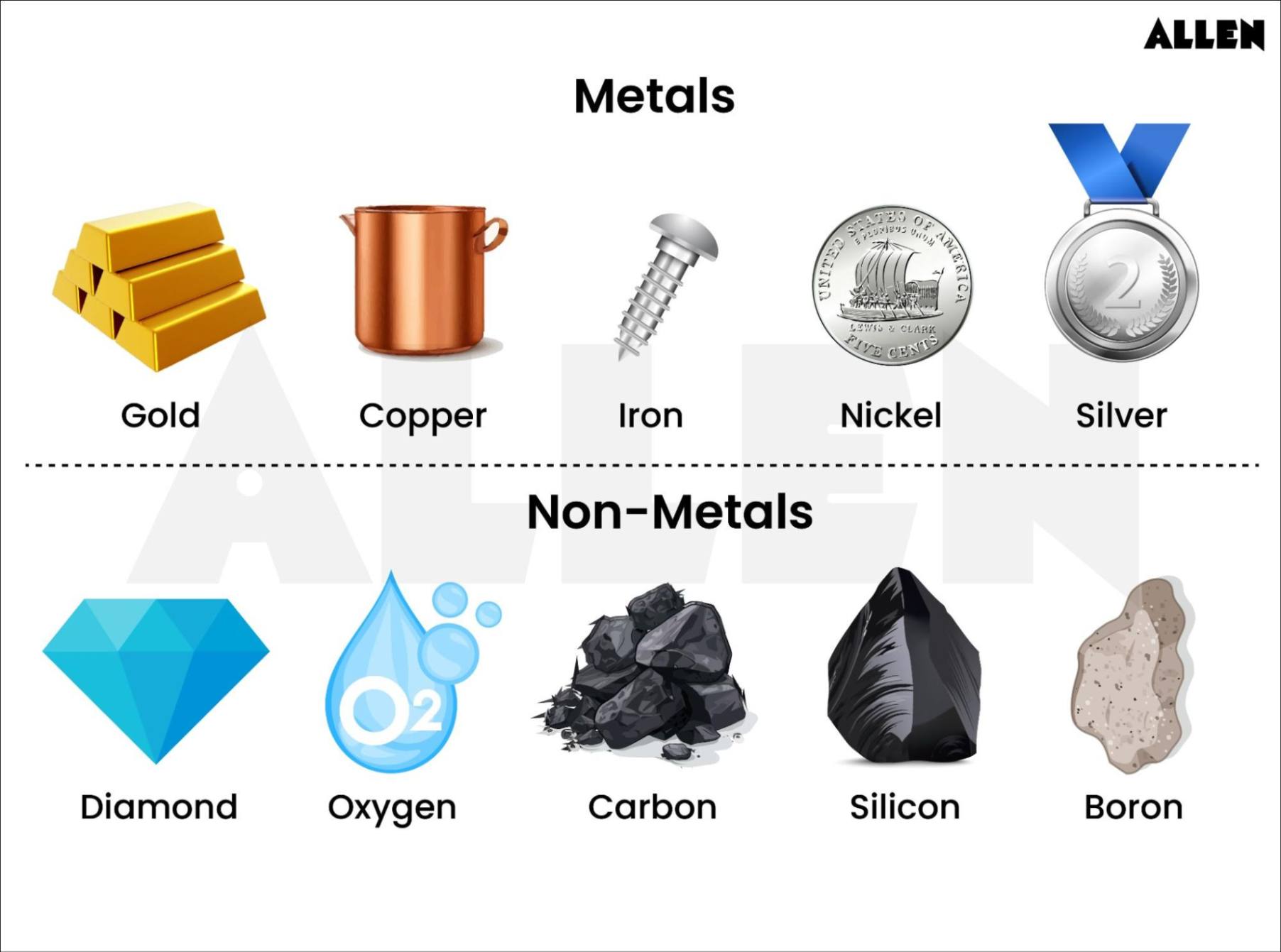
So, let's start with the rockstars, shall we? The ones that get all the attention: metals. Think about it. What comes to mind? Probably something shiny, right? Like a fancy gold necklace, a sleek silver ring, or maybe even the shiny chrome on a car. Bingo! You've already hit on a key characteristic. Metals are generally lustrous – that's a fancy word for shiny, reflective, all that jazz. They love to sparkle!
But it's not just about the bling. Oh no, there's more to these show-offs. Ever touched a metal spoon that's been in a hot soup? Ouch! That's because metals are fantastic at conducting heat. They just love to pass that energy along. And electricity? Forget about it! Your phone, your laptop, the lights in your house – all relying on metals like copper to zip those electrons around. They're practically the autobahn for electrons!
Must Read
And here's another fun fact: metals are usually malleable and ductile. What does that even mean in plain English? Malleable means you can hammer them into thin sheets without them breaking. Think aluminum foil, or a blacksmith shaping iron. Ductile means you can pull them into thin wires. Copper wires are a perfect example. So, they're pretty chill about being reshaped, not brittle at all. Kinda flexible, like us trying to decide what to order for dinner, right?
So, What About the Other Guys? The Non-Metals?
Alright, so we've met the popular kids. Now for the... well, the less flashy but equally important crew: the non-metals. If metals are the flashy sports cars, non-metals are more like the comfy, reliable sedans. They get the job done, but maybe without all the fanfare.
Picture something like carbon (think charcoal or pencil lead), oxygen (you know, the stuff we breathe!), nitrogen, or sulfur. Notice a pattern? They don't typically shine, do they? They're usually dull. No sparkle, no bling, just... doing their thing. And are they good conductors of heat or electricity? Nope! Most non-metals are excellent insulators. They're the bouncers keeping those electrons and heat waves out. Good for oven mitts, bad for wiring your house!
Another big difference? While metals are happy to be hammered and stretched, non-metals are often brittle. Try hammering a lump of coal (which is mostly carbon). What happens? Crack! It shatters. They don't like being messed with; they're much more fragile in their solid form. So, no stretching them into wires or flattening them into sheets. They just prefer to stay as they are, thank you very much!
The Big Electron Party: Giving vs. Taking
Now, if you want the real scientific core of it, the main event, it all comes down to their personalities... or rather, their electrons! Metals, bless their generous little hearts, are usually eager to give away their outer electrons. They're like that friend who always offers to pay for coffee. This willingness to share is what makes them great conductors and allows them to form metallic bonds. They just want to get rid of those extra electrons and achieve a stable state.
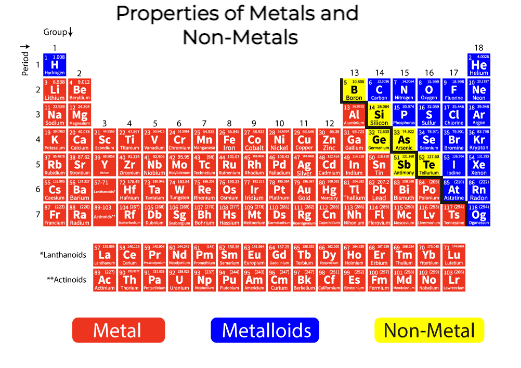
Non-metals, on the other hand? They're more like the friends who are always a bit short on cash and are happy to accept those electrons. They want more electrons to fill their outer shells and become stable. This electron-grabbing tendency is why they behave so differently. It's like a cosmic electron exchange program happening all the time!
Why Does Any of This Matter, Anyway?
Great question! Because this fundamental difference shapes our entire world! Think about it:

- Without metals, no skyscrapers, no cars, no computers, no jewelry, no electric guitars (what a tragedy!). Their strength, conductivity, and workability are absolutely essential for modern technology and infrastructure.
- Without non-metals, well, we wouldn't be here! Oxygen for breathing, nitrogen in our DNA, carbon as the backbone of all organic life. They form the air we breathe, the water we drink (hydrogen and oxygen!), and the very cells that make us, us. They might not be flashy, but they're literally the building blocks of life itself. Talk about essential!
The Awkward Cousins: Metalloids
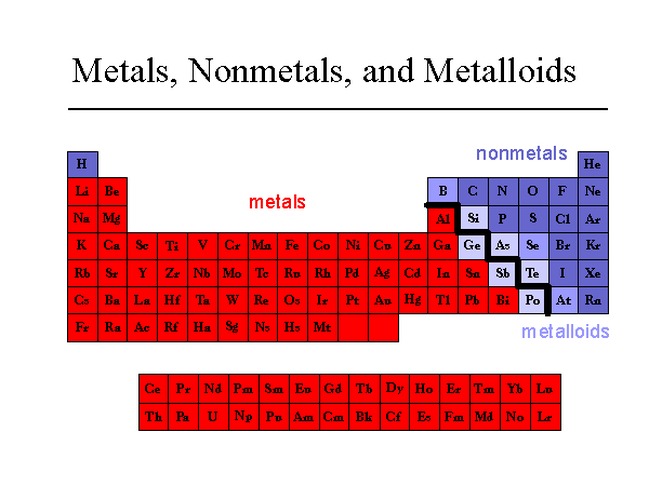
And just when you think you've got it all figured out, nature throws a curveball! There's a small group of elements called metalloids. These guys are the ultimate fence-sitters. They have properties that are kind of metallic, and kind of non-metallic. They're like the teenagers going through an identity crisis, you know? Not quite one thing, not quite the other.
Silicon is the most famous metalloid. It looks a bit shiny (like a metal!), but it's brittle (like a non-metal!). And its conductivity? It's a semiconductor, meaning it conducts electricity sometimes, but not as well as metals, and better than non-metals. Perfect for computer chips and all sorts of electronics! So, these in-betweeners are actually super important for our digital world. Who knew the awkward phase could be so useful?
So there you have it! A quick, totally unscientific (but hopefully fun!) dive into the world of metals and non-metals. Next time you see a shiny penny or take a deep breath, maybe you'll think about those eager electron givers and takers, and the crucial roles they play. Pretty neat, huh? More coffee?