What Is A Group Family On The Periodic Table
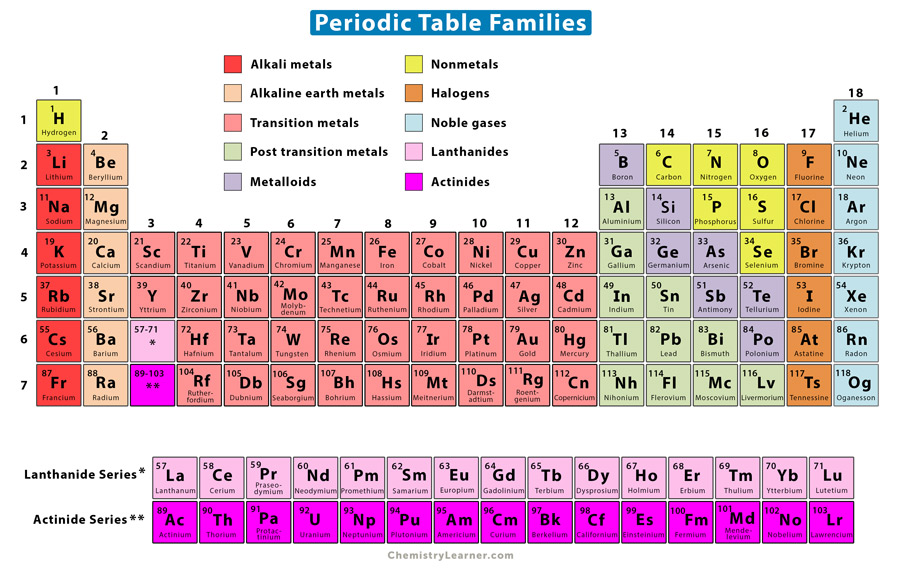
Ever looked at the periodic table and thought, "Wow, that's...organized?" It's more than just a bunch of boxes with letters. It's like a family reunion, but with elements! And these families are called groups. Think of them as the cool cliques in chemistry class.
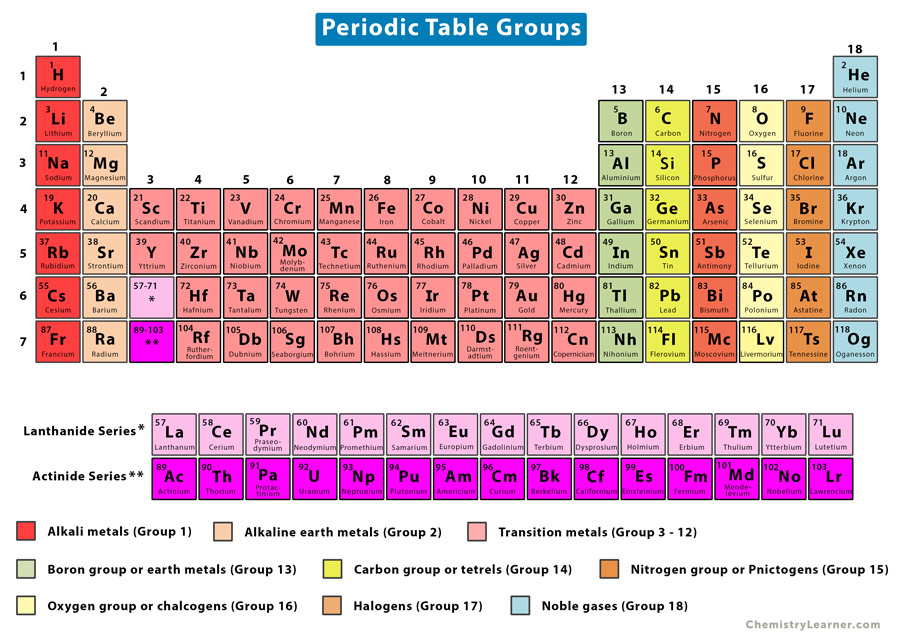
So, what's the deal with these groups? Well, they're columns on the periodic table. They run from top to bottom. Each group is filled with elements that have seriously similar personalities. I mean, chemical personalities. They react to things in the same way. It's like they all share the same quirky habits!
The Alkali Metals: Party Animals of the Periodic Table
Let's meet one of the most exciting families: the alkali metals. They're in Group 1. Lithium, sodium, potassium – these guys are super reactive. They're like the party animals of the periodic table. They just LOVE to react with water. And when they do, boom! (Don't try this at home, folks. Seriously.) Their eagerness to react makes them special.
Must Read
Imagine a group of friends who are always up for anything. That's the alkali metals. They can't wait to jump into a chemical reaction. Their enthusiasm can make them dangerous, but it's also what makes them so interesting to study. They give away electrons like candy on Halloween. How generous!
The Halogens: The Electron Thieves
Now, let's talk about the halogens in Group 17. Fluorine, chlorine, bromine, and iodine, among others. These elements are the total opposite. They’re not generous; they're greedy! They’re always looking to steal an electron. They are the electron thieves.
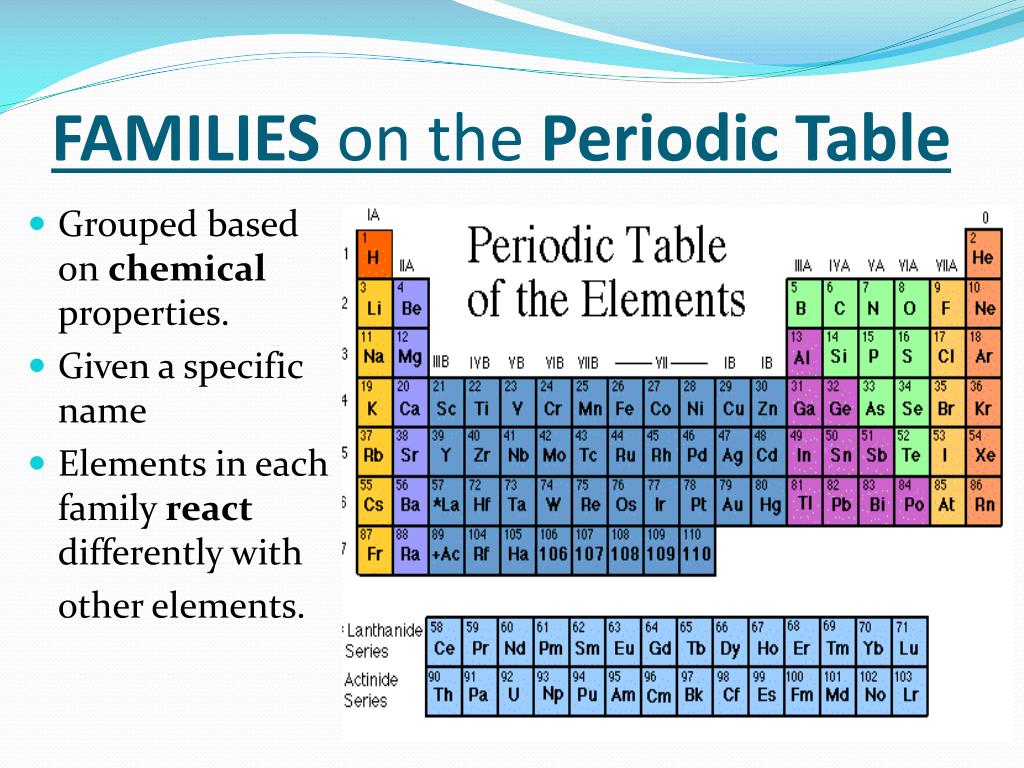
Think of them as that one friend who always "borrows" your stuff and never returns it. But in the world of chemistry, this electron-grabbing behavior is what makes them so useful. They're used in everything from disinfectants to lighting.
The halogens are also incredibly colorful. Chlorine is greenish-yellow, bromine is reddish-brown, and iodine is violet. Talk about a vibrant family! Each halogen has unique properties. But they all share that intense desire for just one more electron. It's what bonds them as a group!
The Noble Gases: The Cool Kids Who Don't Mingle
Finally, we've got the noble gases in Group 18. Helium, neon, argon, krypton, xenon, and radon. These are the cool kids who don't mingle with anyone else. They already have all the electrons they need, so they're totally stable and unreactive. It's like they're saying, "We're good, thanks. We don't need anyone's drama."

Because they're so stable, noble gases are used in all sorts of cool applications. Think neon signs, balloons that float, and even as shielding gases in welding. They’re the ultimate chill elements.
Imagine being so self-sufficient that you never need anything from anyone else. That's the noble gases in a nutshell. They are the epitome of chemical contentment. It's no wonder they're sometimes called inert gases. They are inert because they just do not react with anything!
Why It's All So Cool
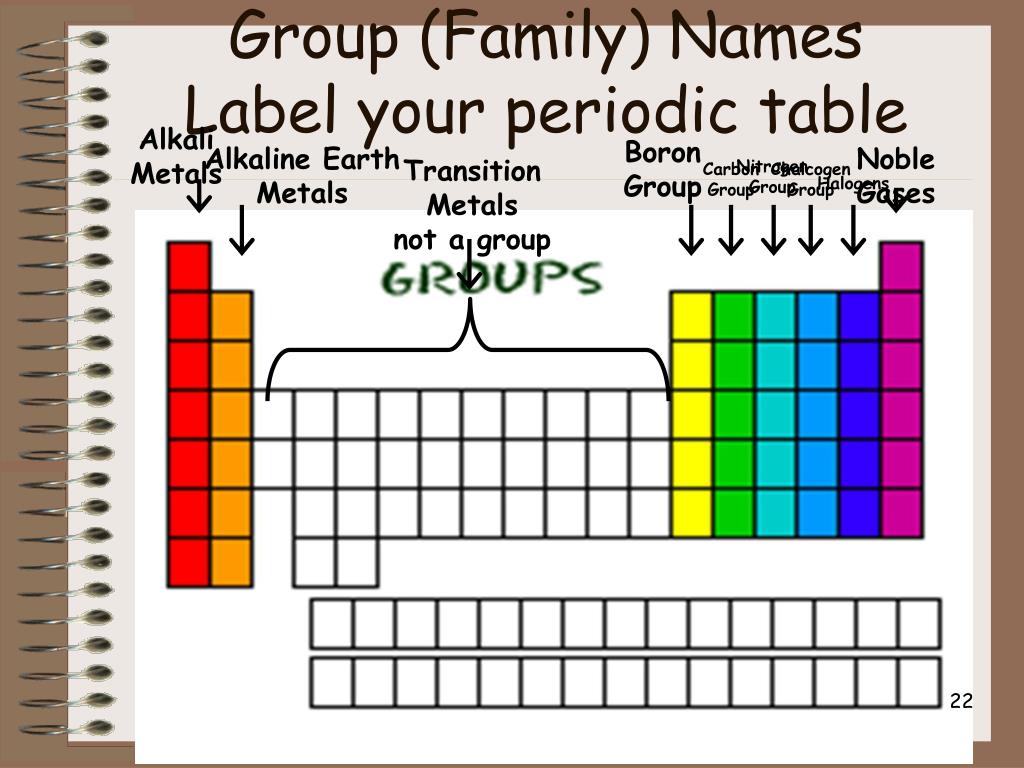
The real beauty of the periodic table is how it organizes all of this information in such a neat and tidy way. By knowing which group an element belongs to, you can predict how it will behave. It’s like having a cheat sheet for the chemical reactions. And who doesn't love a good cheat sheet?
Each group on the periodic table has its own unique story. From the reactive alkali metals to the electron-grabbing halogens and the aloof noble gases. The periodic table is a cast of characters. Getting to know them is like diving into a fascinating story with twists and turns. It's a bit like a science fiction novel, but it's all real!
So, the next time you see a periodic table, don't just see a chart. See a family reunion, a high school clique, a group of characters waiting to tell you their stories. It is a fascinating map of the elements that make up our world. Take a peek at it!