
What Is A Disadvantage Of Using Nuclear Energy
Okay, let's talk nuclear energy! We all know it's this powerhouse of clean electricity, right? But nothing's perfect, is it? Even the coolest inventions have a downside. So, let's dive into one of the major sticking points: What's a disadvantage of using nuclear energy? It’s a valid question, and trust me, understanding these things makes you a smarter, more informed citizen! And who doesn't want to be that?
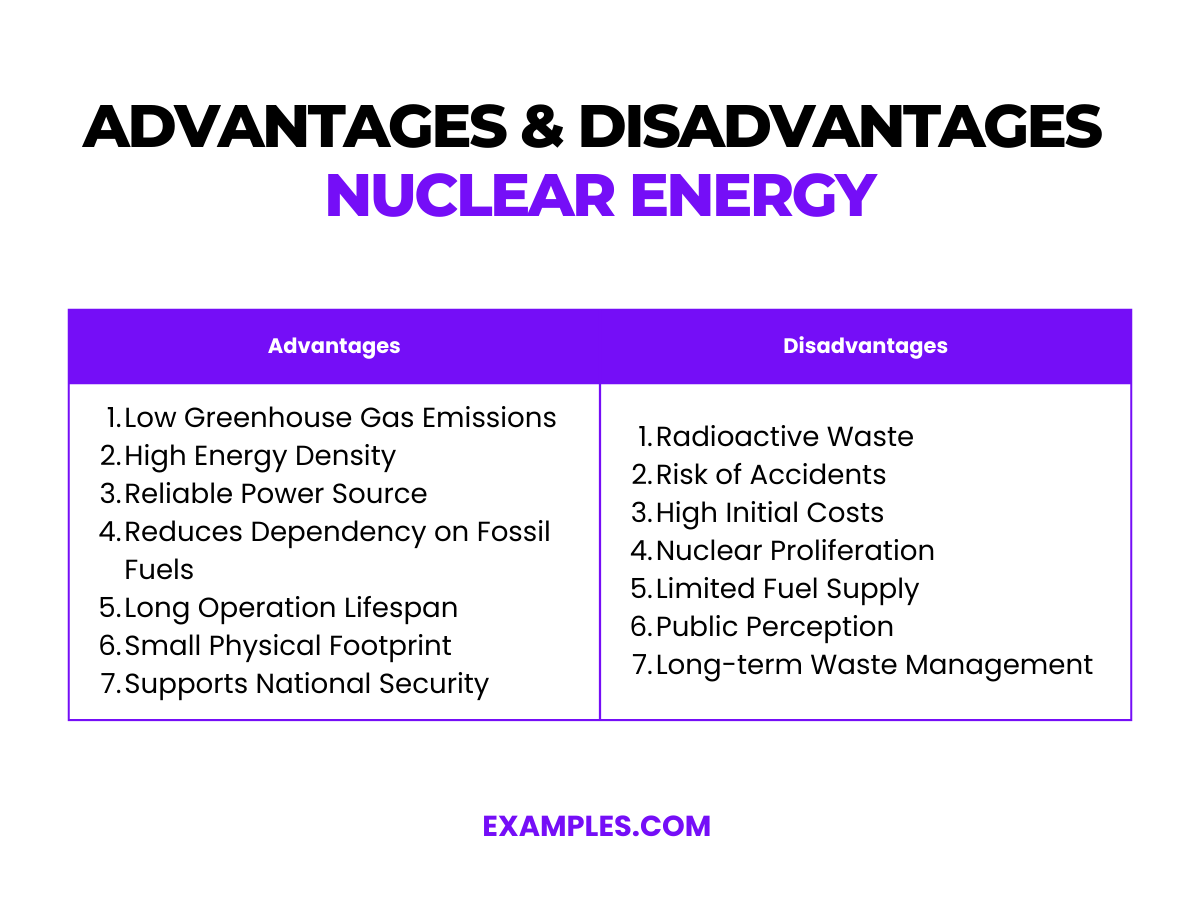
The Elephant in the Room: Nuclear Waste
The biggest concern, by far, is nuclear waste. Now, before you picture some oozing green goo from a cartoon, let's clarify. Nuclear waste is essentially used nuclear fuel, by-products of the fission process. Think of it like ashes after a really, really intense campfire. Except, these ashes are still…well, active.
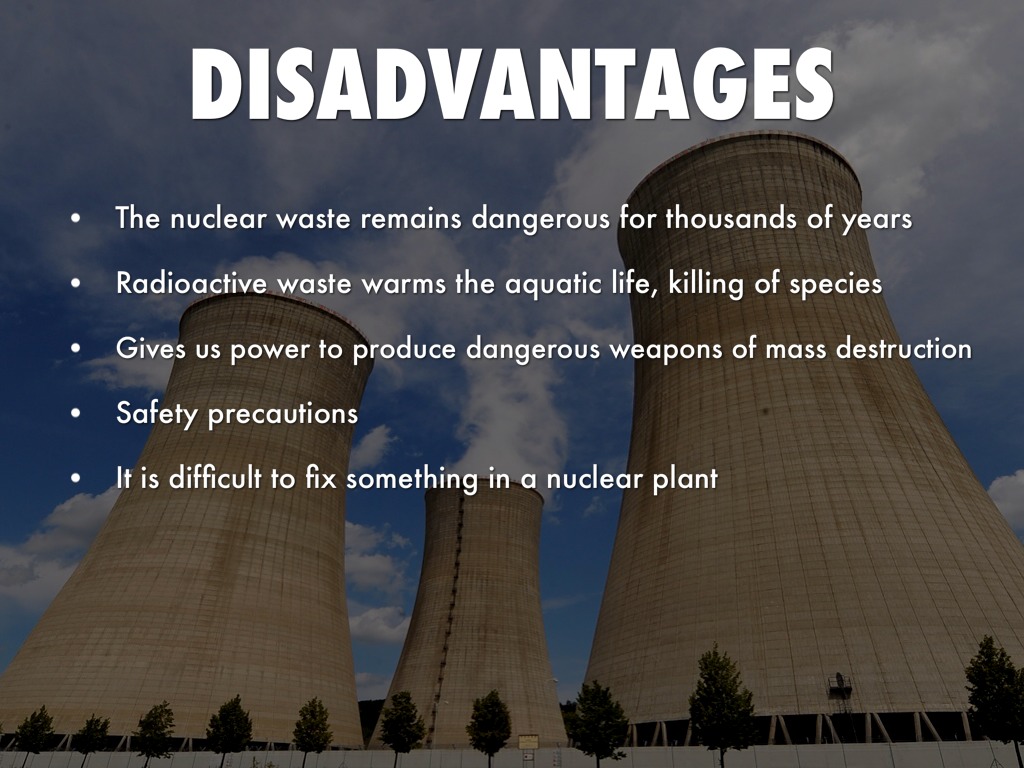
Here's the deal: These byproducts are radioactive, and they remain radioactive for a very long time. We're talking thousands, even hundreds of thousands, of years! Yikes, right?
Must Read
So, the big question becomes: What do we do with it? And this, my friend, is the core of the disadvantage. See, this isn't like tossing your banana peel in the compost bin. We can't just bury this stuff anywhere. It needs to be stored safely and securely for a very long time to prevent it from leaking into the environment and potentially harming people, animals, and ecosystems. Now, you see the challenge!
The challenge of Long-Term Storage. Finding a place to safely store this stuff for millennia? That's a tough cookie. It needs to be geologically stable (no earthquakes, please!), secure from intrusion, and preferably far away from population centers. Currently, most countries store nuclear waste in temporary facilities, often at the nuclear power plants themselves. But these are, as the name suggests, temporary. What happens in 100 years? 500?
Potential Environmental Impact
Even with careful storage, there's always a risk, however small, of accidental release. A leak could contaminate soil, water sources, and even the air. Think of it like a domino effect: contaminated soil affects plant life, which affects the animals that eat those plants, and so on. Okay, maybe it's not the most cheerful scenario, but it's important to consider. Which leads to another interesting challenge.
Let's be frank: people are scared of nuclear waste. And fear, even if it’s not entirely rational, plays a big role. Finding a community willing to host a long-term storage facility is, well, let’s just say it is hard work! It’s also hard to measure the total impact of storing something for 10,000 years. Will future generations approve? Will they be able to manage it?

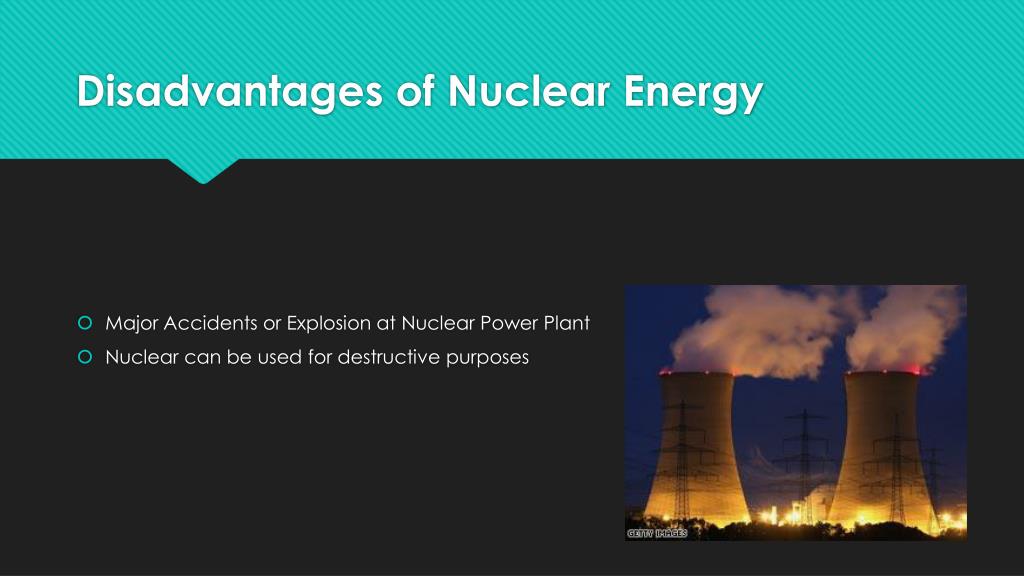
Transportation is another challenge. Moving the waste from the power plant to a central storage facility also carries a risk. While the containers are designed to be incredibly robust, accidents can happen. A transportation accident involving nuclear waste, while unlikely, would be a major headache. Again, maybe not the most uplifting thought, but let’s be realistic about our challenges.
The Cost Factor
Let's talk money! Safely handling and storing nuclear waste is expensive. Like, really expensive. You need specialized containers, secure facilities, and constant monitoring. All of this adds to the overall cost of nuclear power, which can impact electricity prices.
Now, some argue that the long-term cost of dealing with fossil fuel pollution (climate change, health problems, etc.) is even higher. And they might be right! But the upfront cost of managing nuclear waste is definitely a factor to consider.
Moreover, the cost can include decommissioning plants at their end of life. Even shutting down a plant creates many more byproducts of nuclear waste. So, the challenge is continuous, even as plants themselves stop producing power.
But Don't Despair!
Okay, I know I've painted a somewhat bleak picture. But here's the thing: we're not just sitting around wringing our hands! Scientists and engineers are working tirelessly to develop better ways to manage nuclear waste. From advanced storage techniques to even recycling the waste into new fuel, the possibilities are exciting!
So, what can you do? Learn more! Educate yourself about the pros and cons of nuclear energy. Talk to your friends and family about it. Support research into better waste management solutions. By staying informed and engaged, you can help shape the future of energy and ensure a cleaner, more sustainable world. Trust me, understanding these things is empowering! Who knows, you might even be the one to come up with the next big breakthrough in nuclear waste management!
Because if you’re well informed, you’re empowered to make decisions that can create real, positive change. Remember: every little bit helps. Knowledge is power! Get out there and learn!