
What Hvac System Qualifies For Tax Credit 2024
Alright, pull up a chair, grab a latte (or a double espresso, if you're like me and deciphering tax codes makes you want to climb the walls), and let's talk about something thrilling: HVAC tax credits for 2024! Now, I know what you're thinking: "Thrilling? That sounds about as exciting as watching paint dry." But trust me, stick around. We’re going to make this surprisingly painless, and potentially even… lucrative! Think of it as a treasure hunt, where the treasure is cold, hard cash (or at least a reduction in your taxes, which is basically the same thing, right?).
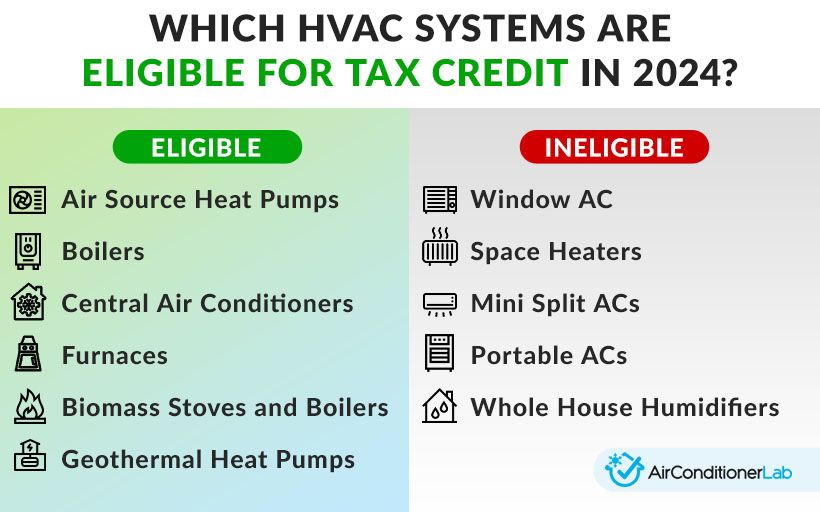
So, the big question: what HVAC system qualifies? It’s not like you can just slap a dusty old window AC unit in and expect Uncle Sam to shower you with gold. (Although, wouldn’t that be nice? I’d be rocking a whole window AC kingdom!)
The Inflation Reduction Act: Your New Best Friend (Maybe)
The key to this whole shebang is something called the Inflation Reduction Act (IRA). Sounds important, right? It is! Basically, the government wants to incentivize us to be more energy-efficient, and they’re dangling the carrot of tax credits to get us to bite. Think of it as a really, really slow-moving, bureaucratic game of follow the leader.
Must Read
There are essentially two ways to snag these credits related to HVAC. One is for making general energy-efficient improvements to your home. The other is for installing specific high-efficiency HVAC equipment. Let’s break them down, shall we?
Option 1: Home Energy Improvements (aka the "I'm Just Trying to Seal Up All the Cracks" Approach)
This credit is all about making your home less of a sieve for energy. Think insulation, air sealing, and – you guessed it – certain HVAC-related upgrades. This falls under the Energy Efficient Home Improvement Credit, which allows you to claim 30% of the cost of qualified expenses, up to a certain limit per year. So, while you can't get a credit for the entire cost of a brand new furnace, you can combine it with other eligible energy-efficient improvements to potentially maximize your return.

Here's the catch: there are annual limits to what you can claim. For example, the credit for qualified energy efficiency improvements is capped at $1,200 per year. There are also specific limits for certain items like exterior doors ($250 per door, up to $500 total), and exterior windows ($200 per window).
Now, I know what you're thinking: "$1,200? That's barely enough to buy a decent cup of coffee these days!" Okay, maybe not that bad, but it's still a significant amount, especially if you're already planning on making these upgrades. Plus, remember, you can claim this credit every year, so you can spread out your improvements and maximize your savings!
Option 2: High-Efficiency HVAC (aka "The Big Guns")
This is where things get serious. If you’re ready to invest in a brand-new, super-efficient HVAC system, you could qualify for a significantly larger tax credit under the Residential Clean Energy Credit. This credit covers 30% of the cost of new, qualified clean energy property, including things like geothermal heat pumps, solar water heaters, solar electric panels, etc. There's no upper limit on the tax credit you can claim (though your tax liability may limit how much you actually receive).
But here's the kicker: the equipment has to meet certain Energy Star standards. So, don't just grab the cheapest furnace you can find and expect to get a tax break. You'll need to do your research and make sure it qualifies.
Important Note: We’re talking specifically about heat pumps, central air conditioners, and furnaces that meet or exceed certain efficiency standards. Look for the Energy Star label! It’s like the Good Housekeeping Seal of Approval, but for appliances that are nice to the planet (and your wallet!).
Finding out if your specific HVAC system qualifies requires looking at its SEER (Seasonal Energy Efficiency Ratio), EER (Energy Efficiency Ratio), and HSPF (Heating Seasonal Performance Factor) ratings. These numbers essentially tell you how efficient the system is. You can usually find these ratings on the equipment itself or in the manufacturer's specifications. Websites like Energy Star or the IRS’s publications can also help you determine if your system meets the criteria.

Do Your Homework (and Maybe Hire a Pro)
Look, I’m not a tax professional. I’m just a friendly voice on the internet, trying to make sense of this crazy world. Always consult with a qualified tax advisor or HVAC professional to ensure you’re getting accurate information and maximizing your tax credits. They can help you navigate the complex rules and regulations, and ensure you’re choosing the right equipment for your needs and budget.
And one last thing: keep meticulous records! Save all your receipts, invoices, and equipment specifications. You'll need them when you file your taxes. Think of it as building your own little "tax credit treasure map," leading you straight to the pot of gold (or, you know, a slightly smaller tax bill).
So, there you have it! The lowdown on HVAC tax credits for 2024. Now go forth and save some money! And if you happen to strike it rich, remember who gave you the inside scoop (hint, hint...). Just kidding... mostly.