
What Happens At The Ring Of Fire
Ever heard of the Ring of Fire? Sounds pretty dramatic, right? Like something straight out of an action movie or a mythical tale. But what exactly happens in this fiery ring, and why is it so talked about? Let's take a chill peek at this incredible part of our planet without needing a helmet or a fire extinguisher!
Imagine our Earth isn't just one solid ball, but more like a giant, ancient puzzle. Instead of little cardboard pieces, these are massive, continent-sized plates called tectonic plates. And guess what? They're not stuck in place! They're always, always on the move, albeit at the incredibly slow speed of fingernail growth. Think of it like a cosmic ballet happening in super-slow motion.
What is the Ring of Fire, Really?
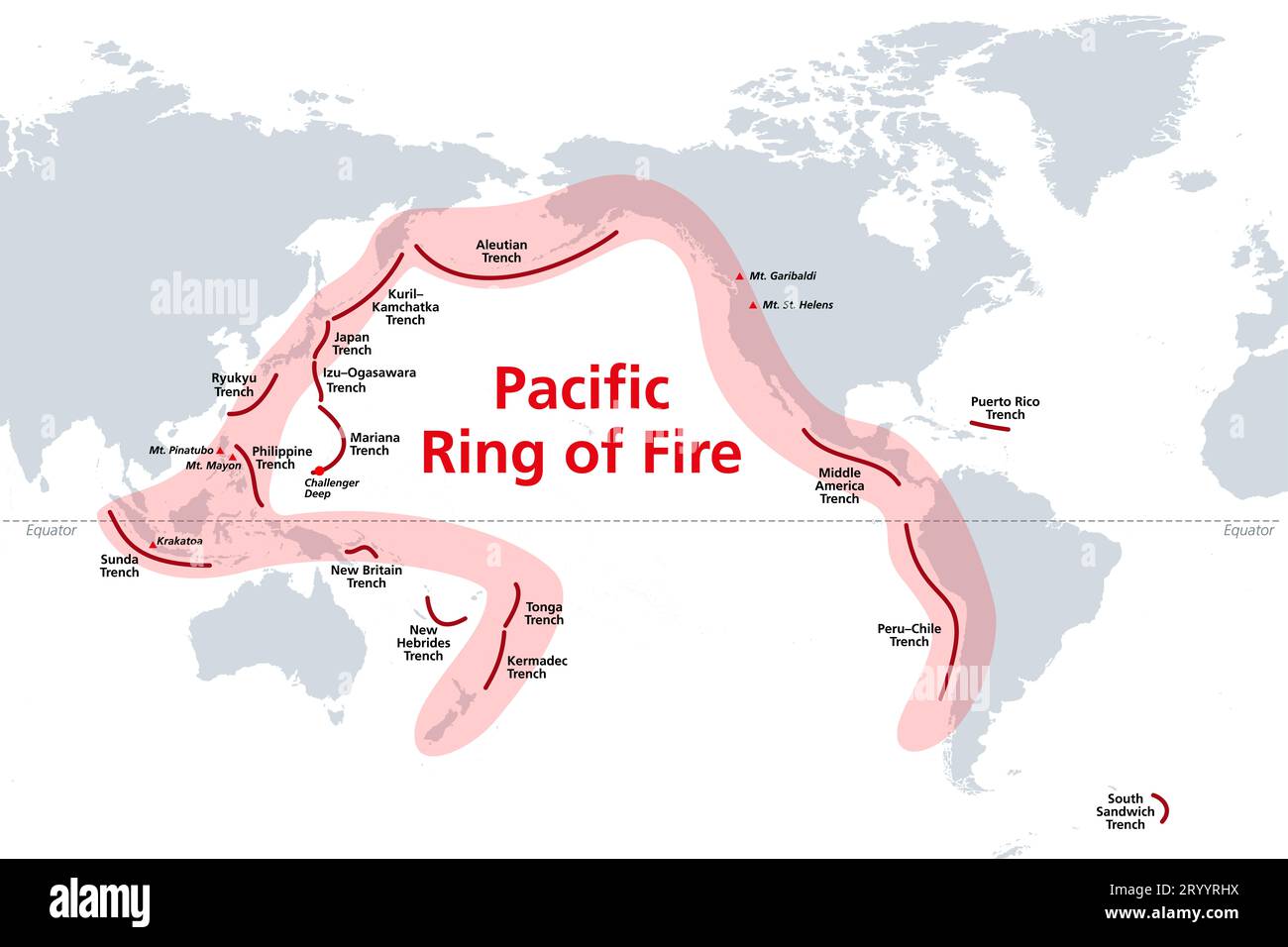
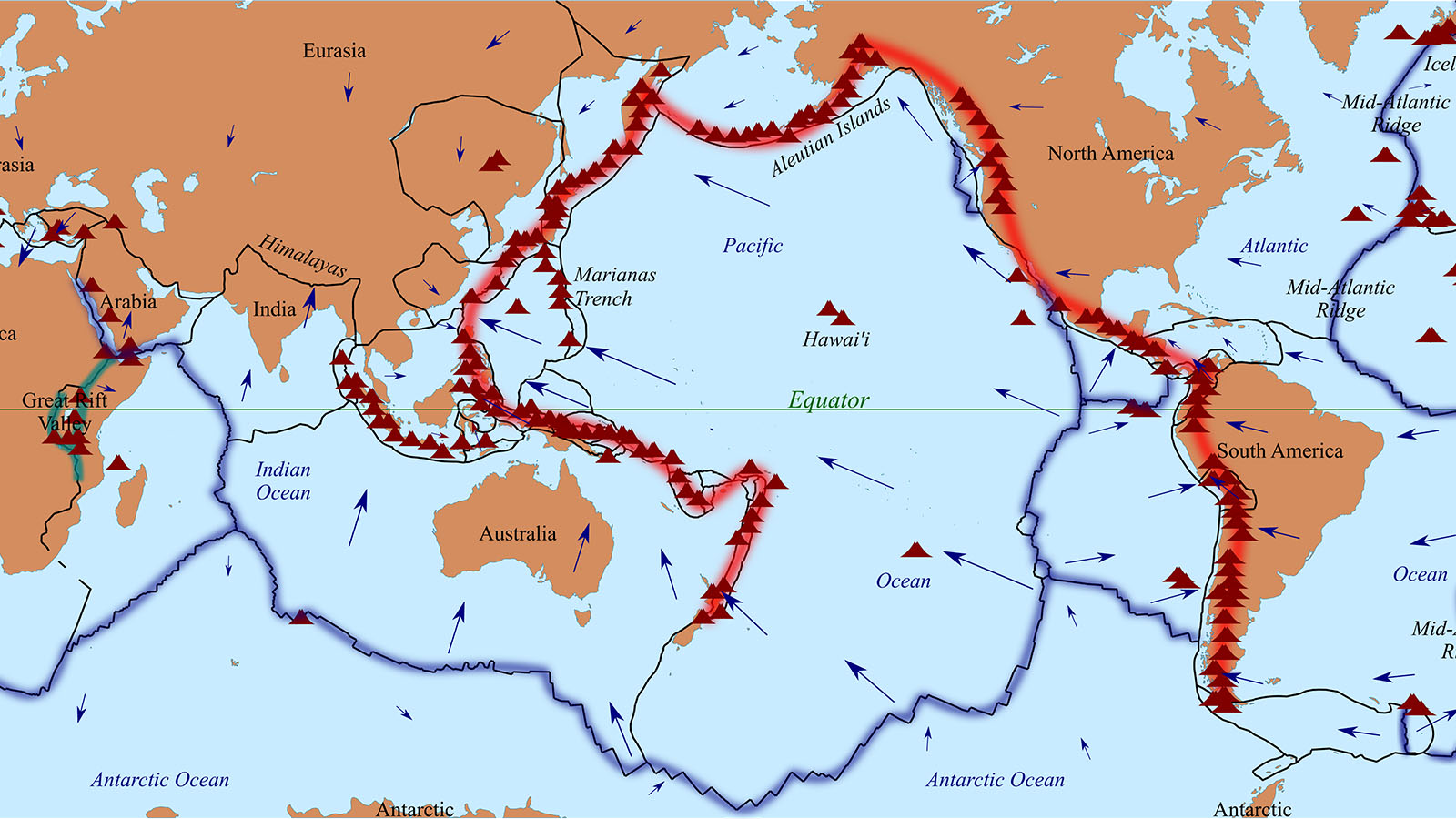
So, the Ring of Fire isn't actually a ring of flames (phew!). It's a huge, horseshoe-shaped area in the Pacific Ocean where many of these giant puzzle pieces meet, clash, and interact. It’s like the ultimate geological crossroads, stretching roughly 40,000 kilometers (that's a lot of kilometers!) and encompassing the coasts of North and South America, Asia, and Oceania.
Must Read
Why is it called the "Ring of Fire," then? Well, because this particular "ring" is home to about 75% of the world's active volcanoes and where a whopping 90% of the world's earthquakes happen! Pretty intense, right? It's literally where our planet's inner heat and movement show off the most.
The Big Collision: Plate Tectonics in Action
At the heart of the Ring of Fire's drama is a process called subduction. Sounds fancy, but it's pretty straightforward. Imagine two of those huge tectonic plates slowly bumping into each other. What happens? Instead of just stopping, one plate often gets forced underneath the other, diving down into the Earth's molten mantle. Think of it like a very, very slow-motion dive under a really thick blanket.
This is where things get really interesting. As the diving plate plunges deeper, it starts to melt due to the intense heat and pressure. This melted rock, now called magma, is lighter than the surrounding rock, so it starts to rise. And where does it want to go? Up, of course!
Volcanoes: Earth's Pressure Valves
That rising magma eventually finds its way to the surface through cracks and weaknesses in the Earth's crust. And voilà! You get a volcano. These aren't just pretty mountains; they're essentially Earth's pressure valves, releasing all that built-up heat and gas from deep inside.

This explains why the Ring of Fire is dotted with so many spectacular volcanoes, from Mount Fuji in Japan to Mount St. Helens in the USA, and countless others across Indonesia, the Philippines, and the Andes. It's like the Earth's personal chain of active chimneys, constantly letting off steam (and sometimes a lot more!).
Earthquakes: The Ground's Groovy Rumble
But it's not just volcanoes causing a stir. Those tectonic plates don't always slide past or under each other smoothly. Oh no. They often get snagged, stuck, and grind against each other. As they try to move, immense stress and energy build up.
Eventually, that stress becomes too much, and the rocks suddenly snap and shift. That sudden release of energy is what we feel as an earthquake. Imagine trying to bend a really sturdy ruler until it finally breaks with a sharp crack – but on a monumental scale, underground!

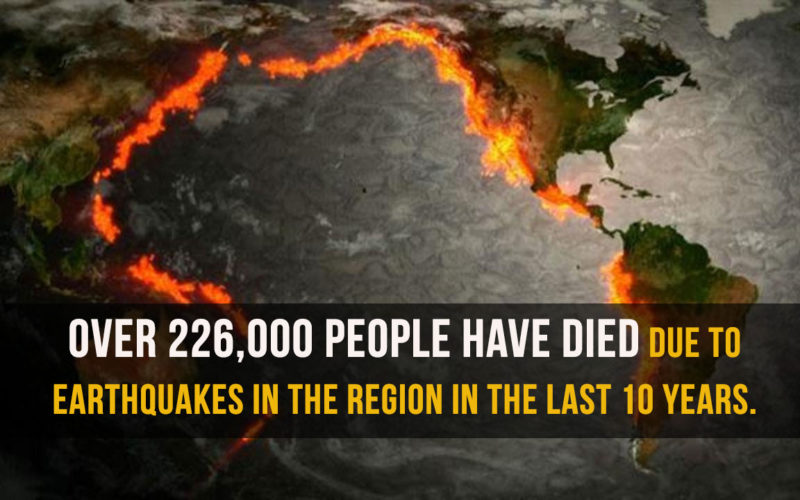
Because the Ring of Fire is such a busy intersection for these moving plates, it's constantly experiencing these geological "snaps." It's like the Earth's own natural drum solo, with rumbles and shakes happening all the time.
Tsunamis: The Ocean's Ripple Effect
Sometimes, when a really powerful earthquake happens underwater in the Ring of Fire, it can displace a massive amount of ocean water. This isn't just a regular wave; it can generate a series of incredibly powerful and destructive waves called tsunamis. Think of dropping a huge, heavy rock into a bathtub – the ripple effect would be pretty dramatic, right? Now imagine that on an oceanic scale. These powerful waves can travel across entire oceans, bringing their energy to distant coastlines.
Why is This All So Cool?
So, why should we care about this busy, rumbling, fire-free ring? Because it's a constant, powerful reminder that our planet is a living, breathing, dynamic entity. It's not just a static rock we live on. The Ring of Fire shows us Earth's incredible power to reshape itself, creating new land, towering mountains, and deep ocean trenches.
It's a place of both immense beauty and formidable power, teaching us about the geological forces that have sculpted our world for billions of years. It reminds us of the fascinating science happening literally beneath our feet, every single day.
Next time you hear about the Ring of Fire, remember it's not just a dramatic name. It's a real, active, and utterly mesmerizing geological hotspot – a true testament to the incredible, ever-changing heart of our planet. Pretty cool, huh?