
What Gauge Wire For 220v 30 Amp
Alright, gather ‘round, folks, and let’s talk about something that might sound drier than a popcorn kernel in a desert, but trust me, it’s got more drama than a reality TV show: electrical wiring. Specifically, we're diving into the thrilling world of 220V 30 Amp circuits. You've got a shiny new electric dryer, maybe a beefy water heater, or an AC unit that could cool a small country, and you're wondering, "What gauge wire do I need so my house doesn't turn into a fiery disco ball?"
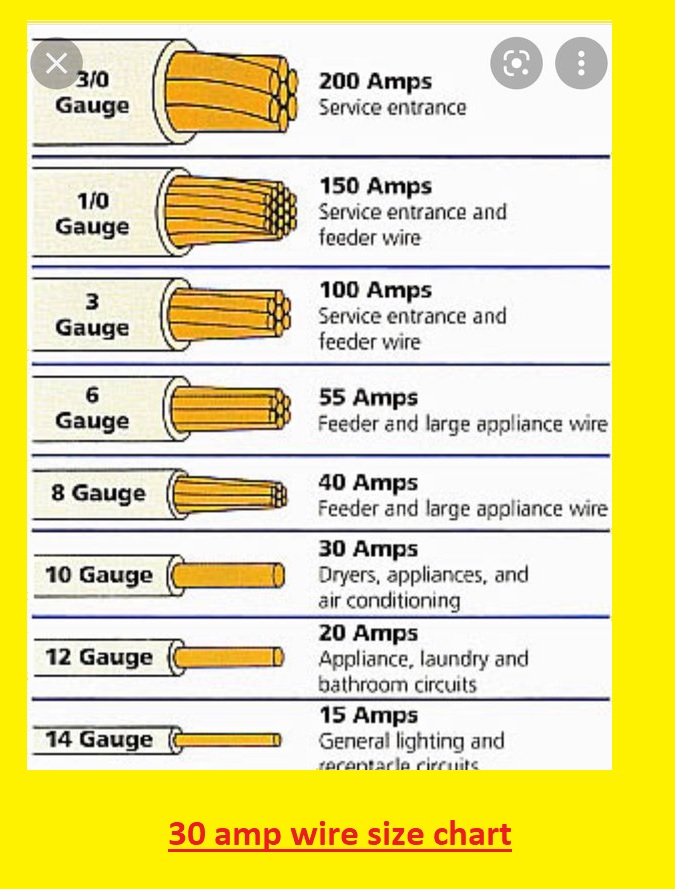
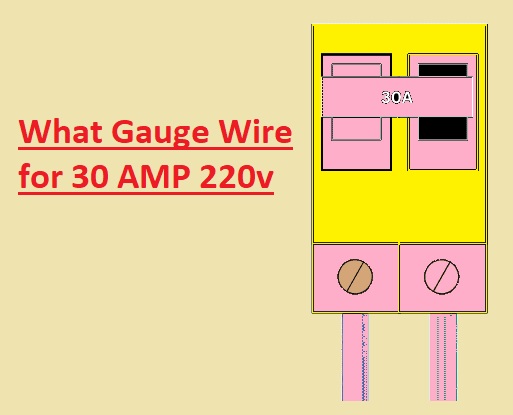
Let's cut right to the chase, because nobody likes suspense when it comes to keeping their house from becoming toast. For a 220V 30 Amp circuit, you're going to want to use #10 AWG wire. There it is! The big secret, revealed! That's "American Wire Gauge" for those of us who aren't fluent in electrical hieroglyphs. Memorize it, tattoo it on your arm, tell your pets. This little number is your golden ticket to appliance nirvana without accidentally summoning a smoke monster.
Why Does Wire Gauge Even Matter, Anyway?
Think of electricity like a bunch of tiny, incredibly enthusiastic partygoers (electrons) trying to rush through a hallway (the wire). The ampere (Amp) is how many partygoers are trying to cram through at once. The voltage (V) is how much "oomph" they've got pushing them. Now, if you've got a whole parade of 30 Amp electrons on a 220V circuit and you give them a skinny, little hallway, what happens?
Must Read
Chaos! Traffic jams! Grumpy electrons! And, most importantly, heat! That wire starts to get hotter than a dragon's breath, which can melt insulation, start fires, and generally ruin your day (and your house). Using the correct gauge wire is like giving those electron partygoers a nice, wide, multi-lane superhighway. Everyone gets through smoothly, nobody gets overheated, and your house remains a cozy, non-incinerated haven.
The Skinny on AWG (Spoiler: Bigger Number = Skinnier Wire)
Here's a fun, counter-intuitive fact that makes electricians chuckle at the bewildered faces of DIYers: the smaller the AWG number, the thicker the wire. Yep, you heard that right! #14 gauge is thinner than #12, and #12 is thinner than our hero, #10. It’s like a bizarre reverse beauty pageant for wires. Our #10 AWG wire is a nice, robust cable, perfect for handling a hefty 30 Amps of electron traffic without breaking a sweat (or catching fire).
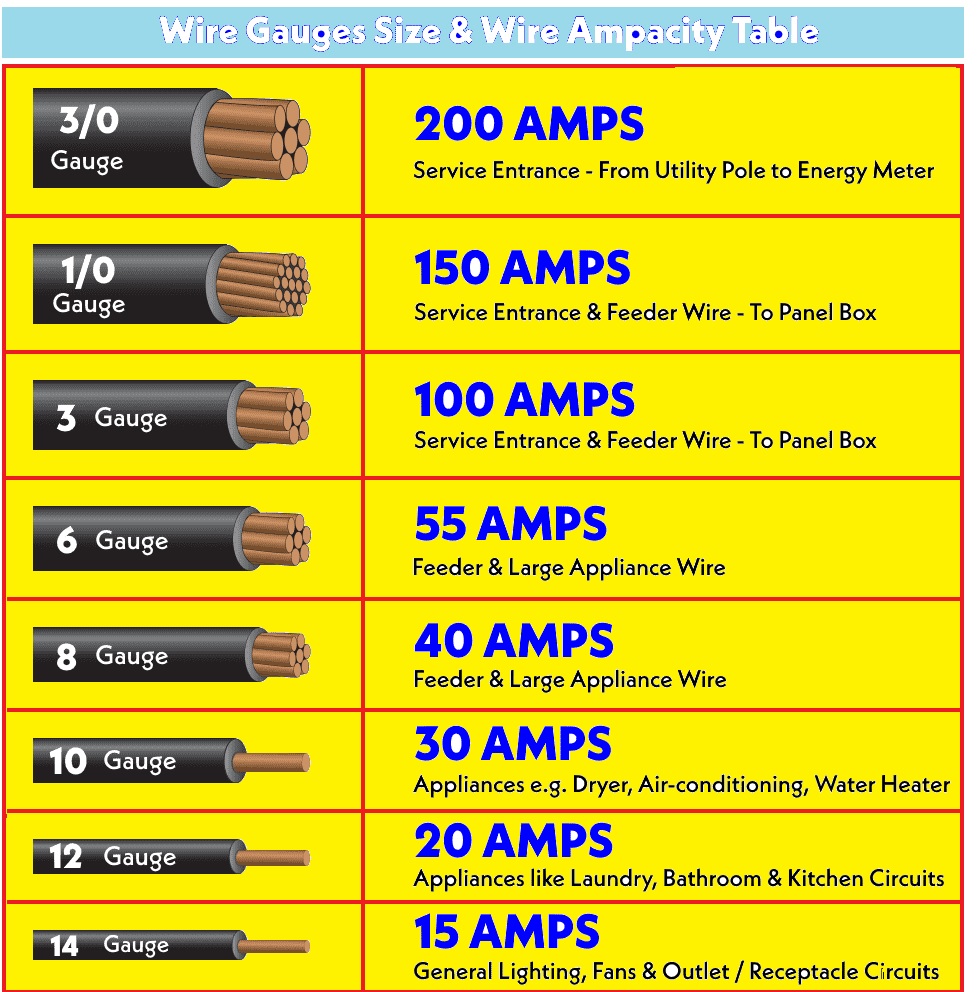
This is crucial because those heavy-duty appliances like electric ranges, large water heaters, and those aforementioned clothes dryers aren't just sipping power; they're chugging it down like it's the last glass of water in a desert. They demand a wire that can handle that kind of thirst. Trying to run them on a thinner wire is like asking a straw to handle a fire hose – it's just not going to end well.
Common Applications for Your #10 AWG, 30 Amp Heroes
So, where will you typically find our electrical superstar, the 220V 30 Amp circuit, paired with its trusty #10 AWG sidekick? Primarily, it’s for those hungry beasts of appliances that need more juice than your standard wall outlet can provide. Think: electric clothes dryers (most common), some electric water heaters, certain window or central air conditioning units, and occasionally, a really enthusiastic shop heater or specific power tools. Always check your appliance's nameplate or manual to confirm its exact voltage and amperage requirements!
A Word to the Wise (and the Weary DIYer): Safety First!
Look, I can make electricity sound fun and whimsical, but let's be super clear: this is not a game of charades with lightning bolts. Messing with electricity can be incredibly dangerous. If you're not absolutely confident in what you're doing, please, for the love of all that is non-flammable, call a qualified electrician! They’ve spent years learning the arcane arts of wiring, understanding local codes, and ensuring your home doesn't become a giant fuse box. There's no shame in admitting that some jobs are best left to the pros.
A surprising fact for your next dinner party: Did you know that wires can actually "sing" or hum? This is often due to magnetic forces caused by alternating current (AC) interacting with the wire itself, or sometimes by vibrations in transformers or other electrical components. So if your wires are humming a little tune, don't worry, they're not possessed, they're just... expressive. But if they're buzzing loudly or smelling like burning plastic, that's their way of screaming for help!

And another quick tip: While aluminum wire was once used, especially in older homes, for these types of circuits, copper wire is generally preferred today due to its superior conductivity and lower expansion/contraction rates, making connections more stable and safer. Always opt for copper unless specific circumstances (and an electrician) dictate otherwise!
So, there you have it: the thrilling saga of 220V 30 Amp circuits and their inseparable partner, the #10 AWG wire. It’s not just about connecting two points; it’s about creating a safe, efficient pathway for all those electron partygoers to do their job without turning your house into a five-alarm special. Stay safe, stay smart, and for Pete's sake, don't let your dryer feel neglected by giving it a skinny wire. Happy wiring (or happy calling your electrician)!
