What Gas To Use For Stainless Steel Mig Welding
There's something deeply satisfying about welding. Maybe it's the hiss of the arc, the molten metal glowing like a tiny sun, or the sheer power of permanently joining two pieces of metal together. For many DIY enthusiasts and professionals alike, MIG welding stainless steel is a go-to technique for creating strong, corrosion-resistant structures. But before you grab your helmet and fire up the machine, let's talk about something crucial: the gas.
Why is the right gas so important? Well, think of it as a shield for your weld. The purpose of the shielding gas is to protect the molten weld pool from atmospheric contaminants like oxygen and nitrogen. These contaminants can cause porosity (tiny holes) and weaken the weld significantly. In short, the right gas helps you achieve a clean, strong, and aesthetically pleasing weld. This is especially vital with stainless steel, as maintaining its corrosion resistance is key.
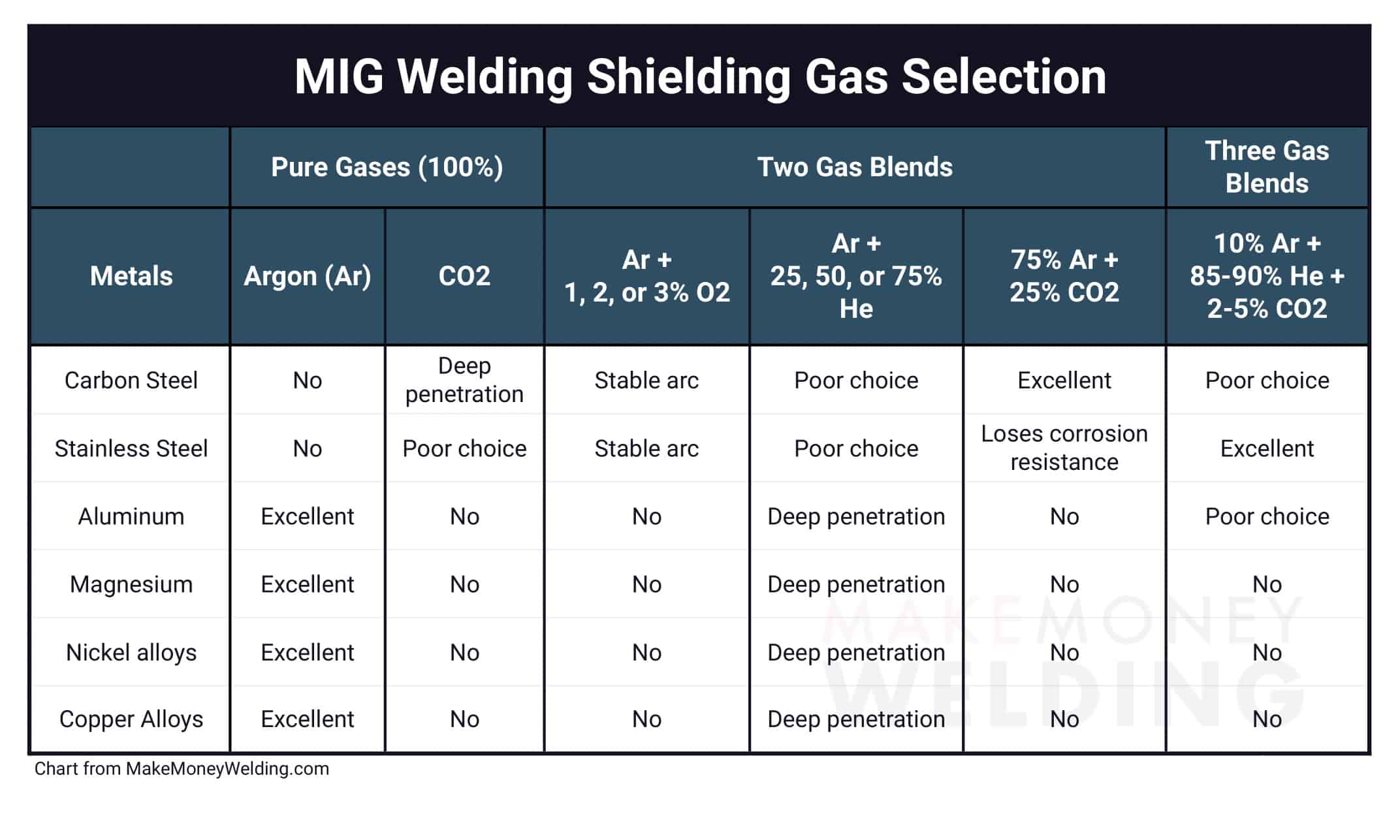
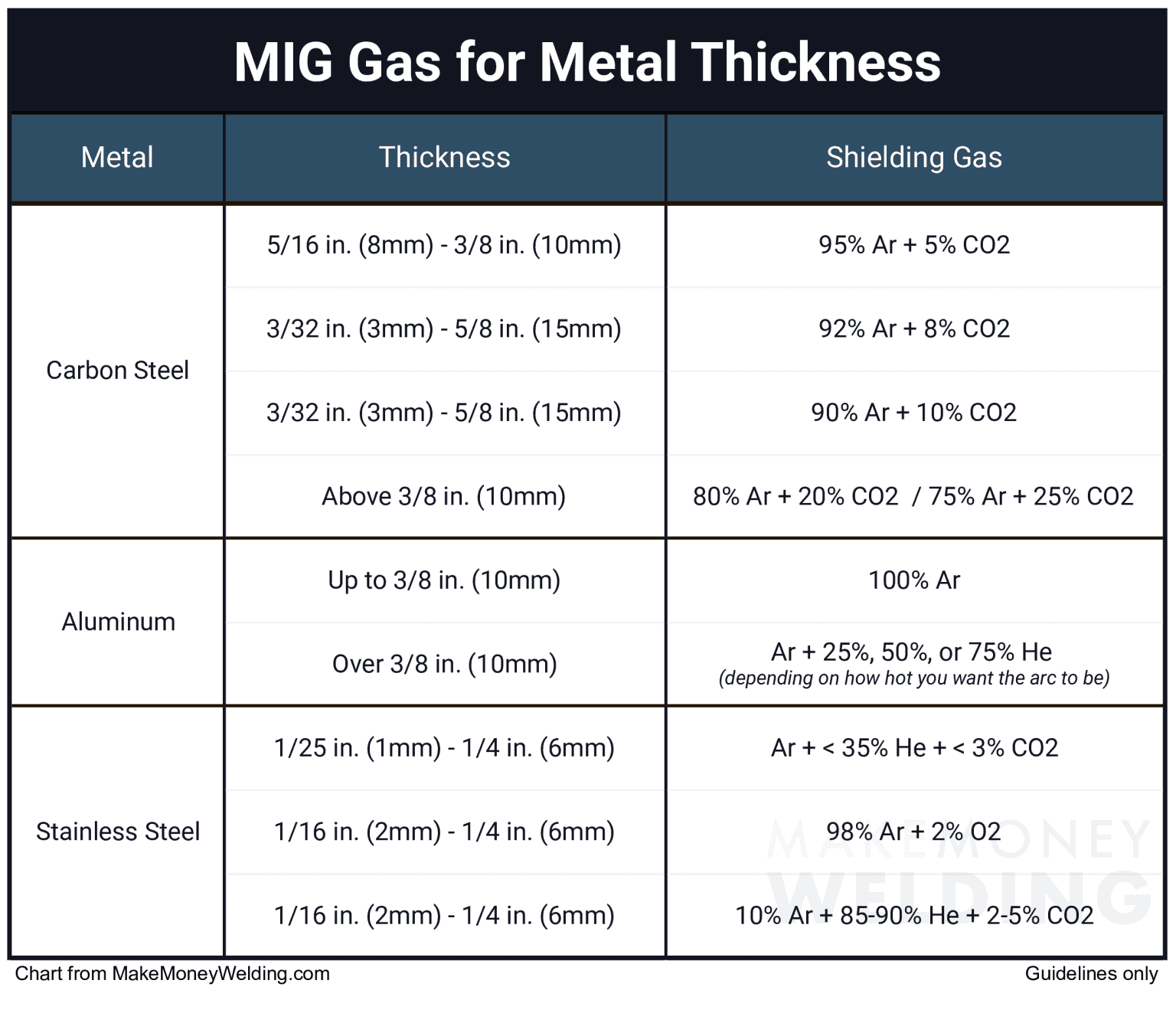
So, what are the options? When it comes to MIG welding stainless steel, the most common and recommended gas mixture is a blend of argon and carbon dioxide (CO2). Typically, you'll see ratios like 98% Argon / 2% CO2 or 95% Argon / 5% CO2. Argon provides a stable arc and good penetration, while a small amount of CO2 helps with arc stability and weld puddle fluidity. Think of it as a well-balanced recipe for success! While pure Argon can be used, the weld tends to be less fluid and the arc can wander. It is not the right choice if the desired result is to have a high quality weld.
Must Read
Another option, and sometimes a better one for specific applications, is a tri-mix gas consisting of Argon, Helium, and CO2. The addition of Helium increases the heat input, leading to better penetration in thicker stainless steel. This is especially useful in industrial settings or when welding thicker gauge materials. These tri-mix gases are typically more expensive.
You might be wondering, "Why not just use regular CO2?" While CO2 is commonly used for welding mild steel, it's not ideal for stainless steel. It can cause excessive oxidation, leading to a weld that's discolored, weakened, and less corrosion-resistant. Think of it as trying to bake a cake with the wrong ingredients – the results won't be pretty (or strong).
You'll find MIG welded stainless steel in countless applications, from kitchen appliances like sinks and refrigerators to automotive exhaust systems, food processing equipment, and even architectural structures. Its strength, durability, and resistance to corrosion make it a valuable material in a wide range of industries.

Here are a few practical tips to ensure you're enjoying your stainless steel MIG welding experience more effectively:
- Cleanliness is key: Thoroughly clean the stainless steel before welding to remove any dirt, grease, or oxides. Use a stainless steel wire brush specifically for stainless steel to avoid contamination.
- Use the right wire: Match your filler metal (the welding wire) to the base metal you're welding. Typically, you'll want a 308L or 316L stainless steel wire.
- Proper technique: Use a consistent travel speed and maintain a proper arc length. Practice on scrap metal before tackling your final project.
- Gas flow: Ensure your gas flow rate is appropriate for the thickness of the material and the size of your welding tip. Too little gas can lead to porosity; too much gas is wasteful and can disrupt the arc. A good starting point is around 20-25 CFH (cubic feet per hour).
- Practice makes perfect: Don't be discouraged if your first welds aren't perfect. Keep practicing, experiment with different settings, and learn from your mistakes.
By understanding the importance of the right shielding gas and employing proper techniques, you'll be well on your way to creating strong, beautiful, and long-lasting stainless steel welds. So, grab your helmet, choose the right gas, and let the sparks fly! Remember to always weld in a well-ventilated area, and wear appropriate safety gear. Happy welding!