Ever stared into your microwave oven, watching that spinning plate of leftovers, and wondered about the invisible magic happening inside? It’s truly amazing, isn't it? One minute, your food is cold; the next, it’s steaming hot.
But what exactly is that magic? Is it tiny cooking pixies? Miniature fire-breathing dragons? Not quite, though those would be significantly more entertaining.
The secret lies in something called frequency. It’s like the specific rhythm or beat that makes the whole thing work. And honestly, the actual frequency might surprise you.
Many people expect some super-secret, classified frequency. Perhaps something only known to top-tier scientists and master chefs. A number whispered in hushed tones, reserved for extraordinary machines.
But here’s my slightly unpopular opinion: the microwave's frequency is actually pretty… ordinary. Shockingly so, perhaps! It’s not some hidden ancient cosmic hum.
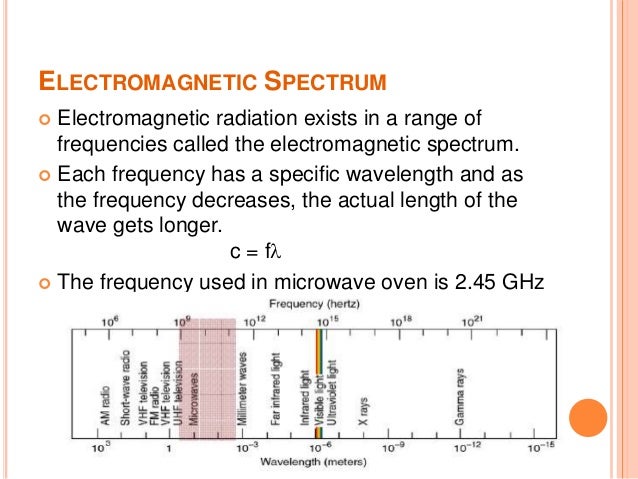
Brace yourself for the big reveal. The frequency most microwave ovens use is around 2.45 gigahertz. Yes, that’s 2.45 GHz.
Are you underwhelmed? Don't worry, you're not alone. It sounds a bit like a random number, doesn't it? Like finding out the secret ingredient to a gourmet meal is just, well, salt.
But before you dismiss our humble microwave frequency as boring, let's explore why this particular number is a star. It’s actually quite clever, even if it lacks a certain dramatic flair.
Frequency spectrum of microwave oven | Download Scientific Diagram
Wait, I Know That Number!
Here’s where it gets interesting, and perhaps a little more relatable. That 2.45 GHz frequency isn't just hanging out in your kitchen. Oh no, it's practically everywhere!
Think about your home. What other devices use a frequency around 2.4 gigahertz? You might be surprised by the company your microwave keeps.
Your Wi-Fi router, for instance, often operates on the 2.4 GHz band. That's right, the very waves that bring you cat videos and online shopping are chilling with your dinner.
What about your Bluetooth headphones? Yep, many of those also hang out in the 2.4 GHz range. Your microwave is sharing airspace with your favorite tunes!
Even baby monitors and cordless phones often utilize this same general frequency. It's a crowded neighborhood, full of invisible signals zipping about.
"It’s almost like finding out your favorite superhero spends their weekends doing mundane chores. Like Batman doing laundry. Only less dramatic."
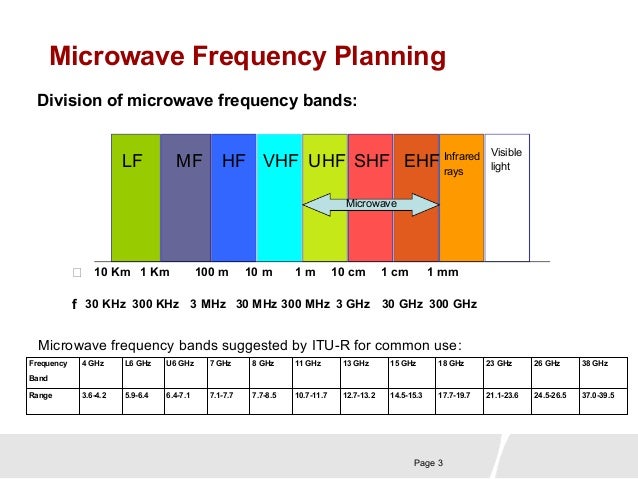
Microwave Frequency Range | GeeksforGeeks
So, our microwave isn't using some exotic, top-secret frequency. It's using a very common, hardworking frequency. This is where my "unpopular opinion" really kicks in.
We often expect complexity for something so effective. But sometimes, the simplest, most common tools are the most powerful.
Why 2.45 GHz? It's All About Water!
So, why this specific, somewhat pedestrian frequency? It's not arbitrary. There's a brilliant reason behind it, rooted in basic chemistry.
The magic of 2.45 GHz is that it's really, really good at making water molecules dance. And what's in most of the food we heat? Water!
These microwaves cause the water molecules in your food to vibrate incredibly fast. It's like a tiny, extremely energetic disco party happening inside your chili.
When molecules vibrate, they create friction. And friction, as we all know, generates heat. Voila! Hot food.
Mw frequency planning
It’s not radiation in the scary, atomic bomb sense. It’s simply energetic waves exciting molecules. Think of it like vigorously rubbing your hands together to get warm.
The magnetron, the clever device inside your microwave, is what generates these specific waves. It’s the unsung hero, humming away, producing those 2.45 GHz marvels.
The Humble Power of Commonality
The fact that this frequency is so common, and yet so effective, is truly remarkable. It highlights how powerful simple principles can be when applied cleverly.
We might expect the frequency of a device that heats food in minutes to be something exclusive. Something like "hyper-quantum wave-particle fusion frequency!"
But no. It’s 2.45 GHz. The same frequency helping you stream your favorite show. The same frequency connecting your wireless mouse.
This commonality is actually a testament to its utility. This band of frequencies is simply very useful for transmitting information and, as it turns out, for cooking.
So next time you're zapping a frozen burrito, take a moment to appreciate the humble power. It's not a flashy, mysterious number.
It's a straightforward, hardworking frequency. One that's proven its worth in countless applications, from communication to cuisine.
Your microwave isn’t a secret agent with a unique code. It’s more like a highly skilled, incredibly efficient, and very well-connected everyday hero.
Embrace the commonness! It’s a wonderful reminder that true innovation often lies in clever application, not just in obscure secrets.
The magic isn't in the number itself, but in how brilliantly engineers harness that number. To turn a common radio wave into a kitchen wizard.
So, let's toast (or rather, microwave) to 2.45 GHz – the unassuming superstar of your kitchen. It might be common, but it certainly gets the job done with impressive speed and efficiency.