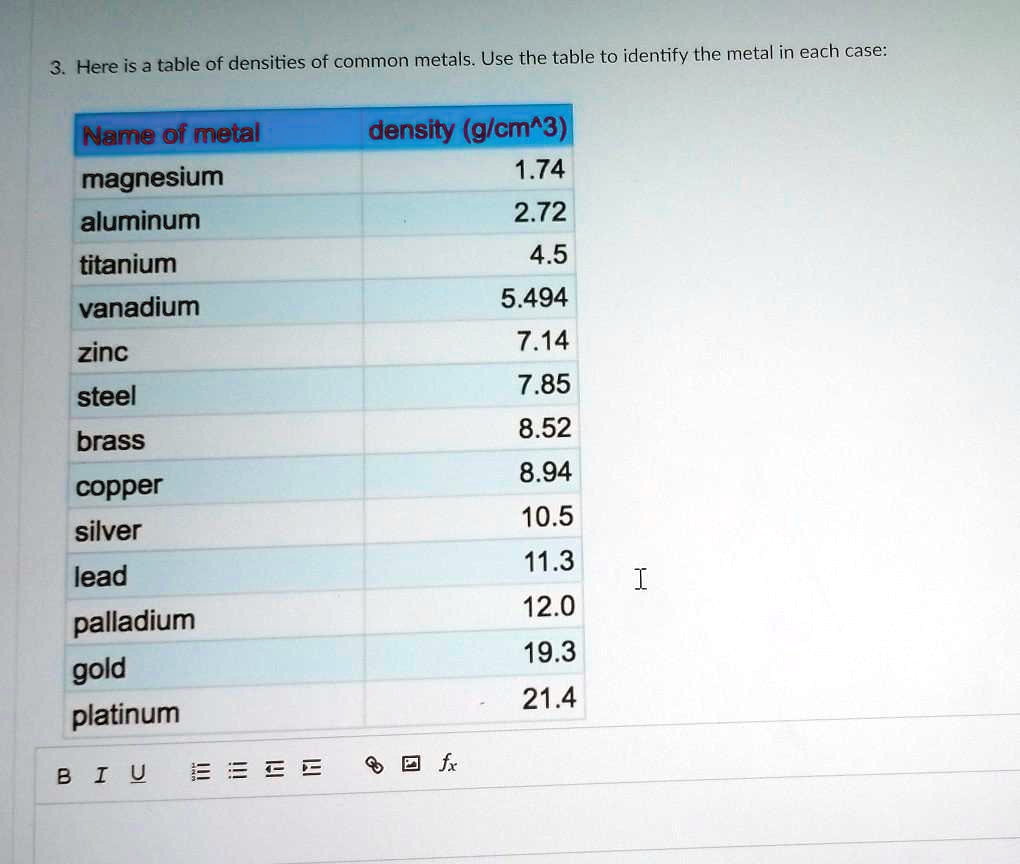
What Elements Have The Lowest Densities Of Metals
Ever wondered what would happen if you could throw a metal ball into a swimming pool and it floated? Seems impossible, right? We usually think of metals as being heavy and sinking straight to the bottom. But the world of elements is full of surprises, and exploring the least dense metals is a fascinating dive into the heart of chemistry and material science. It's not just about defying gravity; understanding density unlocks secrets to designing everything from lighter airplanes to more efficient batteries!
Why is understanding this important? Well, density – the amount of mass packed into a given volume – is a fundamental property that dictates how materials behave. For engineers and scientists, knowing which metals are lightweights is crucial. Imagine designing a race car: every gram counts! Using low-density metals can drastically improve performance. Plus, it's just plain cool to learn about the extremes of the periodic table!
So, who are the contenders for the title of "Lightest Metal"? Let's meet a few key players:
Must Read
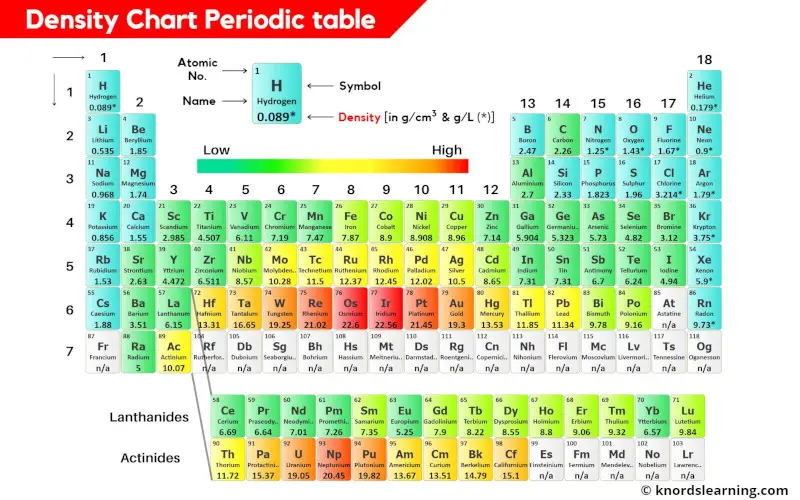
First up is Lithium (Li). This silvery-white alkali metal is the undisputed champion. It's so light that it actually floats on water (though you wouldn't want to try this at home – it reacts violently!). With a density of only 0.534 g/cm³, Lithium is a star in the world of batteries, particularly in our smartphones and electric vehicles. Its lightness allows for higher energy density, meaning longer battery life without adding too much weight.
Next, we have Sodium (Na). Another alkali metal, Sodium clocks in with a density of 0.97 g/cm³. Like Lithium, it's soft enough to cut with a knife and highly reactive. While not as light as Lithium, Sodium still finds its uses in various chemical processes and, intriguingly, in some specialized batteries as well.
Then there's Potassium (K), the third alkali metal on our list. Its density is around 0.89 g/cm³. It's less dense than Sodium and also highly reactive. You'll find Potassium playing a vital role in biological systems and fertilizers.
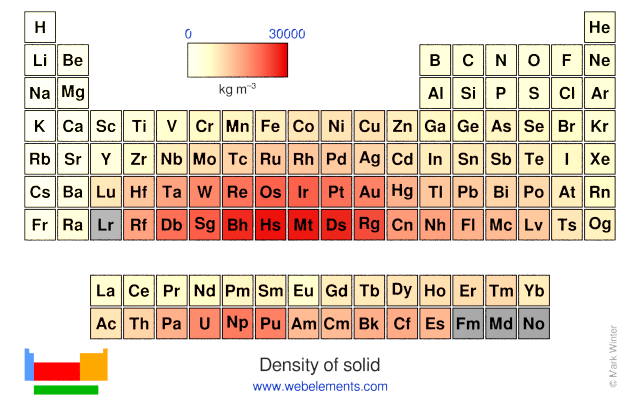
Notice a pattern here? The alkali metals (Group 1 of the periodic table) tend to be the lightest. This is due to their atomic structure – they have relatively few protons and neutrons in their nucleus compared to other metals, resulting in a lower mass for a given volume.

It's worth noting that while these are the "pure" metals with the lowest densities, alloys (mixtures of metals) can also be engineered to achieve extremely low densities. For example, alloys containing significant amounts of aluminum or magnesium can be incredibly lightweight and strong, making them ideal for aerospace applications.
In conclusion, exploring the realm of low-density metals is a journey into the fascinating relationship between atomic structure and material properties. From Lithium powering our phones to lightweight alloys shaping the future of aviation, understanding density is essential for innovation and progress. So, next time you pick up your phone or see a plane soaring overhead, remember the unsung heroes: the light metals that make it all possible! Isn't chemistry amazing?
:max_bytes(150000):strip_icc()/PeriodicTableDensity-58b5d9015f9b586046df6734.jpg)