
What Education Is Needed To Become A Welder
So, you wanna be a welder, huh? Awesome! Thinking of wielding some serious power, literally! Good for you. Forget those desk jobs. Let's talk about what kinda education you'll actually need. Spoiler alert: it's not as intense as becoming a brain surgeon (phew!), but you'll still need some smarts and, you know, skill.
First things first: You don't necessarily need a fancy four-year college degree. I mean, you could get one, sure. Maybe major in… welding engineering? If that's a thing? (Okay, it probably is, but honestly, most welders don't go that route.)
Instead, most people jump into welding through a couple of main paths, and they're both pretty darn effective:
Must Read
Vocational Schools or Trade Schools
These are your bread and butter, your go-to spots for learning the nitty-gritty of welding. Think of it as Welding 101 to Advanced Welding Ninja. You’ll learn everything from the basic types of welding (SMAW, GMAW, GTAW - don't worry, we'll get to those!) to reading blueprints (because you can't just weld willy-nilly!), and safety procedures (super important, trust me!).
These programs usually last anywhere from a few months to a year or two. It really depends on how specialized you want to get. Want to focus on underwater welding? (Whoa, adventurous!) Or maybe pipe welding? The more specific you get, the longer the training might be. But hey, specialized skills usually equal bigger paychecks, right?

Plus, vocational schools often have partnerships with local companies, so you might even land an apprenticeship or a job right after you finish your training. Talk about a head start!
Apprenticeships
Think of this as on-the-job training, but, like, a structured, paid version. Earn while you learn! That’s the motto, people.
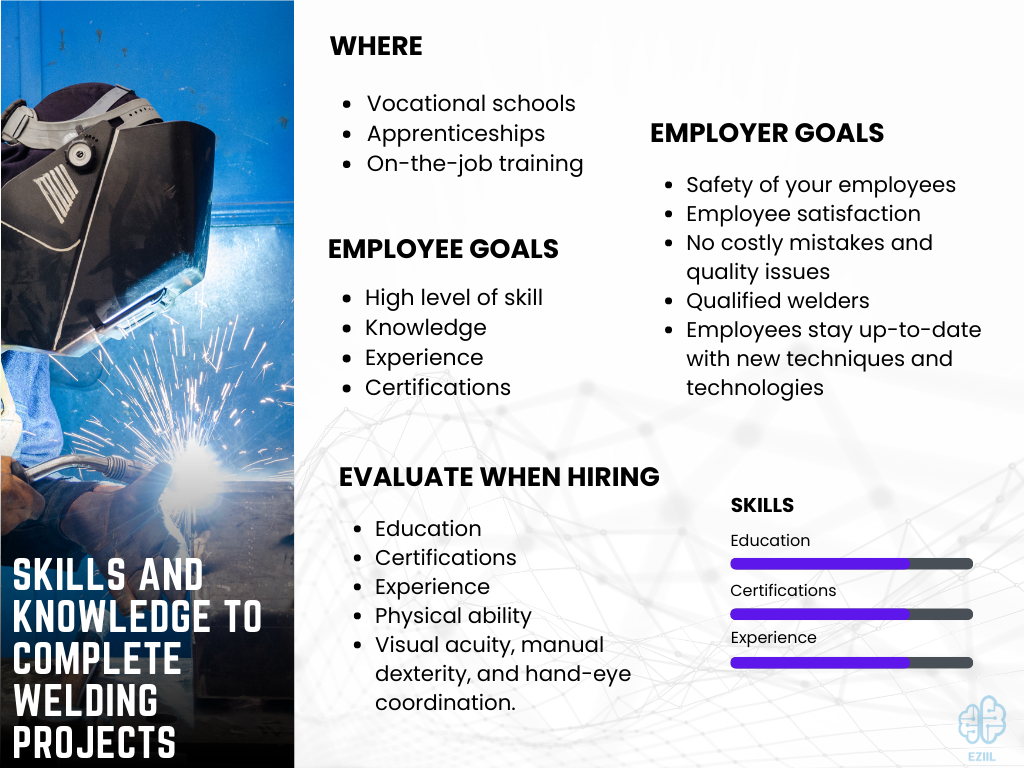
You'll work under the supervision of experienced welders, learning the ropes (or should I say, rods?) firsthand. You'll get to see real-world projects, make real-world mistakes (don't worry, everyone does!), and get real-world feedback. There's seriously no substitute for that kind of experience.
Apprenticeships are usually offered by unions, construction companies, or other employers who need welders. The downside? They can be competitive to get into. The upside? You're basically getting paid to learn a valuable skill. It's a win-win!
Okay, so what about those welding acronyms I mentioned earlier? Let's break it down real quick:
- SMAW (Shielded Metal Arc Welding): This is your classic "stick welding." It's versatile, relatively inexpensive, and used for a ton of different applications.
- GMAW (Gas Metal Arc Welding): Also known as MIG welding. It's faster than stick welding and often used for production work.
- GTAW (Gas Tungsten Arc Welding): AKA TIG welding. It's more precise and used for high-quality welds on thinner materials. Think fancy stuff!
You'll learn all about these (and more!) in your training. Don't sweat it if it sounds like alphabet soup right now.
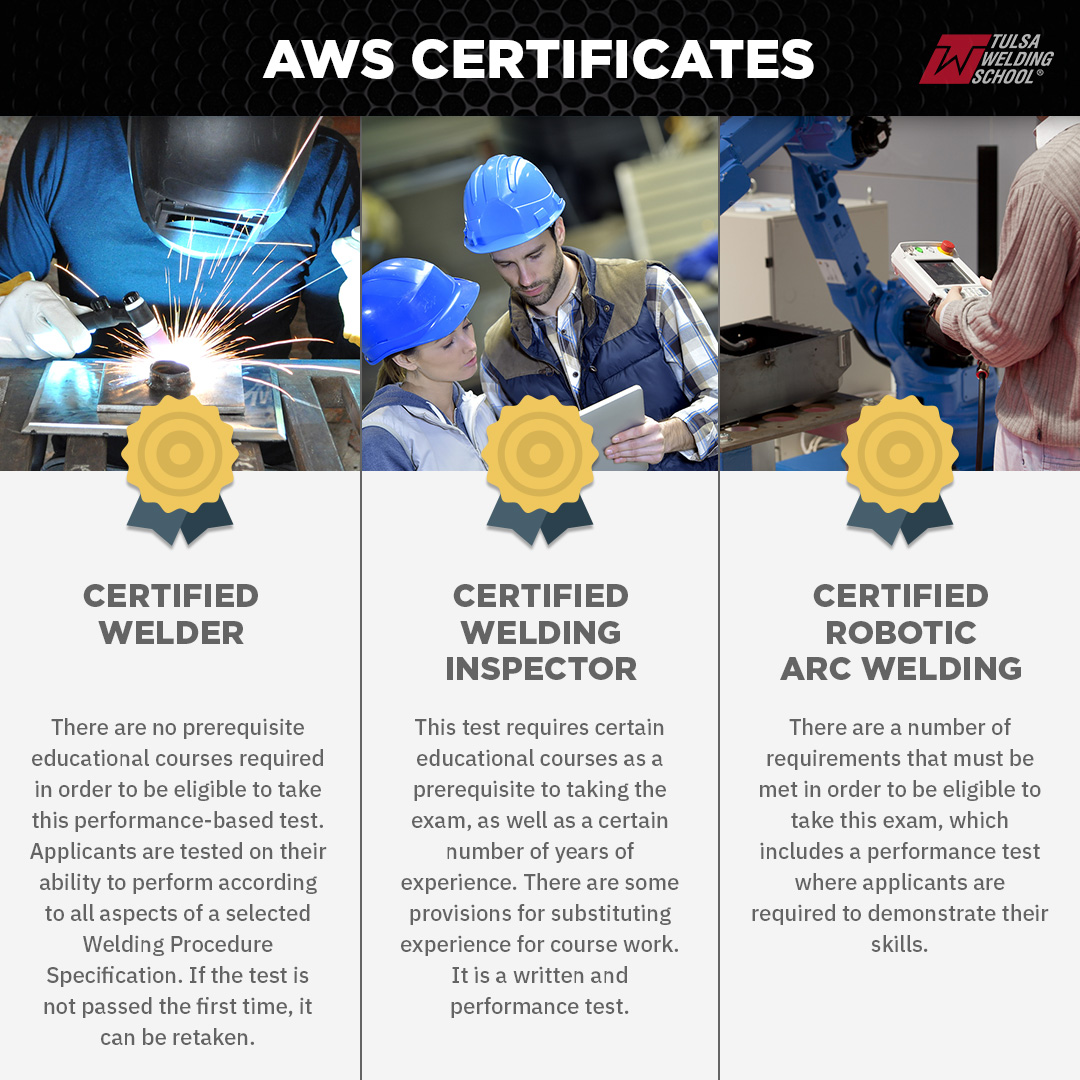
Besides the technical skills, there are a few other things that'll help you succeed as a welder:
- Math Skills: Yeah, I know, nobody loves math, but you'll need to be able to measure things accurately and calculate angles. Don't worry, it's not calculus. More like basic geometry and arithmetic.
- Physical Stamina: Welding can be physically demanding. You'll be standing for long periods, lifting heavy objects, and working in uncomfortable positions. Gotta be tough!
- Attention to Detail: A good weld is a precise weld. You need to be able to spot even the smallest imperfections. Think eagle eyes!
So, there you have it! The education needed to become a welder isn't about years of university, it's about targeted training and hands-on experience. Find a good vocational school or apprenticeship program, work hard, and you'll be well on your way to a fulfilling and lucrative career. Now go forth and weld some awesome stuff!
And hey, who knows? Maybe one day you'll be welding spaceships or underwater robots. The possibilities are endless! (Okay, maybe not endless, but pretty darn cool.)