What Does The Wavelength Of Light Determine
Ever looked at a rainbow and wondered why it’s, well, rainbow-y? Or maybe you’ve pondered why your cat, Mr. Fluffernutter, can see in the dark way better than you? The answer, my friends, boils down to something called wavelength. And trust me, it's way cooler than it sounds. Think of it as the secret code of light!
The Light Fantastic (and Its Wavelength)
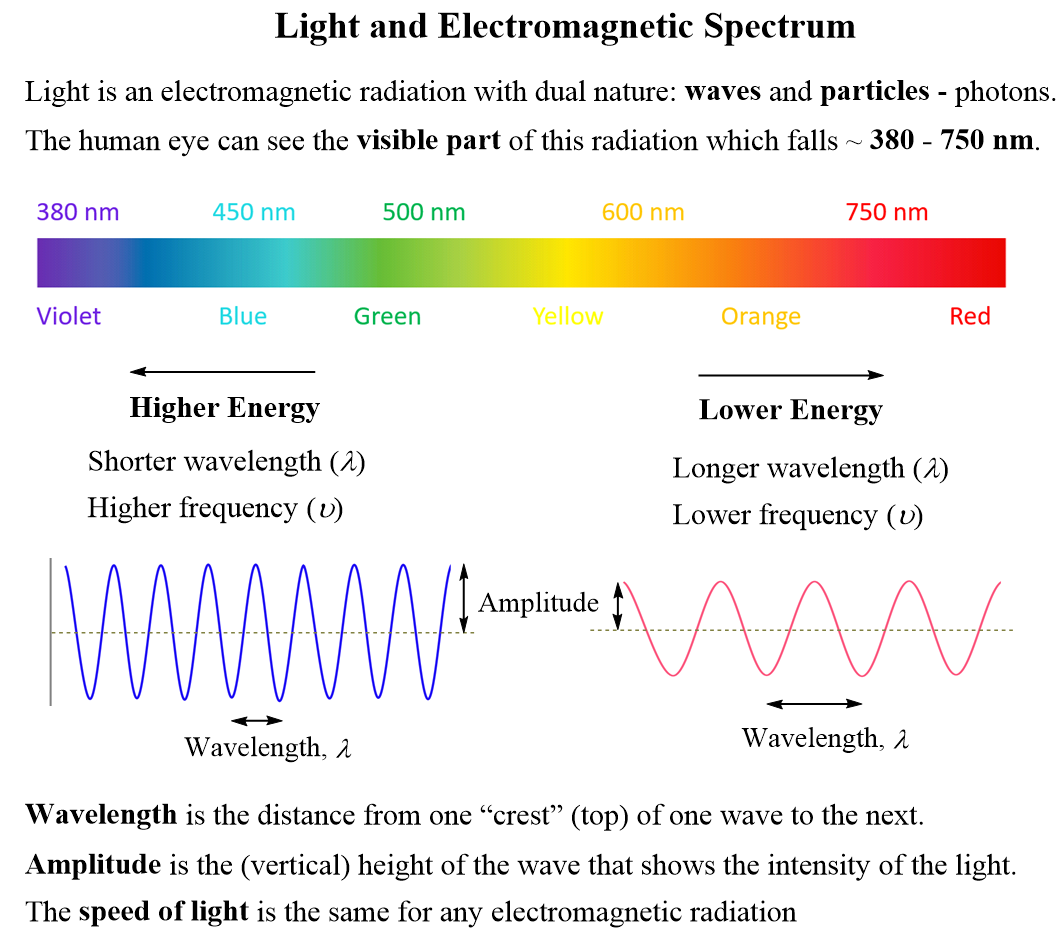
Imagine light as a bunch of tiny waves crashing on a shore. The distance between each wave crest (or each trough, if you're a trough kind of person) is its wavelength. Short waves are all scrunched together, like a tightly packed crowd at a rock concert. Long waves are spread out, like folks chilling on a beach with plenty of elbow room.
Now, here’s the kicker: the wavelength of light determines its color! Yes, that vibrant red of a rose, the calming blue of the ocean, and even the funky green of that avocado you're eyeing – all dictated by the length of light waves bouncing off them.
Must Read
Short wavelengths correspond to violet and blue light. Longer wavelengths give us red and orange. Everything in between fills out the rainbow. It’s like a cosmic color palette, and wavelength is the artist holding the brush!
Beyond the Rainbow: The Invisible Spectrum
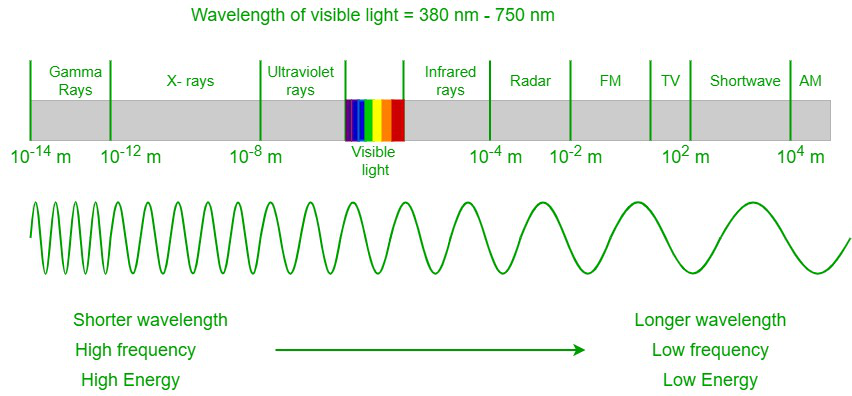
But hold on, the story doesn't end with rainbows. The wavelengths we can see, the colors of the visible spectrum, are just a tiny slice of the electromagnetic spectrum. It's like thinking the whole ocean is just the bit you can see from the beach. There's so much more happening beneath the surface!
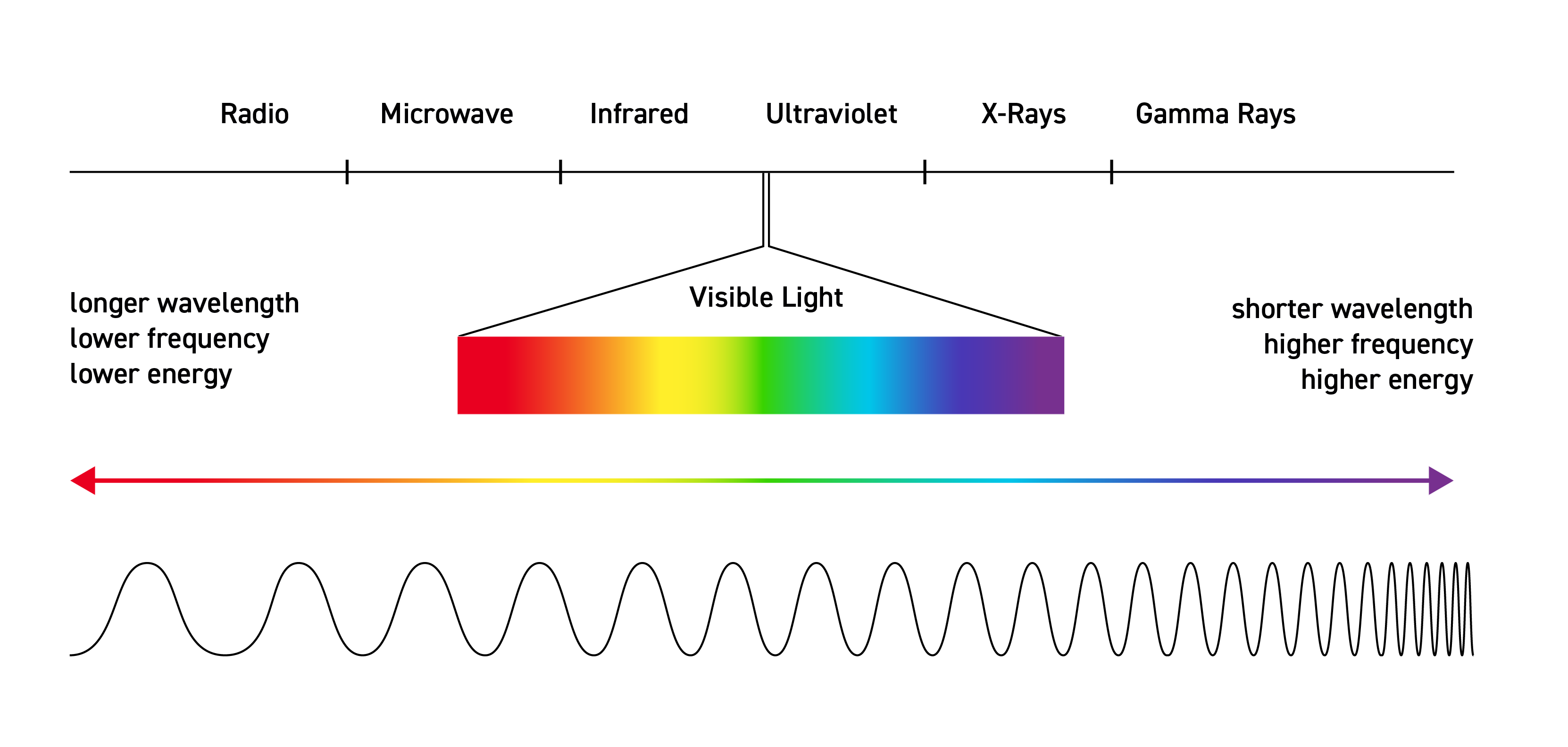
Beyond red, we have infrared light. Think of it as cozy warmth. Your TV remote uses infrared to talk to your television (silently commanding it to play cat videos, no doubt). And those night-vision goggles? They're picking up infrared light emitted by warm bodies – like sneaky spies or, you know, Mr. Fluffernutter sneaking onto the kitchen counter.
On the other end of the spectrum, beyond violet, lies ultraviolet (UV) light. This is the stuff that gives you a sunburn (wear sunscreen, folks!). But UV light isn’t all bad. Bees, for example, can see UV light, which helps them find nectar-rich flowers. Imagine seeing the world with secret, glowing pathways leading straight to deliciousness! That's bee vision, powered by wavelength.
Wavelength in Everyday Life: A Surprising Performance
Wavelength isn't just about pretty colors and sunburns. It plays a role in all sorts of surprising ways. Microwaves, for example, use wavelengths to heat up your leftovers. Radio waves use different wavelengths to transmit your favorite music across the airwaves. And X-rays use incredibly short wavelengths to see right through you (though hopefully only at the doctor’s office!).

Think about how different animals perceive the world. Many insects can see ultraviolet light, which is invisible to us. Snakes can "see" infrared radiation, allowing them to hunt warm-blooded prey in the dark. It's like they have their own personal thermal vision goggles!
Even plants rely on specific wavelengths of light for photosynthesis, the process of turning sunlight into food. They prefer red and blue light, which is why grow lights often emit those colors. So, the next time you see a plant thriving, remember it's all thanks to the magic of wavelength.

So, What's the Big Deal?
The wavelength of light is more than just a technical term. It's the key to understanding how we see the world, how animals perceive their environment, and how technology shapes our lives. It's a reminder that there's so much more to reality than what meets the eye (or even the eye of Mr. Fluffernutter). It’s a testament to the beautiful and complex physics that underlies everything around us.
So, next time you gaze at a rainbow, remember that the vibrant colors are a direct result of wavelength. And maybe, just maybe, give a little nod to the physics that makes it all possible. Who knew something so simple could be so… illuminating?
As
Albert Einsteinonce (probably) said, “Look deep into nature, and then you will understand everything better… especially the importance of wavelength!”