
What Does A Polymer Look Like
Alright, grab a coffee, pull up a chair. We’re about to embark on a quest to answer one of life’s most profound, yet surprisingly invisible, questions: “What does a polymer look like?” If you’re imagining a tiny, shimmering, rainbow-colored dragon, I’m afraid I have to disappoint you. It’s far weirder, much more chaotic, and ultimately, way cooler.
First off, let’s manage expectations. You know how you can “see” your dog, or a tree, or that suspiciously large stain on my shirt? You can’t exactly “see” a polymer in the same way. We’re talking about the molecular level here, folks. This is the realm of the truly microscopic, where even the most powerful optical microscope throws its hands up and says, "Nah, I'm out."
The Molecular Spaghetti Junction
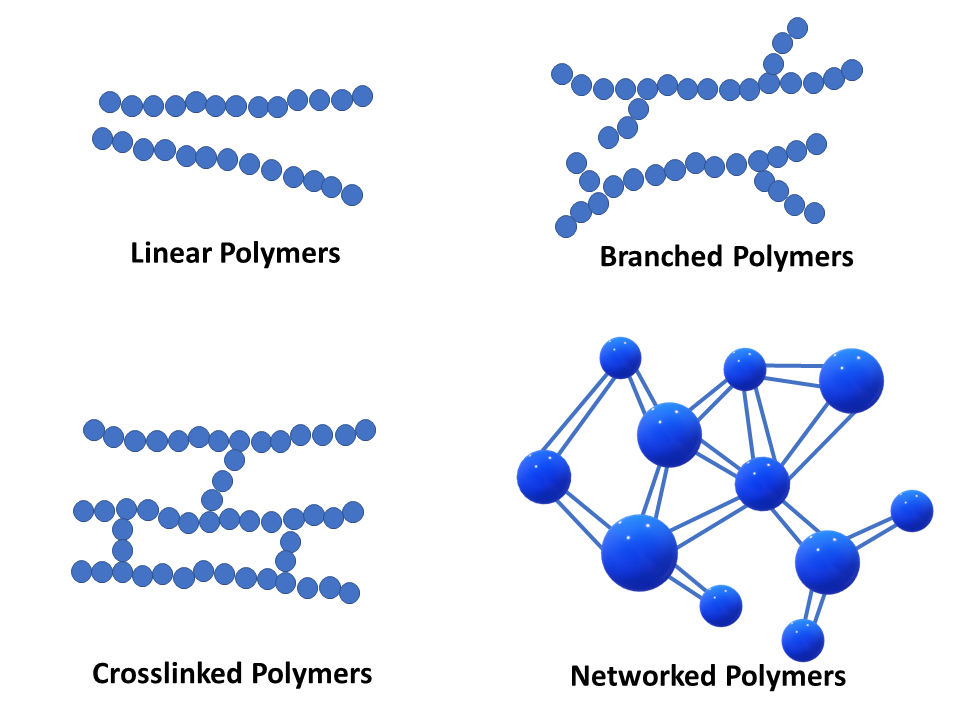
So, what are these mysterious beasts? Imagine you have a single LEGO brick. That's a monomer. Now, imagine you have a bazillion of those LEGO bricks, and you start snapping them together, one after another, forming an incredibly long, long chain. Congratulations, you’ve just built a polymer! (In your head, anyway. Please don't try this with actual LEGOs; you’ll run out of bricks and patience.)
Must Read
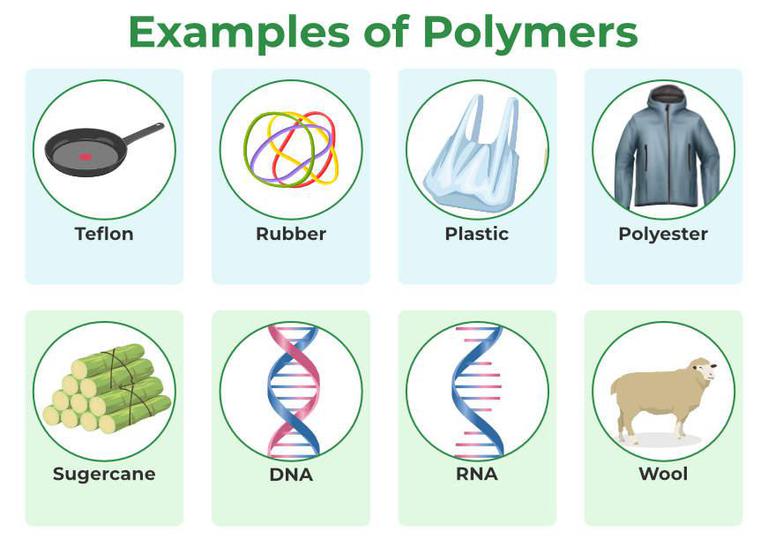
Polymers are essentially just really long molecules made of repeating smaller units. Think of a string of pearls, a paperclip chain, or a microscopic, incredibly persistent worm. They are the backbone of almost everything around you: plastics, rubber, your hair, your skin, even the very DNA that makes you, well, you. Your body is practically a polymer theme park!
The Great Tangled Mess
Now, to the "look" part. If you could somehow shrink down to the atomic scale, armed with your tiny molecular goggles, what would you see? You certainly wouldn't see a neat, perfectly straight line. Oh no, my friend. You’d see something far more akin to a bowl of freshly cooked spaghetti. Or perhaps, the inside of your junk drawer after a minor earthquake.

These chains aren't just sitting there politely. They are in a constant state of molecular breakdancing. Wiggling, jiggling, twisting, turning, and entangling with each other. It’s a microscopic wrestling match happening constantly, all because of thermal energy. They don't want to be straight; they want to be as random and chaotic as possible. It's their natural inclination, like a teenager's bedroom.
Imagine trying to untangle a fishing line that's been through a hurricane, a cat, and then a toddler. Now multiply that chaos by a few billion. That's closer to the reality of a polymer.
Two Kinds of Chaos: Amorphous vs. Crystalline
Even in their wild, untamed state, polymers have personalities. You mainly find them in two "looks," or more accurately, arrangements:
First, there's amorphous. This is your pure, unadulterated tangled spaghetti. The chains are randomly arranged, like a crowd at a rock concert. Think of materials like rubber bands or most clear plastics. They're soft, flexible, and often transparent because light can wiggle through the random gaps. There's no rhyme or reason to their arrangement, just pure, beautiful anarchy.

Then, we have crystalline. Don't let the name fool you into thinking "perfect diamond structure." For polymers, "crystalline" just means that sections of the chains have managed to align themselves into more ordered, compact regions. Think of it like some of the spaghetti strands deciding to get their act together and lie somewhat parallel to each other. These regions make the material tougher, stronger, and often opaque (like milk jugs or plastic pipes). Most polymers are actually semi-crystalline – a bit of order mixed into a whole lot of glorious mess.
So, How Do Scientists "See" Them?
If we can't just look at them with our eyes, how do we know all this? Scientists don't typically "see" a single polymer chain like you’d see a rope. Instead, they use some truly mind-bending techniques. We're talking about things like X-ray diffraction (bouncing X-rays off them to figure out their internal structure), electron microscopes (which don't use light, but electrons, to image surfaces), and atomic force microscopes (which use a tiny, tiny needle to "feel" the surface topography, like a blind person reading Braille).
It’s less about direct observation and more about being super-smart molecular detectives. They gather clues, run simulations, and piece together the puzzle of these invisible architects.
Why Does All This Matter?
The "look" of a polymer – how tangled, how ordered, how long its chains are – determines everything about its properties. Is it stretchy like a rubber band or rigid like a cutting board? Is it squishy like a stress ball or strong like Kevlar (which, by the way, is also a polymer, made of highly ordered chains!)?
So, the next time you pick up a plastic bottle, bounce a rubber ball, or even just run your fingers through your hair, remember the invisible world within. A world of wiggling, jiggling, incredibly long molecular chains, forever engaged in a chaotic, yet perfectly orchestrated, dance. They might not be tiny dragons, but in their own molecular way, they're far more fascinating.