What Do All Electromagnetic Waves Have In Common
Ever find yourself humming along to the radio, microwaving popcorn, or marveling at the vibrant colors on your phone screen? What if I told you all these seemingly disparate activities are connected by a single, fundamental force of nature: electromagnetic waves? They're the invisible threads weaving together our modern world, and understanding what they have in common is surprisingly… well, illuminating.
The Speed of Light & Beyond
The first thing all electromagnetic waves share is a blazing fast passport. They all travel at the speed of light – roughly 299,792,458 meters per second (or about 186,282 miles per second) in a vacuum. That's fast enough to circle the Earth more than seven times in just one second! Think about that next time you're waiting for your Wi-Fi to load – the signal itself is cruising at warp speed, even if your connection isn't.
Imagine light as a universal language, a cosmic messenger delivering information across vast distances. It's not just a metaphor; it's the actual science.
Must Read
Wiggling Our Way Through the Universe
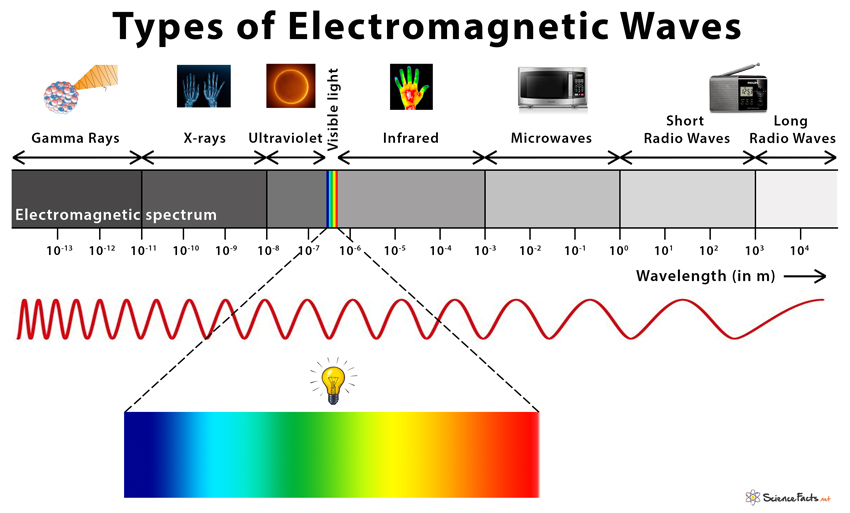
Okay, speed is impressive, but what are these waves actually doing? The key is in their name: electromagnetic. These waves are created by vibrating electric and magnetic fields. Imagine dropping a pebble into a still pond. You get ripples, right? Electromagnetic waves are kind of like that, but instead of water, it's the electric and magnetic fields that are "wiggling." And just like those ripples, electromagnetic waves have a wavelength (the distance between two crests) and a frequency (how many crests pass a point per second).
Think of it this way: Radio waves have long, lazy wavelengths, like those chill, drawn-out notes in a Pink Floyd song. Gamma rays, on the other hand, have short, frantic wavelengths, like a high-energy punk rock anthem. It's all about the vibes, man!
Family Ties: The Electromagnetic Spectrum
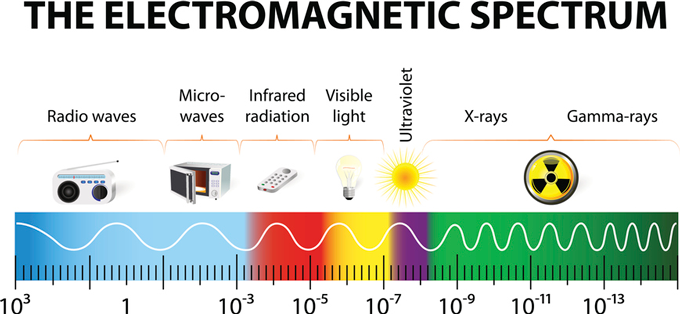
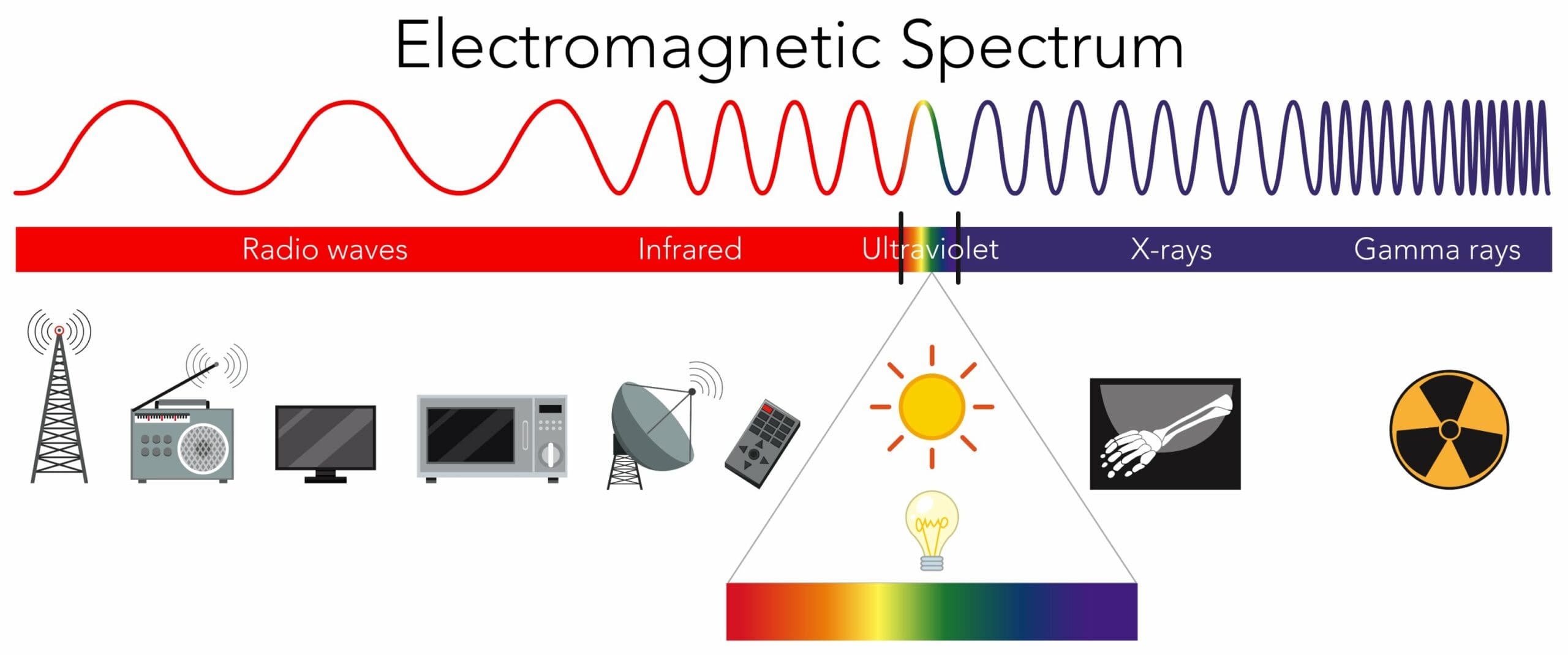
Now, here's where it gets really interesting. All electromagnetic waves, from the lowliest radio wave to the mighty gamma ray, are part of the electromagnetic spectrum. This spectrum is simply the range of all possible frequencies of electromagnetic radiation. It's like a giant family reunion, where everyone is related but has their own unique personality and superpowers.
Consider the diverse family members:

- Radio waves: Used for broadcasting, communication, and even MRI machines. They're the life of the party, always transmitting information.
- Microwaves: Perfect for heating up leftovers (and, surprisingly, for radar technology). The culinary wizards of the spectrum.
- Infrared radiation: Feel the warmth of the sun (or your TV remote). The comfort blanket of the family.
- Visible light: The rainbow we see, the colors that paint our world. The artists of the spectrum.
- Ultraviolet (UV) radiation: Can give you a tan (or a sunburn), and is used for sterilization. The sunbathers (and sanitizers) of the family.
- X-rays: See through soft tissues (and are used for airport security). The detectives of the spectrum.
- Gamma rays: The most energetic form of electromagnetic radiation, produced by nuclear reactions and used in cancer treatment. The heavy hitters of the family.
Energy Levels: A Direct Correlation
Another crucial commonality is the relationship between frequency and energy. The higher the frequency of an electromagnetic wave, the more energy it carries. This is why gamma rays are so dangerous – their high frequency packs a serious punch. It's also why UV radiation can cause sunburn, while radio waves are perfectly harmless. This is described by the equation E = hf, where E is energy, h is Planck's constant, and f is frequency.
Practical Tip: Always wear sunscreen to protect yourself from the high-frequency (and high-energy) UV rays of the sun!

Wave-Particle Duality: A Mind-Bending Concept
This is where things get a little philosophical. Electromagnetic waves exhibit wave-particle duality. This means they can act like waves (as we've discussed) and like particles called photons. It's like they have a split personality! Einstein famously explained the photoelectric effect using the concept of photons, earning him a Nobel Prize.
It's a reminder that reality isn't always as straightforward as it seems. Kinda like that plot twist in "The Sixth Sense."
A Constant Companion
From the moment you wake up to the alarm on your phone to the moment you drift off to sleep under the glow of a nightlight, you are constantly interacting with electromagnetic waves. They are not some abstract scientific concept; they are an integral part of your daily life. Understanding their common characteristics gives us a deeper appreciation for the intricate and interconnected nature of the universe around us, and our place within it.