
What Direction Should The Fan Spin In Winter
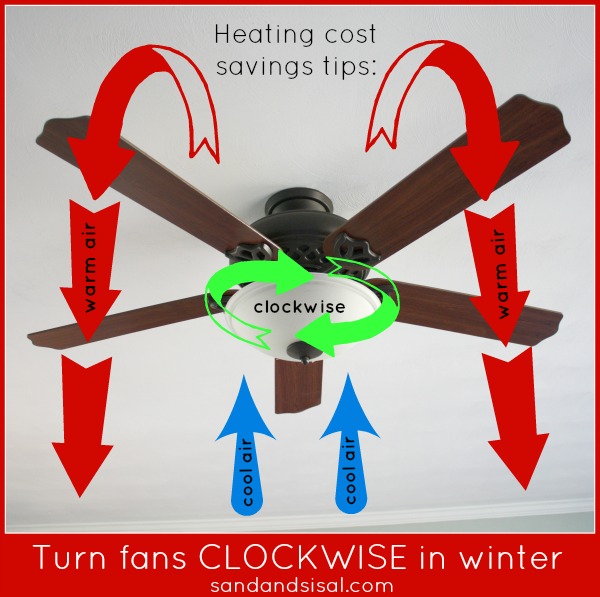
Okay, friend, let's talk fan direction. Sounds boring? Trust me, it's not! Especially when it's freezing outside. We're talking winter. Should that ceiling fan even be on? And if so, which way should it spin? It's a question that's plagued humanity...well, maybe not, but it should have!
Think about it. Summer? Easy peasy. Blasting that cool air down. But winter? We're all bundled up like Yetis. So, what's the deal? Prepare for some (slightly) mind-blowing information.
The Great Spin Debate: Winter Edition
Here's the thing: Hot air rises. Elementary, my dear Watson! Your heater is working hard to make your room toasty. But guess where all that warm air ends up? Cowering near the ceiling. Feeling lonely and ignored.
Must Read
That's where your trusty ceiling fan comes in. Its mission? To gently coax that warm air back down to where the people are. You know, where you're shivering in your thermal socks.
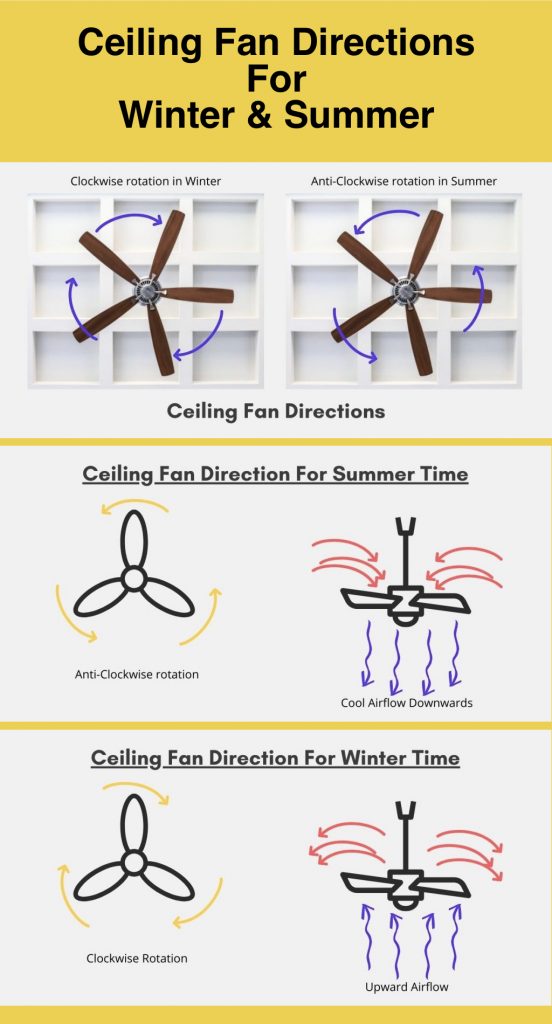
So, the answer to the million-dollar question (or at least the five-dollar question) is: clockwise. Yes, you read that right. Clockwise! But hold on! There's a catch!
Most fans have a tiny little switch. Often hidden. Sometimes shy. You'll probably need a chair, a flashlight, and maybe a bloodhound to find it. This switch controls the fan's direction. Look for it on the motor housing.
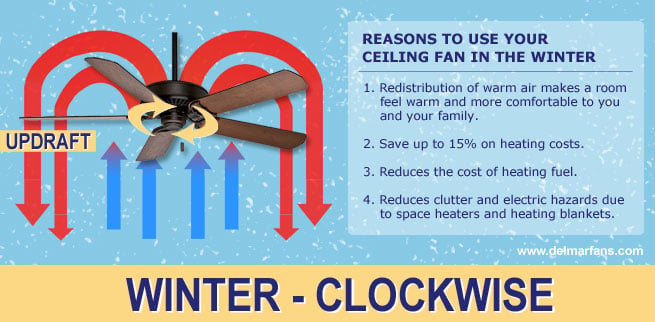
Why clockwise? Because spinning clockwise at a low speed creates an updraft. It gently pulls that warm air that’s hanging out by the ceiling and recirculates it down the walls. This avoids creating a wind chill effect (which you definitely don't want in winter).

Imagine it like this: your fan is a tiny, air-moving ninja. It's silently and efficiently battling the forces of heat stratification. Pretty cool, right?
Why is this so cool? Because it can actually save you money! By more efficiently distributing the heat in your room, your heating system doesn't have to work as hard. Less work = less energy consumption = lower energy bills! Cha-ching!
The Science-y (But Not Too Science-y) Part
Okay, let's get slightly technical, but I promise it won't be painful. This phenomenon is called thermal stratification. Hot air is less dense than cold air, so it naturally rises. It's the same reason hot air balloons float. (Random fact: hot air balloons were invented in France in 1783!)
![Ceiling Fan Directions for Summer vs Winter [Infographic]](https://airflowacademy.com/wp-content/uploads/2021/06/Ceiling-fan-direction.jpg)
Your ceiling fan is basically de-stratifying your room. It's mixing the warm air with the cooler air near the floor, creating a more even temperature throughout the space. Think of it like stirring a pot of soup, but with air!
Fan Fails and Funny Moments
Here are some things to avoid:
- Running your fan on high. Remember, we want a gentle air circulation, not a hurricane.
- Forgetting to switch it back in the summer. Clockwise in summer is a recipe for disaster. You'll feel like you're in a sauna.
- Blaming the fan for all your problems. It's a fan, not a miracle worker. If your house is still freezing, you might need to check your insulation or invest in a good blanket.
I once knew someone who accidentally set their fan to hyper-speed in the winter. It created a vortex of dust bunnies that swirled around the room like a tiny, furry tornado. It was both terrifying and hilarious. Don't be that person!
So, To Recap...
Winter fan direction: Clockwise, on low. Find that sneaky switch! Save money! Enjoy a more comfortable and evenly heated room! And maybe, just maybe, impress your friends with your newfound fan knowledge. "Oh, you didn't know about winter fan direction? Let me enlighten you..."
Now go forth and conquer the chilly air! And remember, a well-adjusted ceiling fan is a happy ceiling fan. And a happy ceiling fan makes for a happy you! Just promise me you won’t create a dust bunny tornado.