
What Direction Should A Ceiling Fan Go In Winter
Winter. The season of cozy sweaters, steaming mugs of cocoa, and...confusing ceiling fan directions? If you're like most people, you probably just crank up the thermostat and forget about that dusty propeller hanging overhead. But what if I told you your ceiling fan could actually help you save energy and stay warmer all winter long? Prepare to be enlightened, my friends.
Yes, you read that right. That humble fan, usually associated with cooling summer breezes, can be a surprisingly effective tool for combating winter chills. The secret? It's all in the direction.
The Great Reversal: Clockwise is Your Winter Friend
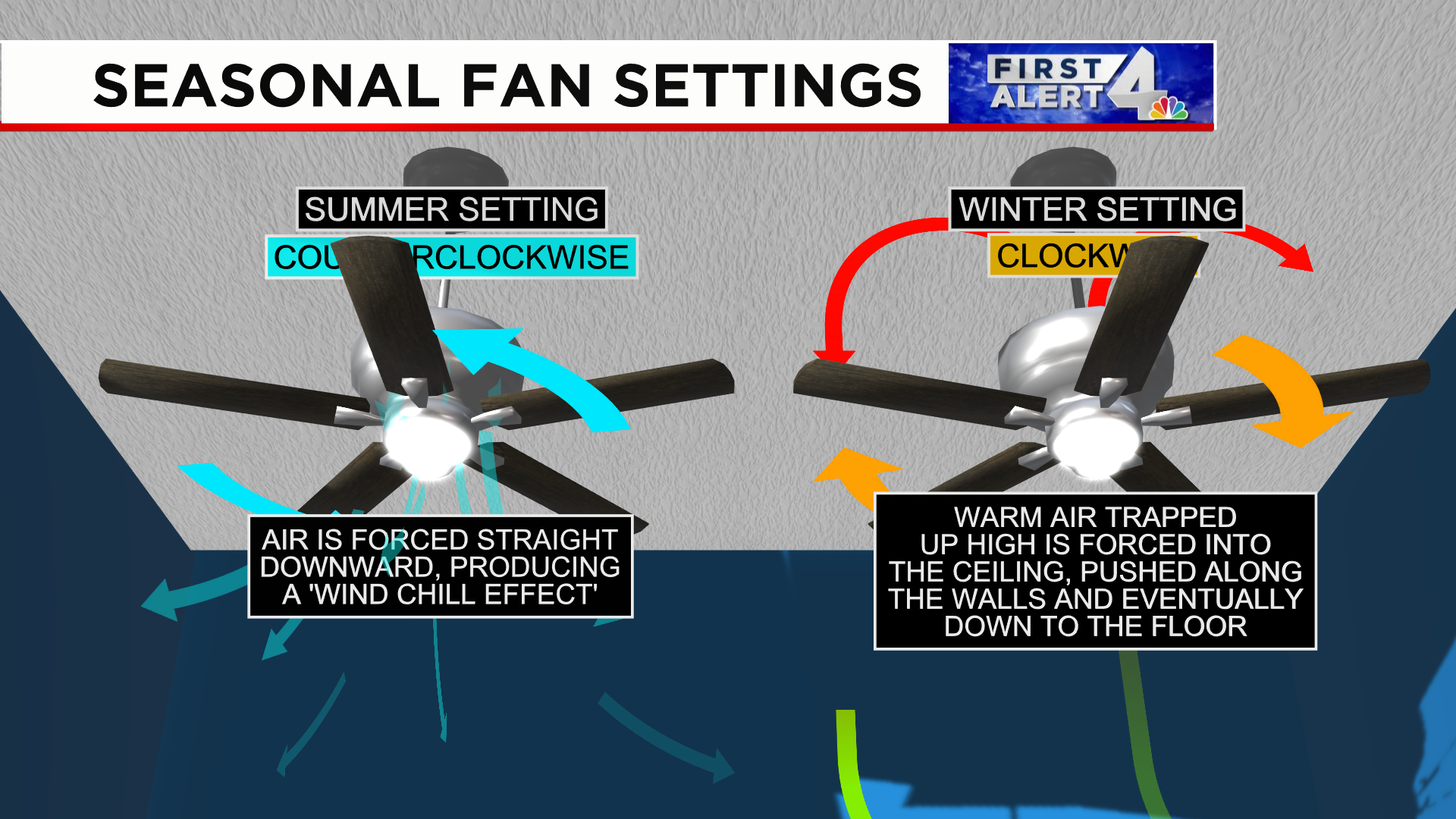
During the summer, your ceiling fan should be spinning counter-clockwise. This creates a direct downdraft, pushing cool air down and creating that refreshing breeze we all crave when the temperatures soar. Think of it like a personal air conditioner, gently whispering away the heat.
Must Read
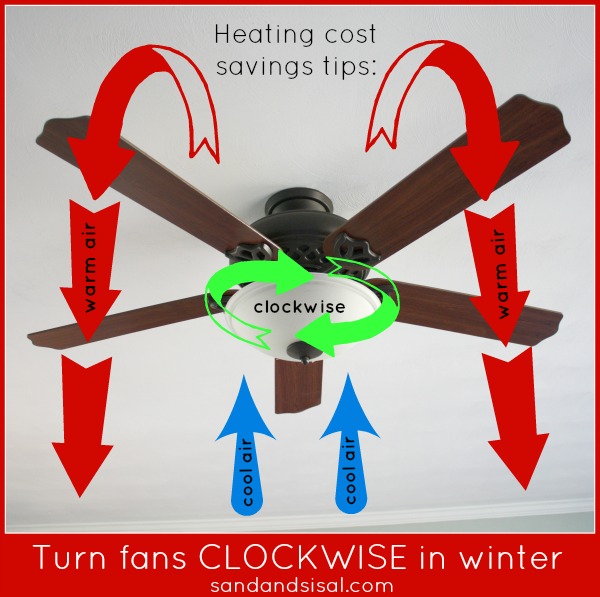
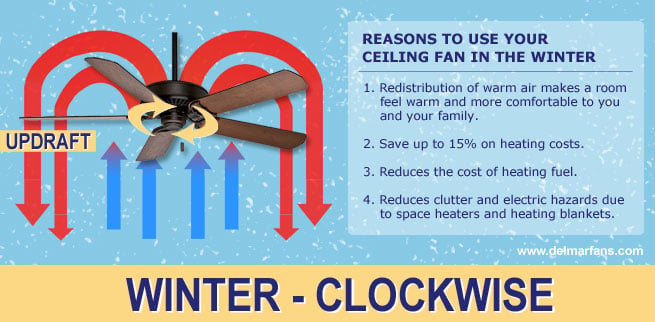
But winter calls for a different approach. To warm things up, you need to switch your fan to spin clockwise, but at a low speed. This is crucial! You don't want to create a wind tunnel in your living room. The goal is to gently draw the cooler air near the floor up towards the ceiling, which then pushes the warmer air, that naturally rises, back down along the walls.
Think of it like this: hot air rises, like a stubborn teenager avoiding chores. The clockwise rotation is like a subtle, parental nudge, gently reminding that hot air to come back down and contribute to the overall warmth of the household.
Practical Tip: Most ceiling fans have a small switch located on the motor housing. Flip it to reverse the direction. If you're unsure, consult your fan's manual (if you can find it!). Or, you know, just try it and see what happens. You can always switch it back!
Why Does This Work? The Science of Stratification
The phenomenon at play here is called thermal stratification. Simply put, warmer air rises and cooler air sinks. This is why the ceiling of a room is usually warmer than the floor, especially in rooms with high ceilings. Your ceiling fan, when set to clockwise rotation, helps to destratify the air, creating a more even temperature distribution throughout the room.

Imagine your living room as a layered cake. The top layer is warm and delicious (but only accessible if you're a very tall giraffe). The bottom layer is cold and...well, less appealing. The ceiling fan, in clockwise mode, gently mixes the layers, making the whole cake (your room) more consistently palatable (comfortable!).
Fun Fact: High ceilings are architecturally beautiful, but they also exacerbate thermal stratification. That's why ceiling fans are particularly beneficial in rooms with vaulted ceilings.

Beyond Comfort: Saving Energy and Money
Besides making your living space more comfortable, using your ceiling fan in winter can also help you save energy and money. By circulating the warm air downwards, you can often lower your thermostat setting by a few degrees without sacrificing comfort. Every degree you lower your thermostat can translate into significant savings on your heating bill.
Think of it as a little act of rebellion against the energy companies. You're taking control of your home's temperature and minimizing your reliance on fossil fuels. Plus, you get to feel smugly virtuous while wrapped in a cozy blanket.
Practical Tip: Experiment with your thermostat setting to find the sweet spot. You might be surprised at how much you can lower it without feeling any colder.
Embrace the Small Things
It's easy to overlook the small details in our daily lives, like the direction of a ceiling fan. But sometimes, these small adjustments can make a big difference. Taking the time to optimize your home for winter can lead to increased comfort, lower energy bills, and a greater sense of control over your environment.
So, take a moment to look up. Is your ceiling fan spinning clockwise? If not, give it a flip. You might just be surprised at the difference it makes. And who knows, maybe you'll even start looking at other overlooked details in your life and finding ways to make them just a little bit better. After all, life is a series of small moments. Why not make them as comfortable and efficient as possible?