
What Direction Should A Ceiling Fan Go In Summer

Hey there, sunshine seekers! Ever walk into a room on a sweltering summer day and think, "Ugh, is there anything that can make this less like a sauna?" Well, guess what? There is! And it’s probably hanging right above your head: your trusty ceiling fan!
Now, you might be thinking, "A ceiling fan? Seriously? Is that all you’ve got?" But trust me on this. Knowing which direction your ceiling fan should be spinning can be a game-changer for your comfort levels (and maybe even your energy bill!).
Let’s dive into the thrilling world of ceiling fan direction! (Okay, maybe "thrilling" is a strong word, but stick with me!).
Must Read
Summer Spin: Counter-Clockwise is Key!
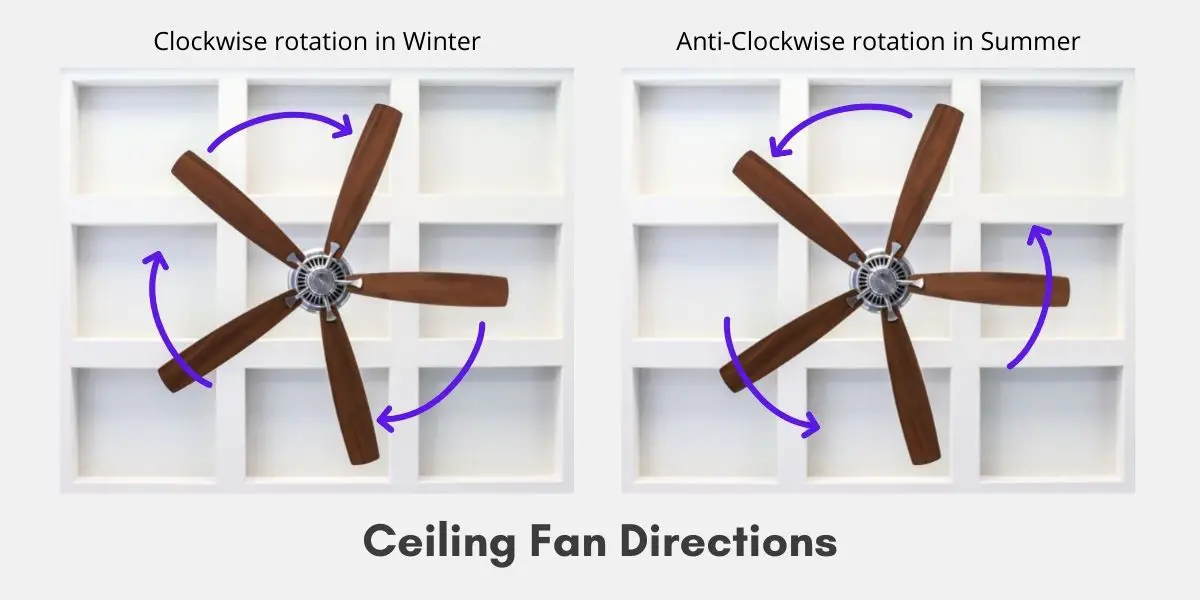
Alright, here's the secret weapon you need to conquer the summer heat: Your ceiling fan should be spinning counter-clockwise when you look up at it. Why, you ask?
Well, imagine this: the fan blades are like little air-moving ninjas. When they spin counter-clockwise, they’re designed to push air downwards, creating a refreshing breeze that you can feel right on your skin. It's like having your own personal mini-wind!
Think of it like this: the fan isn't actually cooling the air. Instead, it’s cooling you. The breeze helps evaporate sweat, which is how your body naturally regulates its temperature. Clever, huh?
Important Note: Don’t just assume your fan is already set correctly! Those sneaky installers might have put it on the wrong setting. Time to do a little detective work!
How to Tell Which Way Your Fan is Spinning
Okay, so you’re ready to check your fan’s direction. Excellent! Here’s how to do it:
Step 1: Stand directly beneath your fan. (But, you know, be careful. Safety first!).

Step 2: Look up! (Duh!).
Step 3: Observe which way the blades are turning. If they're moving to the left (counter-clockwise), you're golden! If they're moving to the right (clockwise), you’ve got some switch-flipping to do!
Switching Directions: Usually a Simple Task!
Found your fan spinning in the wrong direction? No worries! Changing it is usually a piece of cake. Most ceiling fans have a little switch located on the motor housing. You might need a step stool to reach it (again, safety first!).
![Ceiling Fan Directions for Summer vs Winter [Infographic]](https://airflowacademy.com/wp-content/uploads/2021/06/Ceiling-fan-directions-infographic-552x1024.jpg)
Just flip that switch and your fan should start spinning in the opposite direction. Give it a few minutes to get up to speed, then stand underneath and feel the cool, refreshing breeze wash over you. Ahhh, that's better!
Pro-Tip: If you can’t find the switch or you’re not comfortable fiddling with electrical stuff, consult the owner’s manual or call a qualified electrician. It's always better to be safe than sorry!
Why Bother with Ceiling Fan Direction?
So, besides the obvious comfort factor, why should you care about which way your ceiling fan spins?

- Lower Energy Bills: By properly using your ceiling fan, you can often raise your thermostat setting by a few degrees and still feel comfortable. That means less work for your air conditioner and lower energy bills. Cha-ching!
- Improved Air Circulation: A ceiling fan helps circulate the air in your room, which can help prevent stagnant air pockets and keep the temperature more consistent.
- General Comfort: Let's be honest, a gentle breeze just feels good! It can make a room feel more inviting and relaxing, perfect for those lazy summer afternoons.
Isn't it amazing how such a simple thing can have such a big impact? Don't underestimate the power of a well-directed ceiling fan!
More to Learn!
And that, my friends, is the lowdown on ceiling fan direction in the summer. I hope this little bit of knowledge empowers you to take control of your indoor climate and make your home a more comfortable and enjoyable place to be.
But hey, this is just the beginning! There's a whole world of home improvement and energy efficiency out there to explore. Don't be afraid to keep learning, keep experimenting, and keep making your living space the best it can be. You've got this!