
What Direction For A Ceiling Fan

Okay, let's talk about something that's probably hanging right above your head right now, quietly doing its thing. Or perhaps, not quite doing its thing. I'm talking about your ceiling fan. You flip the switch, it spins, you get a breeze, right? End of story? Oh, my friend, that's where the plot thickens, and where a tiny, overlooked detail can become a total game-changer for your comfort and even your energy bill.
For years, many of us treated our ceiling fans like a simple on/off appliance. Need air movement? Turn it on. Don't need it? Turn it off. Simple. But what if I told you there's a secret button (or rather, a secret switch) that can transform your fan from a basic air-pusher into a seasonal maestro of comfort? Prepare to have your mind gently whirred into a new dimension of home optimization!
The Great Spin Debate: Summer vs. Winter
Here's the lowdown, the absolute truth, the enlightenment you never knew you needed: your ceiling fan has two primary directions of rotation. And understanding which way it should spin, and when, is like unlocking a cheat code for your home's climate control. It’s not just about turning it on; it’s about knowing what direction for a ceiling fan truly serves you best.
Must Read
Summer: The Refreshing Downdraft
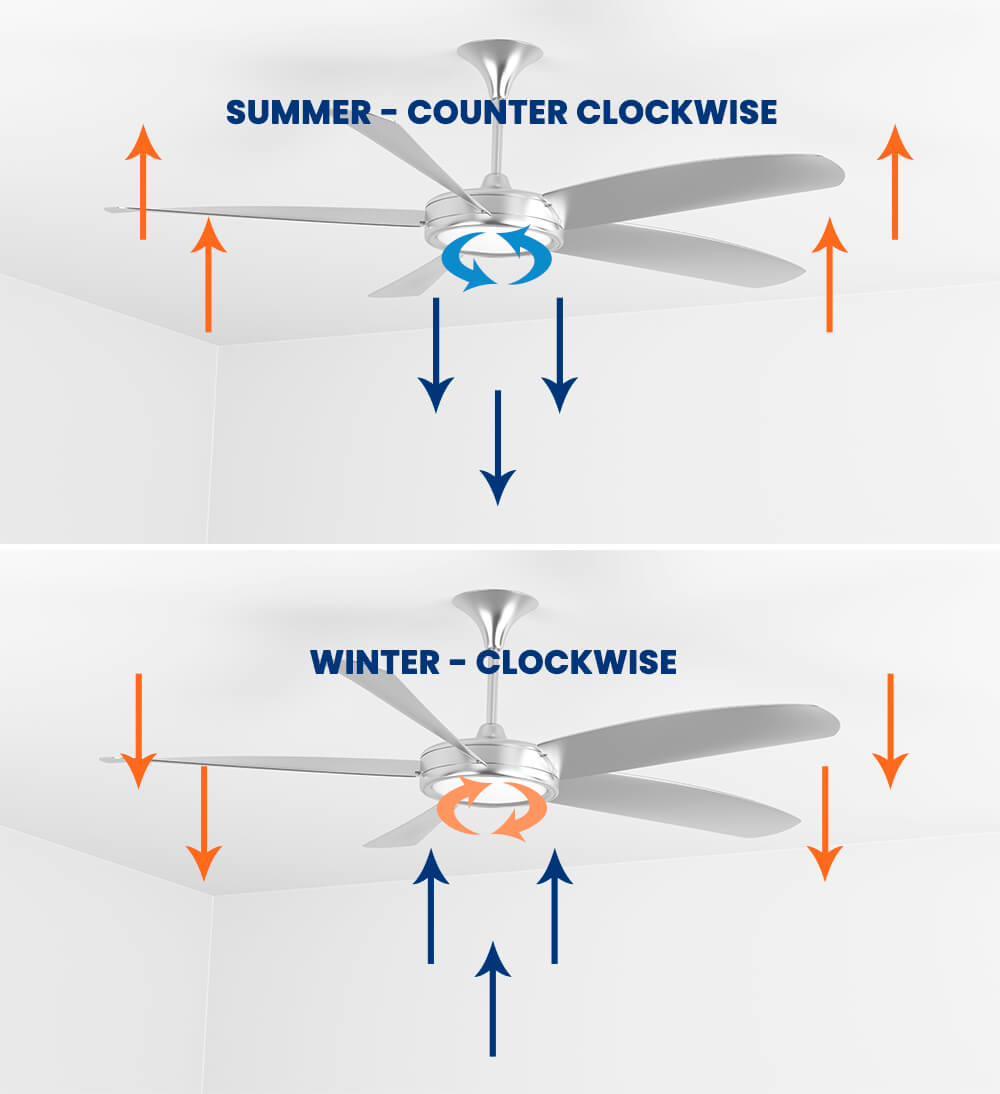
When the mercury rises and you're dreaming of an arctic breeze, you want your ceiling fan to create a noticeable downdraft. Think of it as your own personal wind machine. To achieve this glorious effect, your fan blades should spin in a counter-clockwise direction. (Imagine looking up at it and seeing the blades move from left to right as they come towards you, then sweep away to the right.)
Why counter-clockwise? Because this motion pushes air straight down, creating a wonderful "wind chill" effect directly on your skin. Now, here's an important caveat: it doesn't actually lower the room's temperature. It just makes you feel cooler. It's like standing in front of an open window on a breezy day. That sensation of air moving across your skin helps evaporate sweat, making you feel significantly more comfortable without having to crank down your AC. Genius, right?
So, during those sweltering months, make sure your fan is spinning like it's trying to unscrew itself from the ceiling: counter-clockwise and at a higher speed. You'll thank yourself (and me!).
Winter: The Cozy Updraft
Now, let's flip the script, literally. When the chill sets in and you're bundled up indoors, you still want your ceiling fan working, but for an entirely different purpose. In winter, your fan should spin in a clockwise direction, and usually at a much lower speed. (Look up, and the blades should appear to be moving from right to left as they come towards you, then sweep away to the left.)
Why clockwise? Because warm air naturally rises and collects near the ceiling. When your fan spins clockwise, it gently pulls this warm air upwards towards the ceiling, then pushes it outwards and down along the walls. This creates a subtle updraft that recirculates the warm air throughout the room, rather than blasting it directly onto you. The goal isn't to create a breeze, but to redistribute that precious warmth that's been lurking up high.
The result? Your heater doesn't have to work as hard, your room feels more evenly warm, and you might even save a few bucks on your heating bill. It’s like giving your heating system a little helper, making your cozy winter evenings even cozier. Who knew a fan could be such a multitasker?
How to Become a Fan Direction Detective
So, you're convinced. You want to optimize your fan. But how do you know which way it's spinning, and how do you change it? Fear not, intrepid home optimizer, it's surprisingly simple!

First, the most crucial step: ALWAYS turn off your fan and wait for the blades to completely stop before attempting to change its direction. Safety first, always!
Once it's safe, look at the motor housing of your fan. You'll usually find a small, toggle switch – often labeled "forward" or "reverse." This is your magic button! If you're unsure which way it's spinning, just stand underneath it, turn it on, and observe the blades. If they're pushing air down, it's counter-clockwise. If it feels like air is being pulled upwards, it's clockwise.
Simply flick that switch, turn your fan back on (start at a low speed), and feel the difference. It might take a moment to notice, especially for the winter setting, but trust me, your room will feel it.
:max_bytes(150000):strip_icc()/ceiling-fan-rotate-direction-1907533-v4-5ba94e6346e0fb002576cebf.png)
Beyond the Spin: An Inspiring Thought
Isn't it amazing how a little piece of knowledge, a tiny adjustment, can make such a big impact on your daily comfort and potentially your wallet? Understanding what direction for a ceiling fan is merely a starting point. It's a reminder that often, the most effective solutions aren't about buying new gadgets or undertaking massive renovations, but about understanding and optimizing what we already have.
This isn't just about fans; it's a metaphor for life, really. So often, we just accept things as they are, without pausing to consider if a small tweak, a different direction, could unlock a whole new level of efficiency, comfort, or even joy. Taking control of something as simple as your fan direction empowers you. It shows you that paying attention to the details, learning something new, and making mindful choices can significantly improve your environment and your well-being.
So, go ahead! Be a master of your domain. Take a moment to check your ceiling fans. Spin them into optimal comfort, save a little energy, and feel the immense satisfaction of knowing you’ve made your home just a little bit smarter and a lot more comfortable. What other small adjustments are waiting for you to discover?