
What Direction Do Ceiling Fans Turn In Winter
Brrr! Is that winter nipping at your nose? You're probably thinking about cranking up the heat and snuggling under a mountain of blankets. But wait! Before you resign yourself to a hefty heating bill, let's talk about a secret weapon hiding right above your head: your ceiling fan!
Ceiling Fans: Not Just for Summer!
Most people associate ceiling fans with cool summer breezes, right? We picture them whirring away, banishing humidity and keeping us comfortable on those scorching days. But guess what? These handy appliances are actually year-round heroes, capable of boosting your comfort and saving you money even when the snow is falling!
The key to their winter prowess lies in the direction they spin. It's like a secret handshake with your thermostat. Get it right, and you'll be basking in cozy warmth. Get it wrong, and you might as well be fanning away dollar bills!
Must Read
The Big Question: Which Way to Spin?
Alright, let's get down to brass tacks. During the summer, your ceiling fan should be spinning counter-clockwise (as viewed from below). This creates a refreshing downdraft, pushing cool air down and making you feel cooler. Think of it as a personal air conditioner!
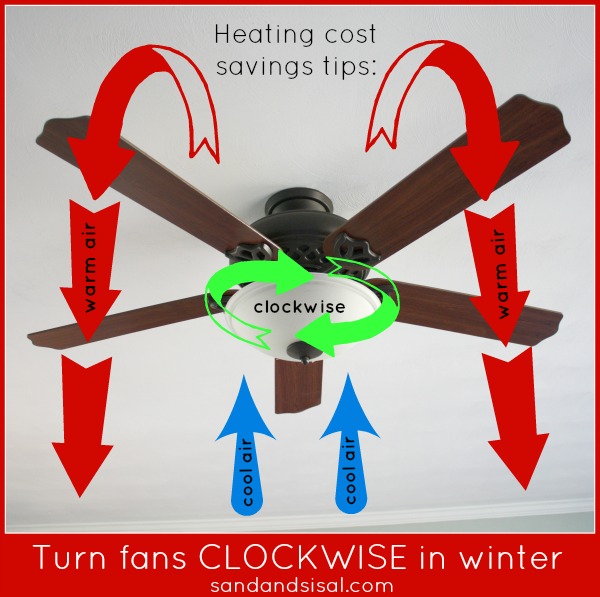
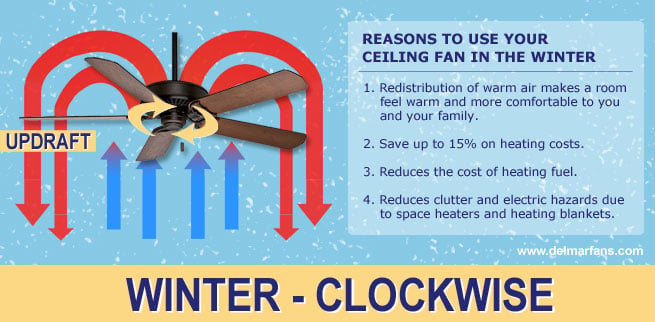
But winter is a whole different ballgame! In winter, you want your ceiling fan to rotate clockwise. Yes, you read that right! Clockwise!
Now, I know what you might be thinking: "Clockwise? But won't that make me feel a draft?" Fear not, my friend! This isn't about creating a blizzard in your living room. It's about something much more subtle, much more clever.
The Magic of Warm Air (and Gentle Circulation)
Warm air rises. It's a simple fact of physics, like gravity or the irresistible urge to binge-watch your favorite show. This means that all that lovely, expensive heat your furnace is pumping out is congregating near the ceiling, far away from where you're actually sitting!
![Ceiling Fan Directions for Summer vs Winter [Infographic]](https://airflowacademy.com/wp-content/uploads/2021/06/Ceiling-fan-direction.jpg)
A clockwise-rotating ceiling fan gently pushes that warm air back down the walls, recirculating it throughout the room. It's like a warm air taxi service, bringing comfort to the masses (or at least, to you on your couch).
Think of it like this: imagine you're baking cookies. The heat rises to the top rack of the oven. Now, if you had a tiny, magical fan inside your oven gently circulating that hot air, wouldn't the cookies on the bottom rack bake more evenly? That's essentially what your ceiling fan is doing for your room!
Spotting the Switch: A Detective's Guide
Okay, so you're convinced. You're ready to unleash the winter power of your ceiling fan. But how do you actually change the direction? Most ceiling fans have a small switch located on the motor housing. You might need a step stool to reach it, so be careful!
This switch is usually labeled with arrows indicating the direction of rotation. If not, don't panic! Simply flip the switch and observe the fan's movement. If it's going the wrong way, flip it back. It's like a mini-adventure in home improvement!
![Ceiling Fan Directions for Summer vs Winter [Infographic]](https://airflowacademy.com/wp-content/uploads/2021/06/Ceiling-fan-directions-infographic-768x1425.jpg)
Pro-Tip: Always turn off the fan before flipping the switch! You don't want to risk damaging the motor or, worse, giving yourself a nasty shock. Safety first, my friends!
But I Don't Feel a Draft! Is It Working?
The beauty of the winter ceiling fan setting is that it's subtle. You shouldn't feel a noticeable breeze. If you do, your fan might be set to high, or the blades might be angled too aggressively.
The goal is gentle air circulation, not a wind tunnel. You'll notice the difference in overall room temperature. The floor will feel less cold, and you might even be able to lower your thermostat a degree or two without sacrificing comfort. Boom! Instant savings!
Still not sure if it's working? Try this: stand on a chair and feel the air near the ceiling. Then, step down and feel the air near the floor. If the air near the floor is noticeably warmer after running the fan for a while, you're in business! You've successfully harnessed the power of winter fan-dom!
Beyond the Basics: Fan Fine-Tuning
Just like a finely tuned sports car, your ceiling fan might require a little tweaking to achieve peak performance. Here are a few things to consider:

- Fan Speed: Experiment with different fan speeds. A lower speed is usually best for winter, as it minimizes the risk of creating a draft.
- Blade Pitch: Some ceiling fans have adjustable blade pitch. A steeper pitch will move more air, but it can also create a stronger downdraft. If you're feeling a breeze, try adjusting the pitch to a shallower angle.
- Room Size: The size of your room will influence the effectiveness of your ceiling fan. A small fan might not be powerful enough to circulate the air in a large room, while a large fan might create too much of a draft in a small room.
Think of it as an art form! Experiment, observe, and adjust until you find the sweet spot that keeps you perfectly comfortable all winter long.
Debunking the Myths: Separating Fact from Fan-tasy
Like any good piece of home improvement advice, there are bound to be some myths floating around about ceiling fans and winter. Let's bust a few of them right now!
Myth #1: Ceiling fans are only for cooling. Wrong! As we've already established, they're amazing at circulating warm air in the winter too!
Myth #2: Running a ceiling fan in the winter will increase my energy bill. Actually, it can decrease your energy bill by helping to distribute heat more efficiently, allowing you to lower your thermostat. It's like getting paid to be comfortable!
Myth #3: All ceiling fans are the same. Nope! There are different sizes, styles, and features to choose from. Do your research and find the perfect fan for your needs. It's like choosing a pet, but less furry!
The Final Spin: Embrace the Winter Fan
So, there you have it! The definitive guide to using your ceiling fan in the winter. It's simple, it's effective, and it can save you money. What's not to love?
Don't let your ceiling fan gather dust all winter long. Put it to work! Flip that switch, enjoy the gentle warmth, and pat yourself on the back for being such a clever homeowner. You deserve a reward... perhaps a mug of hot cocoa and a cozy blanket?
Remember, a ceiling fan rotating clockwise is your secret weapon against the winter chill. Embrace the fan, embrace the warmth, and embrace the savings. Happy winter, everyone!
Now go forth and conquer those cold temperatures, armed with the knowledge of the clockwise spin! You've got this!