What Direction Do Ceiling Fans Go In The Summer

Let's face it, ceiling fans are the unsung heroes of summer. They're not as flashy as central air conditioning, but they're significantly more charming, a whole lot quieter, and, dare we say, even a little bit romantic. But beyond their aesthetic appeal and budget-friendliness, lies a question that has plagued homeowners for generations: what direction should my ceiling fan go in the summer? It might seem trivial, but the answer can unlock a whole new level of cool comfort (and lower energy bills!).
Thinking about ceiling fan direction might seem mundane, but it's a perfect example of how understanding basic principles can have a real, tangible impact on your everyday life. For the artist, hobbyist, or even the curious casual learner, mastering this simple concept can be surprisingly rewarding. Imagine you're a sculptor trying to optimize your studio's airflow to help your clay dry evenly, or a painter needing to minimize dust particles in the air while your masterpiece cures. Knowing which way to spin your fan becomes a practical and valuable skill. Even for the casual learner, the satisfaction of optimizing your home environment is a small win that contributes to overall well-being.
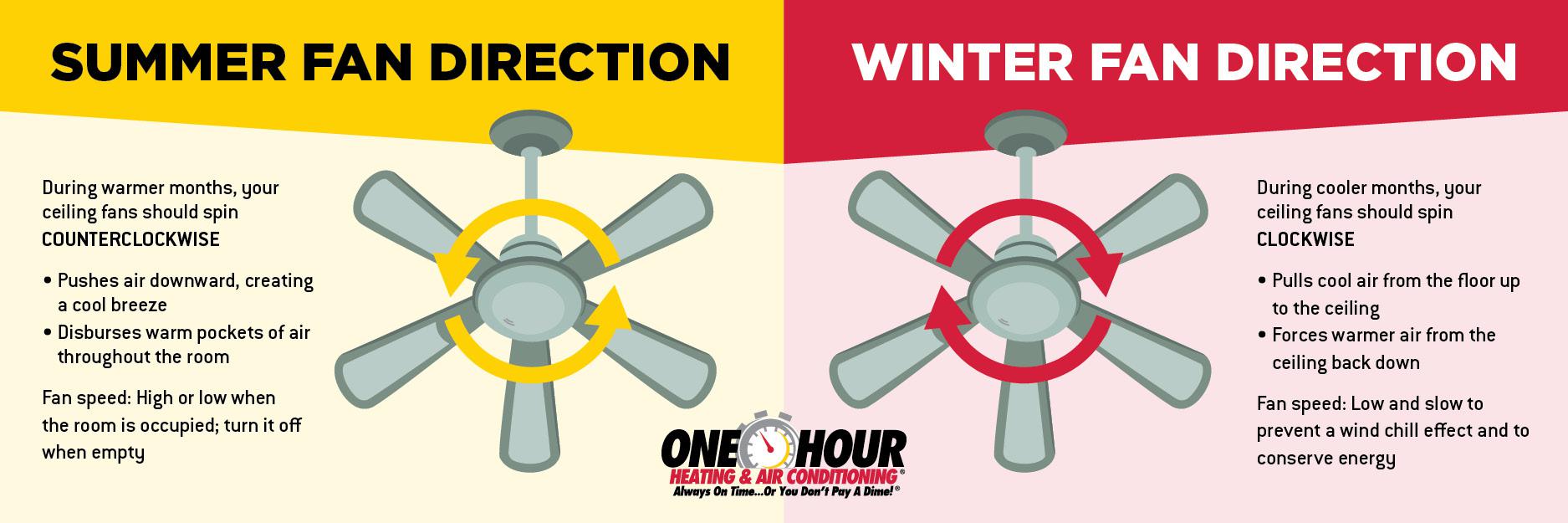
The secret lies in creating a downdraft. During the summer months, you want your ceiling fan to rotate counter-clockwise (when viewed from below). This pushes air downwards, creating a refreshing breeze that evaporates perspiration and makes you feel cooler. Think of it like a gentle, personal air conditioner. Conversely, in the winter, you'd switch it to a clockwise direction to pull cool air up and circulate the warm air that rises to the ceiling. While this article focuses on summer cooling, understanding the winter function further demonstrates the versatility and intelligent design of these often-overlooked appliances.
Must Read
Trying this at home is incredibly easy! First, ensure your fan is turned off before making any adjustments. Most ceiling fans have a small switch located on the motor housing. This switch typically has two positions: one for summer (counter-clockwise) and one for winter (clockwise). Flip the switch to the summer position. Turn the fan on and observe the direction of the blades. If they are spinning counter-clockwise, you're good to go! If not, try flipping the switch again. You might need to use a step ladder to reach the switch safely.
:max_bytes(150000):strip_icc()/ceiling-fan-rotate-direction-1907533-v4-5ba94e6346e0fb002576cebf.png)
One crucial tip: adjust the fan speed. A higher speed will generate a stronger breeze, while a lower speed is perfect for a more subtle cooling effect. Experiment to find what's most comfortable for you. Also, remember that ceiling fans don't actually lower the temperature of a room; they simply make you feel cooler by moving the air. So, use them in conjunction with air conditioning to maximize energy efficiency.
Why is understanding ceiling fan direction so enjoyable? It's the simple pleasure of taking control of your environment and optimizing it for comfort. It's a practical skill that yields immediate and noticeable results. And, let's be honest, there's a certain satisfaction in knowing that you're not just passively accepting the summer heat, but actively fighting back with a well-placed breeze. So, go ahead, give your ceiling fan a spin in the right direction, and enjoy the cool, comfortable results!

![Ceiling Fan Directions for Summer vs Winter [Infographic]](https://airflowacademy.com/wp-content/uploads/2021/06/Ceiling-fan-directions-infographic-768x1425.jpg)