
What Conditions Are Necessary For Hurricanes To Form
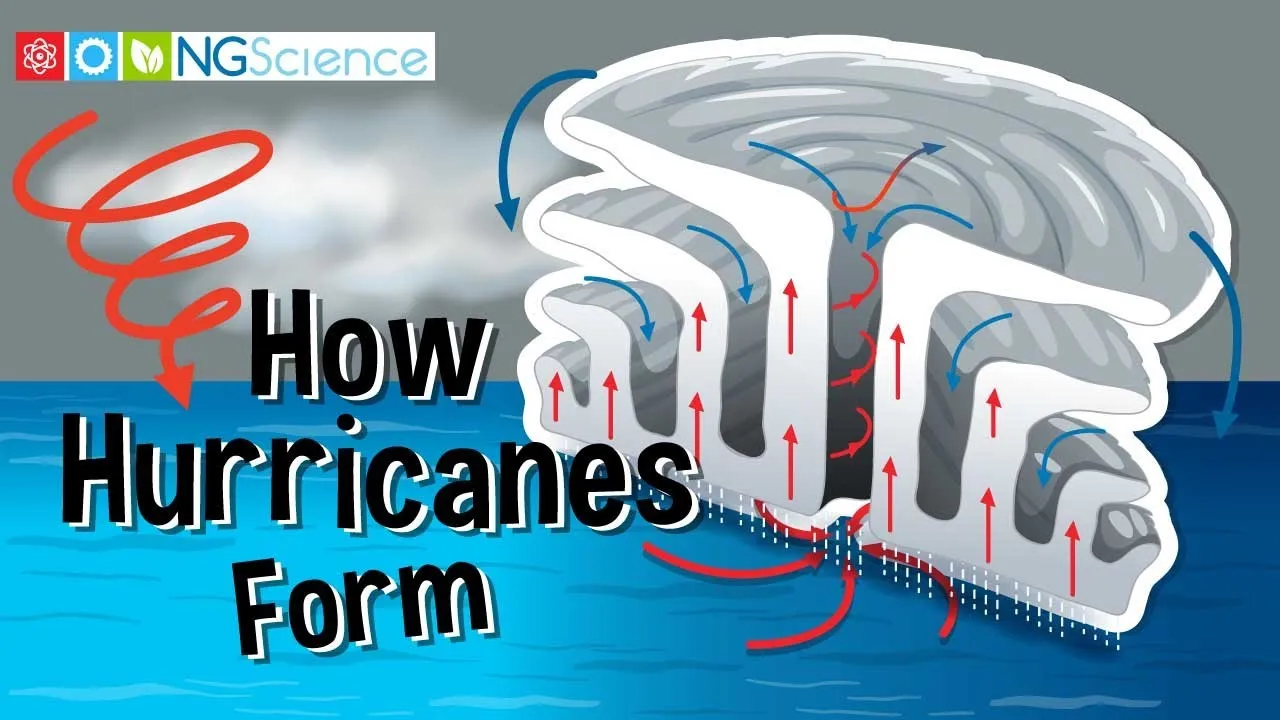
Ever looked at a hurricane and thought, "Wow, that's just… water doing the waltz of doom"? Me too! But behind that swirling spectacle of nature's fury lies a fascinating recipe, a quirky combination of ingredients that have to be just right for a hurricane to even throw its hat (or more accurately, its rain clouds) into the ring.
The Secret Hurricane Cookbook: Ingredient #1 – Warm Water, the Hot Tub of Doom
Imagine trying to bake a cake with ice water. Yeah, not gonna happen. Hurricanes are the same way, but instead of flour and sugar, they need warm water – really warm water. We're talking at least 80 degrees Fahrenheit (27 degrees Celsius) warm.
Think of this warm water as the hurricane's energy source, its personal power smoothie. The warmer the water, the more moisture it evaporates into the air, and that moisture is the fuel that feeds the hurricane's insatiable appetite.
Must Read
This isn't your average bathtub temperature, folks! It's more like a giant, swirling jacuzzi for sea creatures, only instead of bubbly jets, it has the potential for winds strong enough to rearrange your furniture… and maybe your house along with it.
Ingredient #2: A Tropical Disturbance – The Humble Seed of Destruction
Every hurricane starts small, usually as a little cluster of thunderstorms, a tropical disturbance. These disturbances are like the awkward teenagers of the weather world – kinda clumsy, a little unpredictable, but with the potential for greatness (or in this case, intense storminess).
Most of these disturbances fizzle out, no big deal. But sometimes, if the other ingredients are just right, they can start to organize and strengthen. Think of it as a group of friends suddenly deciding to form a really intense dance troupe, only instead of dancing, they're whipping up wind and rain.
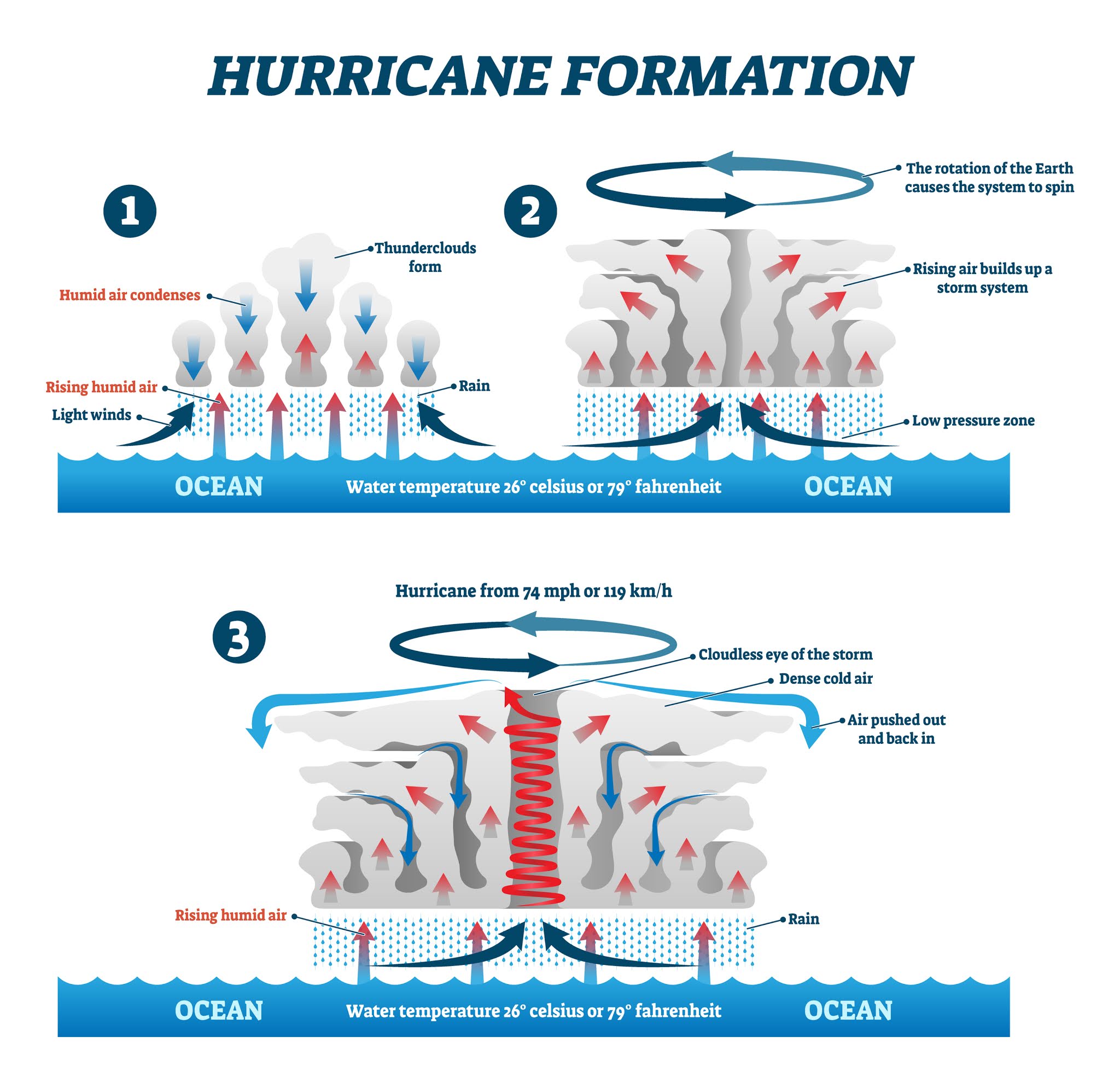
It's like watching a tiny spark ignite a bonfire. These tropical disturbances are the potential sparks, waiting for the right conditions to explode into something truly epic… and potentially devastating.
Ingredient #3: Light Winds Aloft – The Referee That Doesn't Blow the Whistle
Imagine trying to build a sandcastle on a windy beach. The wind keeps knocking it down, right? Hurricanes are similar. They need relatively calm winds higher up in the atmosphere, what we call "light winds aloft."
Strong winds aloft, known as wind shear, can tear a developing hurricane apart. It's like trying to assemble a puzzle while someone keeps snatching the pieces away. The hurricane needs to stay organized and upright to really get going, and wind shear prevents that.
So, light winds aloft are like a benevolent referee in the hurricane game, letting the storm develop without interference. They're the silent supporters of chaos, the unsung heroes of the swirling vortex.
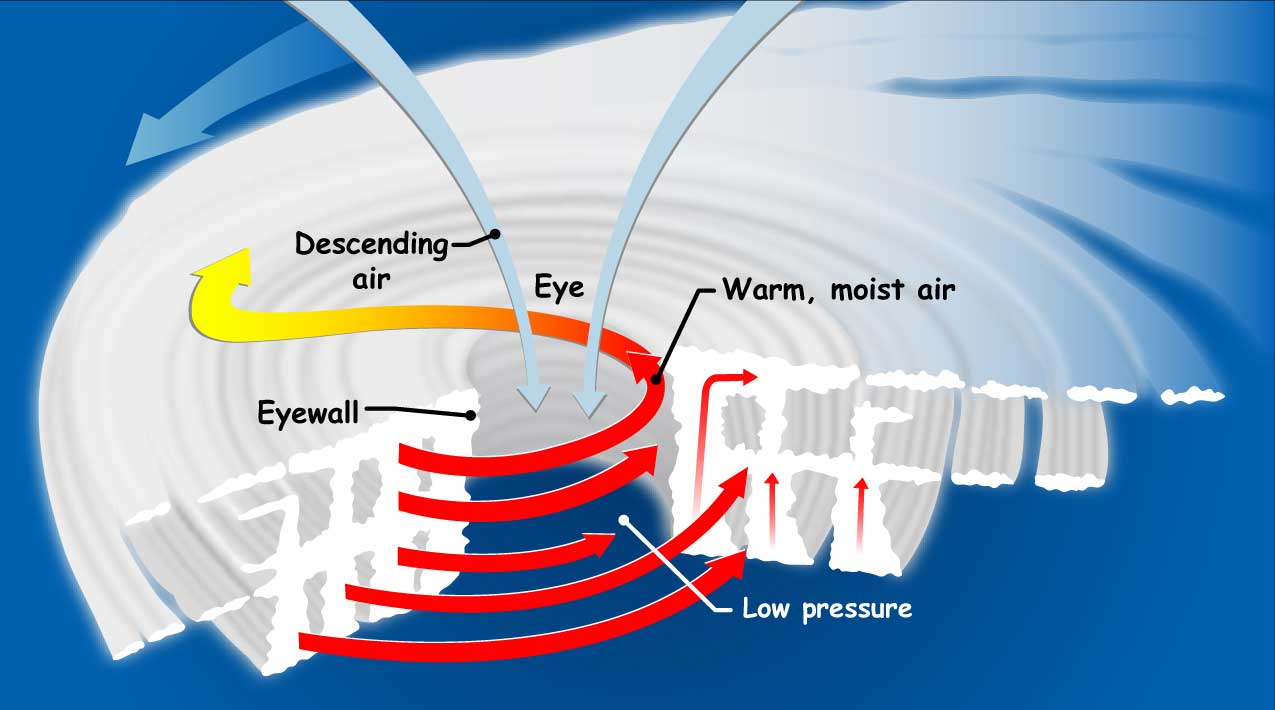
Ingredient #4: Coriolis Effect – The Earth's Quirky Spin Dance
Okay, this one's a little weird, but important. The Coriolis Effect is caused by the Earth's rotation. It's why hurricanes spin! Without it, they'd just be big blobs of thunderstorms drifting aimlessly across the ocean.
Think of it like a cosmic dance instructor giving the storm a twirl. In the Northern Hemisphere, the Coriolis Effect makes hurricanes spin counter-clockwise. In the Southern Hemisphere, they spin clockwise.
It's a bit like watching a figure skater spin faster and faster as they pull their arms in. The Earth's rotation provides the initial spin, and the hurricane's own internal dynamics amplify it. It's nature's own dizzying ballet!
Putting It All Together: The Hurricane Recipe for Disaster (and Awe)
So, to recap, you need warm water (the fuel), a tropical disturbance (the seed), light winds aloft (the referee), and the Coriolis Effect (the dance instructor). Mix these ingredients together in the right proportions, and you've got yourself a hurricane!
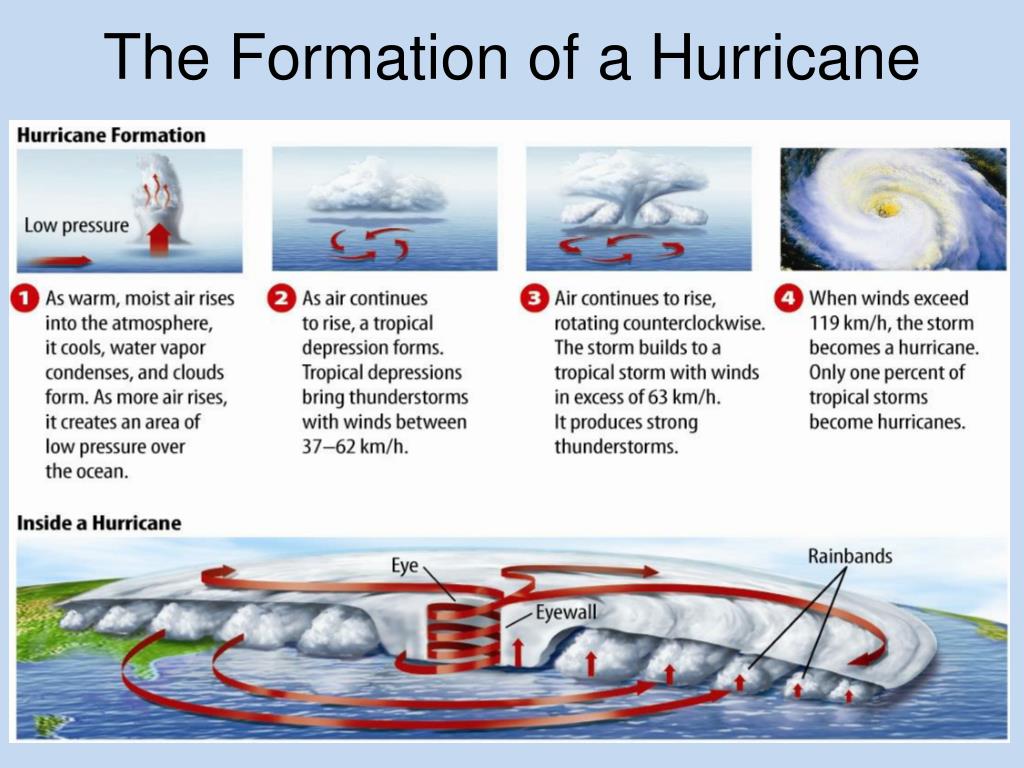
Of course, the exact strength and path of a hurricane are incredibly complex and depend on many other factors. But these four ingredients are the essential building blocks, the foundation upon which these powerful storms are built.
It's both terrifying and fascinating to think about the precise conditions that need to align for a hurricane to form. It’s a potent reminder of the power and complexity of nature. While we certainly don't want hurricanes, understanding how they form can help us prepare for them and stay safe.
Beyond the Science: Respect and Responsibility
While the science behind hurricanes is interesting, it's crucial to remember that these storms are also incredibly destructive. They can cause immense suffering and devastation, displacing communities and causing widespread damage.
Therefore, understanding hurricanes isn't just about scientific curiosity. It's also about responsibility. By understanding how these storms form, we can better predict their paths and intensity, and take steps to mitigate their impact.

Furthermore, as our climate changes, it's becoming even more important to understand hurricanes. Warmer ocean temperatures provide more fuel for these storms, potentially leading to more frequent and intense hurricanes in the future. Staying informed and supporting efforts to address climate change are crucial steps we can all take.
Final Thoughts: The Hurricane's Song
Hurricanes are a force of nature, a powerful and awe-inspiring phenomenon that reminds us of the immense power of the natural world. They are both terrifying and beautiful, destructive and essential.
By understanding the conditions that give rise to these storms, we can gain a deeper appreciation for the complex processes that shape our planet. We can also better protect ourselves and our communities from the devastation they can cause.
So, the next time you hear about a hurricane brewing in the Atlantic or Pacific, remember the warm water, the tropical disturbance, the light winds, and the Earth's spin. Remember the recipe for destruction… and the recipe for resilience.