
What Causes The Wind To Move
Have you ever closed your eyes and just felt the wind whisper across your face? It’s a gentle caress one moment, a playful tug the next, or sometimes a mighty roar. We feel it, we hear it, we even use it to fly kites and sail boats. But have you ever stopped to wonder, truly wonder, what makes the wind move? It's not just some invisible hand pushing air around; there's a beautiful, elegant secret at play.
The answer, believe it or not, starts with our biggest, brightest star: the Sun. Yes, that giant fiery ball in the sky is the ultimate wind architect, orchestrating everything from a soft breeze to a powerful gale. It's a grand cosmic dance, with the sun leading the way. Think of the sun as the conductor of a massive, airy orchestra.
Now, here’s the surprising part: the sun doesn't heat our Earth evenly. Imagine baking a giant cookie and some spots get a little toastier than others. Our planet is a bit like that cookie. Different surfaces – land, water, forests, deserts – absorb the sun's warmth in different ways and at different speeds. This uneven heating is the first crucial ingredient in our wind recipe.
Must Read
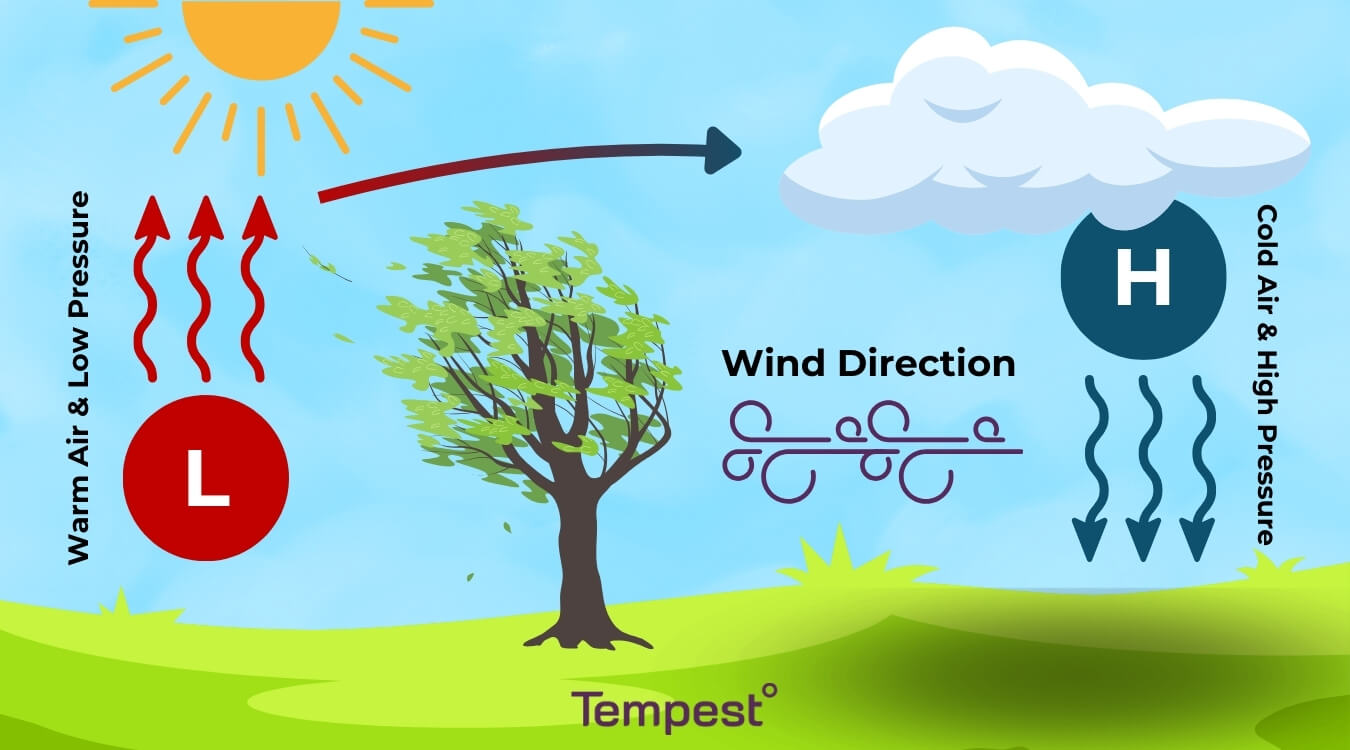
So, let's zoom in on a spot where the sun has really warmed things up. What happens to the air there? When air gets warm, it gets excited! Its tiny molecules start buzzing around with more energy. This makes the warm air lighter and less dense, a bit like a hot air balloon wanting to float upwards.
Picture it: warm air rising, gracefully lifting itself into the sky. It's like it’s saying, "Time to stretch my legs!" As this warm air rises, it creates a kind of temporary "empty space" down below, an area where there’s less air pressing down. Scientists call this a low-pressure area, but you can think of it as a quiet corner where air has decided to take a break.
Meanwhile, imagine a different spot where the sun isn't shining quite as brightly, or maybe it’s over a cool ocean. The air here stays cooler. Cool air is a bit more laid-back. Its molecules are closer together, making it heavier and denser. Instead of rising, this cool air gently sinks towards the ground, like a cozy blanket settling down.
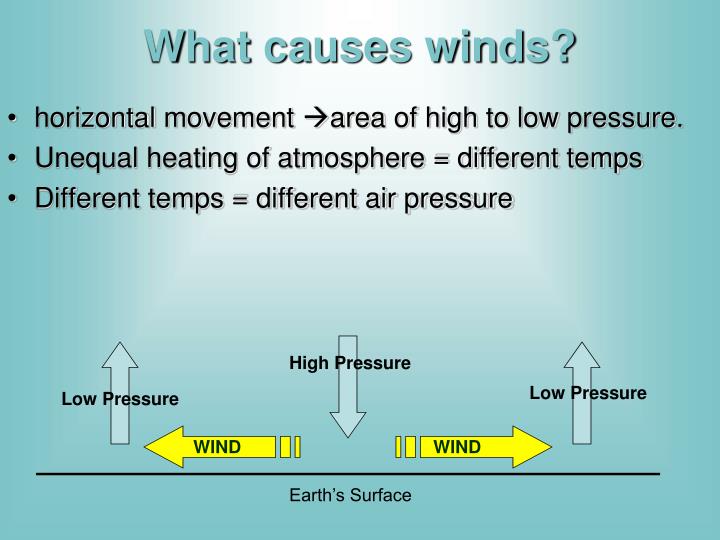
As this cool, dense air sinks, it creates the opposite effect of our warm, rising air. It pushes down with more force, creating a "crowded room" feeling. This is what we call a high-pressure area. It's a place where there's plenty of air to go around, maybe even a bit too much! So, on one side, we have an "empty seat" (low pressure), and on the other, a "full room" (high pressure).

Here's where the magic truly happens, and it's quite heartwarming in its simplicity. Nature, you see, absolutely hates imbalances. It constantly strives for equilibrium, for everything to be fair and balanced. Air is no different; it wants to even things out.
So, what does the air do? It rushes from the "full room" (the high-pressure area) to fill the "empty seat" (the low-pressure area). It's like a spontaneous party guest noticing an open spot on the couch and making a beeline for it. This movement, this great rush to balance the scales, is literally the wind.
Every time you feel a breeze, you are experiencing air on a mission! It's air trying to make sure every corner of our atmosphere has its fair share of pressure. It's air saying, "Hey, I noticed things were a little uneven over here, so I'm coming to help!" Isn't that a lovely thought? The wind is just air being a good neighbor.
The bigger the difference in temperature between two spots, the bigger the difference in pressure will be. And the bigger the pressure difference, the faster the air will rush to equalize things. This is why some days we feel a gentle sigh of wind, and on others, a powerful gust that tugs at your hat. It all depends on how much the sun has played favorites with its heating.

But wait, there's a bit more to this story! Our amazing Earth isn't just sitting still; it's spinning like a top. This spin adds a fascinating twist to our wind's journey, deflecting its path. It's like trying to walk in a straight line on a merry-go-round – you'll end up veering off course!
This phenomenon, known as the Coriolis effect, means that wind doesn't just flow in a straight line from high to low pressure. It gets a little swirl, a curve, turning winds into vast, swirling patterns across our globe. This is why weather systems, like hurricanes and cyclones, rotate!
Mountains also play a role, acting like giant obstacles or ramps for the wind. They can funnel wind through valleys, making it stronger and faster. Or they can block it, creating quiet, sheltered pockets on their leeward side. Our planet's diverse landscape adds unique personalities to the wind.
Water bodies, too, have their own influence. Oceans heat up and cool down much slower than land. This creates delightful local breezes, like the refreshing afternoon sea breeze you feel at the beach. It's a daily dance between the warm land and the cooler water.
So, the next time you're flying a kite, remember its unseen engine. That kite is harnessing the sun's energy, transformed into moving air, eager to balance the atmospheric books. It's a beautiful demonstration of physics in action, made fun and tangible. The wind isn't just an empty force; it's a testament to the Earth's dynamic balance.
Consider the wind's many jobs. It carries pollen for flowers, spreading life across landscapes. It helps birds soar gracefully without flapping a wing. It rustles through leaves, creating nature's own soothing symphony.
It can also be a powerful sculptor, shaping sand dunes into flowing art or carving intricate patterns into rock formations over millennia. The wind is an artist, a gardener, a traveler, and a storyteller all rolled into one. It’s always on the move, always working, always influencing.
Think about the wind carrying the scent of rain, or the distant aroma of blooming flowers. It's a messenger, delivering sensory postcards from far-off places. It connects us to the larger world, even when we're standing still. The wind truly breathes life into our environment.

From the gentle sigh that lulls you to sleep, to the mighty roar that clears the skies after a storm, the wind is a constant, invisible companion. It reminds us that even the simplest things have profound, interconnected stories behind them. It’s a powerful, yet often overlooked, force of nature.
The wind is just air rushing to fill a void, to bring balance to our world.It’s a perpetual motion machine, powered by the sun’s warmth and the air’s natural inclination to share. It's the Earth literally breathing, expanding and contracting, always seeking harmony.
So, the next time you feel that invisible push or pull, pause for a moment. Appreciate the incredible journey that air has taken. Remember the sun, the warm spots, the cool spots, and the air's earnest desire to make things right. It’s a truly heartwarming thought, isn't it?
The wind is not just "there"; it's a vibrant, active participant in the story of our planet. It's a constant reminder of the beautiful, subtle forces that shape our everyday experiences. And now, you know its lovely little secret.