
What Causes Carbon Monoxide In A House Without Gas

Hey there, curious cat! So, you've heard of carbon monoxide (CO), right? The sneaky "silent killer" often linked to faulty gas appliances. But what if I told you your beautiful, gas-free abode could still be cooking up this invisible mischief-maker? Plot twist! It's like finding out your house has a secret identity.
This isn't some spooky ghost story; it's pure, quirky science! The truth is, CO isn't just a gas appliance's bad habit. It's the result of something far more common: incomplete combustion. Think of it like a clumsy chef trying to cook a meal without enough ingredients or proper tools. Instead of a perfectly done dish (carbon dioxide, CO2), you get a half-baked, slightly dangerous mess (carbon monoxide, CO).
The Not-So-Glamorous Origin Story of CO
Here's the deal: whenever anything with carbon in it burns, it needs a good, healthy dose of oxygen. When there's plenty of O2, you get the relatively harmless CO2. It's what plants breathe, what we exhale, and generally a well-behaved molecule. But when oxygen is scarce, or the burning conditions are just a bit wonky, things take a turn for the worse.
Must Read
That's when you get CO. It's like the black sheep of the carbon family – odorless, colorless, tasteless, and absolutely brilliant at going undetected. It's so sneaky, it could win an Olympic gold medal in invisibility!
The Usual Suspects (Without Gas!)
So, what everyday things in a gas-free house can turn into a miniature CO factory? You might be surprised!

Your Cozy Wood-Burning Fireplace or Stove
Ah, the crackling warmth of a good fire! Sounds idyllic, right? But if your chimney is clogged with creosote (that gunky residue from burning wood), or if your damper isn't open enough, or if the airflow just isn't right, your lovely fireplace becomes a CO producer. It’s like putting a scarf over your chimney's mouth – the exhaust can't escape, and that partial burn goes haywire. Regular cleaning and good ventilation are key. Don't let your chimney get choked up!
The Afterglow of a Charcoal Grill
Picture this: a fantastic backyard BBQ, delicious food, great company. The coals are still glowing, but the party's winding down. Someone decides to bring the grill into the garage or even inside the house to "cool off" or finish burning. Big no-no! Even those seemingly harmless embers can continue to crank out dangerous levels of CO for hours. Charcoal, even when it looks "out," is a prolific CO generator. Keep those grills strictly outdoors, folks, even after the last burger is flipped!

Portable Kerosene or Propane Heaters
Super handy for chilly evenings or power outages, these little warmth machines are a blessing and a curse. They burn fuel to produce heat, which means they gobble up oxygen. If you use them in a poorly ventilated room, they quickly deplete the available O2, leading to incomplete combustion and a surge of CO. It's like trying to run a marathon in a closet – you'll run out of breath fast! Always ensure ample ventilation when using these appliances, or better yet, opt for electric alternatives indoors.
Generators: Your Best Friend (When Used Safely)
During a power outage, a portable generator is a lifesaver. But its exhaust is absolutely packed with CO. This is why you must ALWAYS operate generators outdoors, far away from windows, doors, and vents. Even if it's "just for a little while," CO can quickly seep into your home, turning your temporary inconvenience into a serious emergency. It’s a powerful machine, but it needs its space!
Your Car, Idling in an Attached Garage
Running into the garage to grab something, starting your car to warm it up, or just leaving it idling for a moment? Even with the garage door open, exhaust fumes can silently creep into your attached home. Garages are often not sealed airtight to your living spaces, and CO doesn't need an engraved invitation to slip through cracks and vents. It’s a surprisingly common cause of CO poisoning, and a super easy one to avoid!
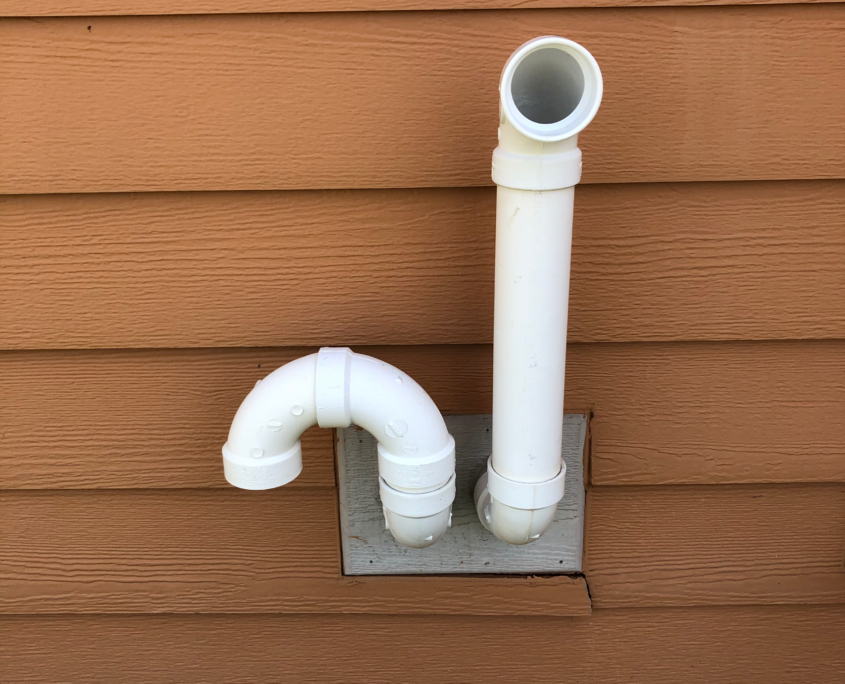
Blocked Chimneys or Vents (Even for Oil Furnaces!)
If your home uses an oil furnace or boiler for heat, that system also burns fuel. Like any combustion appliance, if its flue or vent becomes blocked by a bird's nest, debris, or snow, the exhaust (and CO) can back up into your home. Regular maintenance and checks are essential to keep these vital systems breathing freely and safely.
Why This Is So Fascinating (and a Little Scary!)
CO is a marvelously sneaky molecule. It's slightly lighter than air at the same temperature, but it mixes so readily that it essentially hangs out everywhere once produced. Your red blood cells, those diligent oxygen carriers, actually prefer CO to oxygen – by a factor of 200 times! They latch onto CO and refuse to let go, starving your body of vital oxygen. It's like a rude guest who hogs all the good snacks!
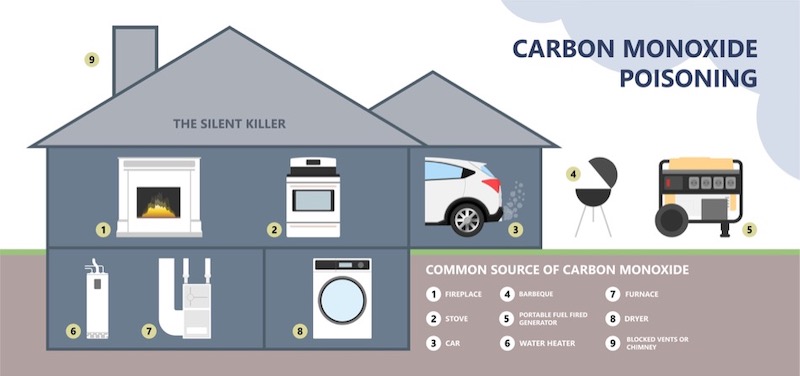
The Takeaway: Stay Smart, Stay Safe!
So, what's the big takeaway from our little CO confab? It's not just about natural gas! Any fuel that burns – wood, charcoal, kerosene, propane, oil, gasoline – can be a CO culprit if it's not given enough oxygen or proper venting. It's like saying "only chefs with gas stoves can burn dinner." Nope! Anyone can mess up a meal if they're not careful!
This hidden danger is precisely why your friendly neighborhood carbon monoxide detector is your absolute best buddy. It's the ultimate "uh-oh!" button for your home, screaming when things go sideways long before you'd ever notice. Install them, test them, and keep those batteries fresh!
Stay curious, stay safe, and remember: even without gas, your house has amazing (and sometimes challenging!) stories to tell!